The Norse World Database Launched

Norse World is a new database is a digital resource which will make it easier for researchers to study perceptions of the surrounding world in medieval Scandinavian literature

The new tool is a database aimed at researchers in fields such as language history and philology, comparative literature, manuscript studies and digital humanities. It will be freely available to both researchers and the public.

Spatial humanities and cognitive mapping are growing fields within digital humanities, but the study of spatial thinking in medieval Scandinavia and its development as an area of research are hampered by a lack of information on place names and other spatial references in literary texts.

Scandinavian medieval literature is a mine of information on how foreign lands were visualised in the Middle Ages: What places were written about and where? Are some places more popular in certain text types or at certain times? How do place names link different texts? Is there a shared concept of spatiality? How is space gendered?

“Any research aiming to uncover what pre-modern Scandinavians understood about places abroad requires as a minimum an index of foreign place names in Swedish and Danish literature from the Middle Ages. Yet, to-date no such index exists. With the release of Norse World, an important tool is being made available for the first time that makes research on the perception of the world among pre-modern Swedes and Danes possible for the first time,” says Alexandra Petrulevich, Researcher at the Department of Scandinavian Languages, Uppsala University.

The new tool consists of three main components: a bespoke MySQL database, Norse World – an interactive map, and an independent back-end application that enables access to the database when users search the map resource. All three components use open-source code which enables them to be built into larger infrastructure clusters. The tool is both a scientific and technical first with no equivalent in what has previously been done in philology and linguistics.

The digital resource Norse World is a result of the infrastructure project The Norse perception of the world / Fornnordisk omvärldsuppfattning financed by Riksbankens Jubileumsfond (2017–2020).

SOURCE:

New database for medieval literature launched
Press Release

Read more

The post The Norse World Database Launched appeared first on Medieval Histories.

Powered by WPeMatico

News about Ribe, an Early Medieval Emporium from the 8th Century

Ribe was the earliest emporium in Early Medieval Denmark. At the cusp of the Viking Age, the town played a significant role. But when was it founded? By whom? And for what reason? Renewed excavations this summer brings us closer to an answer.

Ribe in the 8th Century. After: Sydvestjyske Museer/ Juxtapose

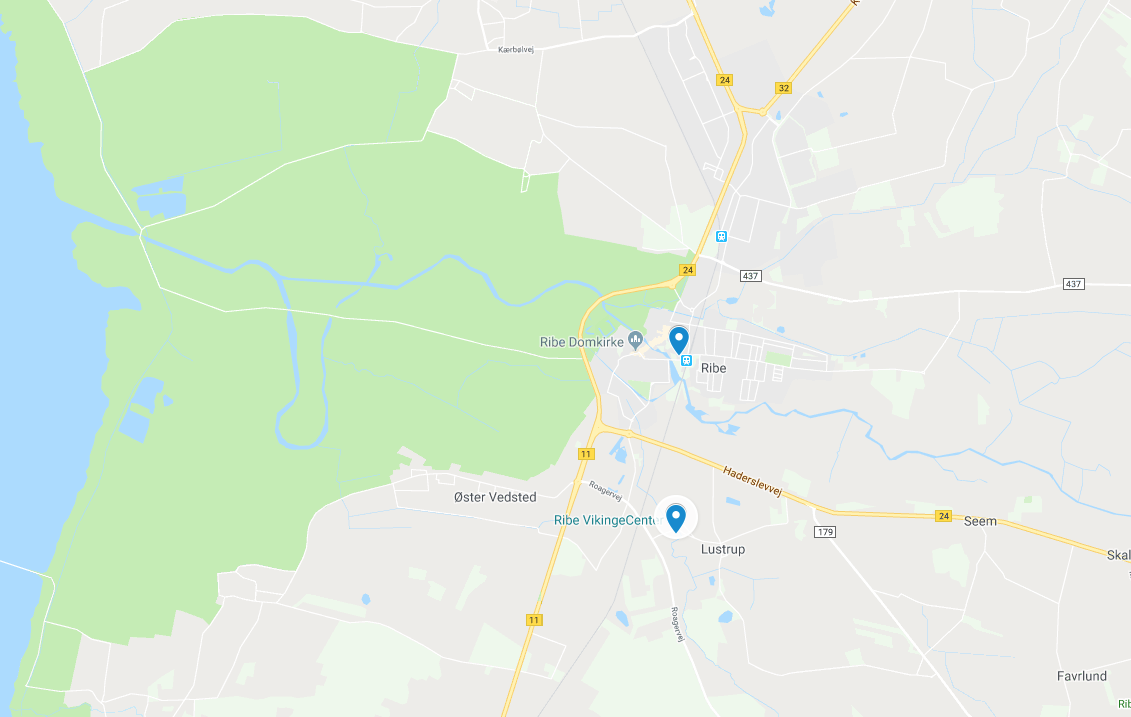
Since 1970, archaeologists have excavated in Ribe, a small town situated in Southern Denmark, approximately five kilometres west of the Wadden Sea. The modern town is traversed by the River Ribe, which used to meander into the west coast estuary. Nowadays it is regulated and runs an orderly course. Until the 20th century, the town was in the grip of tidal waters, occasionally causing severe flooding. To the east, the landscape is dominated by boggy wetlands, while sandy plains reach north and south. Thus, Ribe is situated at the logical western crossroad reaching from north to south. Today, at the banks of the river we find a small quay. In the same way, the earliest town must have boasted of a harbour, albeit its precise location has so far evaded the archaeologists.

The archaeological remains of Ribe are exceptionally well-preserved. Ribe, however, is unique, because the modern town more or less covers the earlier settlements. This poses a challenge since excavations have to take place whenever a current building project calls for “rescue archaeology”. Accordingly, excavations since 1970 have yielded a breath-taking amount of artefacts and knowledge. Nevertheless, the basic knowledge about the history of the town has so far eluded the archaeologists. One reason is that even though Ribe is famous for its well-preserved stratigraphy, the older excavations had no access to the modern techniques, which allow for exact mapping of the thin cultural layers.

Northern Emporium

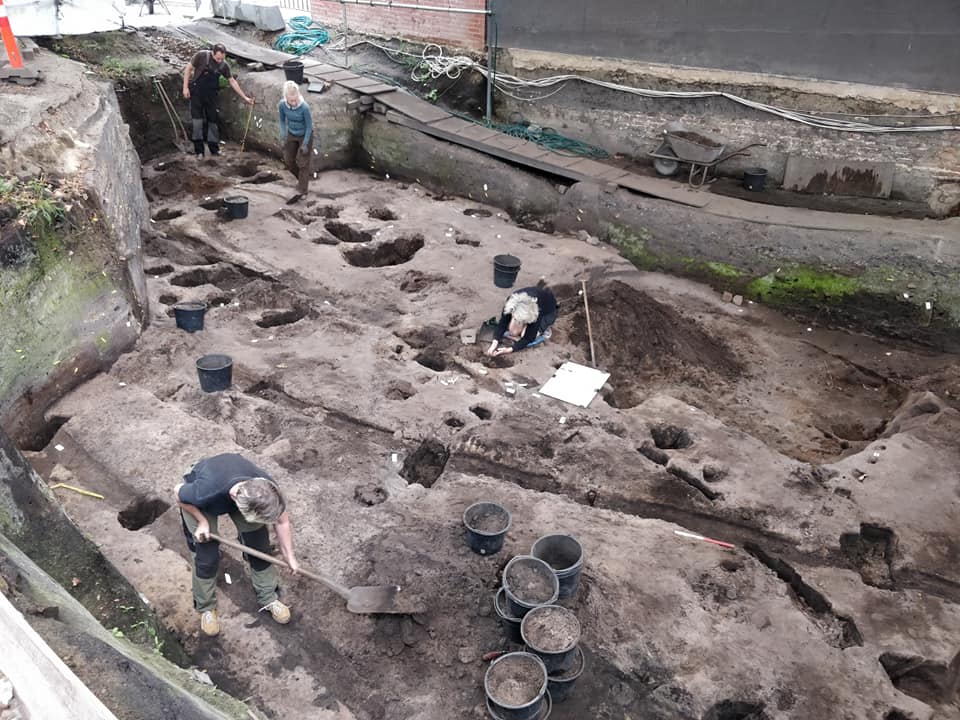
Excavation under way © Northern Emporium

In 2017, the Carlsberg Foundation made it possible to carry out a systematic excavation of a plot inside the oldest Ribe. The overall aim has been to answer several questions: How did Ribe emerge? Were the earliest activities seasonal? And if so, at what point did Ribe become a permanent settlement, that is a proper town? Was the earliest Ribe characterised by high-density housing as a new evaluation of the old excavations indicate? Who were the earliest citizens? Seasonal visitors or local merchants and craftsmen? Might historical events be detected in the development and changes, which the town underwent? And finally: for how long did Ribe survive as a vibrant emporium?

Using state-of-the-art techniques like laser-scanning, 3D-visualisation, geochemical element analysis, micromorphology, and dynamic, electronic methods as well as other high-definition techniques, the archaeologists are currently processing vast amounts of data. As yet, no firm conclusions have been published. What we do know so far is that the first traces of activities at Ribe can be dated to c. 700, but also that the area was inhabited no later than the 720’s with people wintering in substantial houses plying their trade and crafts. This suggests a more or less resident population at a time when history and archaeology tell us a mighty potentate or king was otherwise busy digging a deep channel across Samsø, the Kanhave channel, as well as rebuilding the wall at Dannevirke. Dendrochronologically dated to respectively 726 and 737, these defensive projects must have involved the deployment of a significant workforce. As Ribe from day one, also seems to have been minting scaettas, its status as an important emporium may likely date from the same period and historical context.

Thousands of Objects

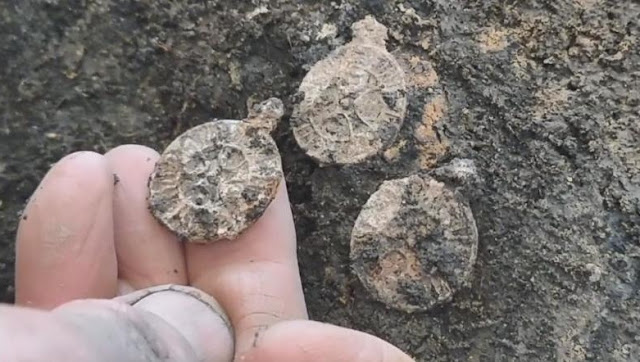
Christian amulets made of lead c. 800 - 825 © Northern Emporium
Christian amulets made of lead c. 800 – 825 © Northern Emporium

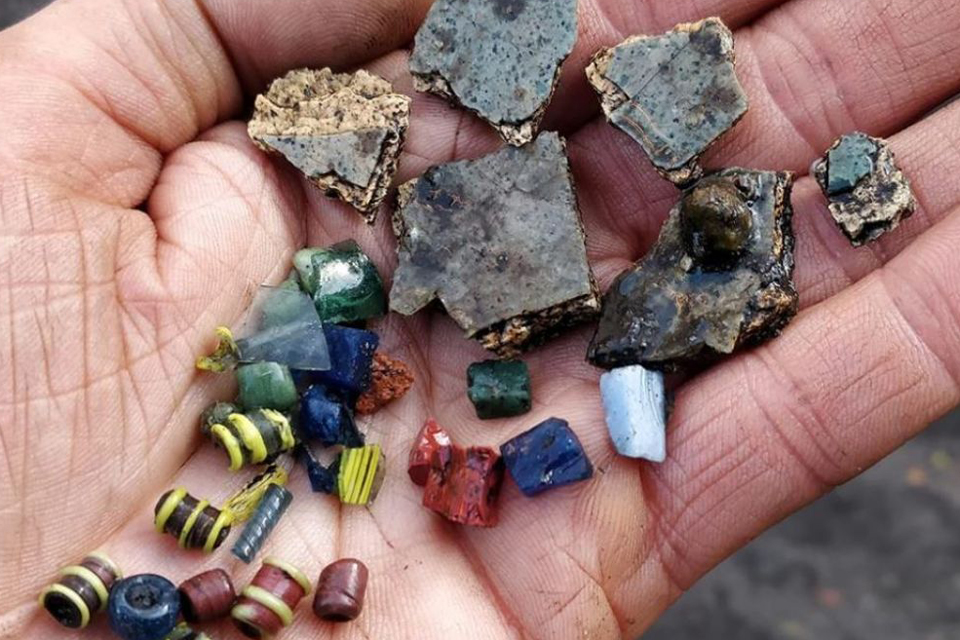
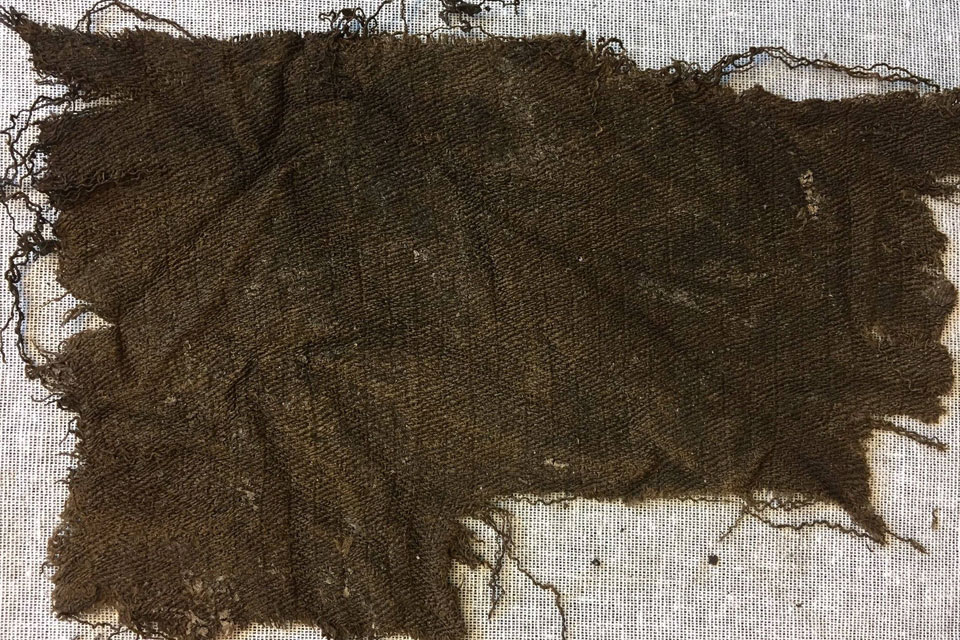
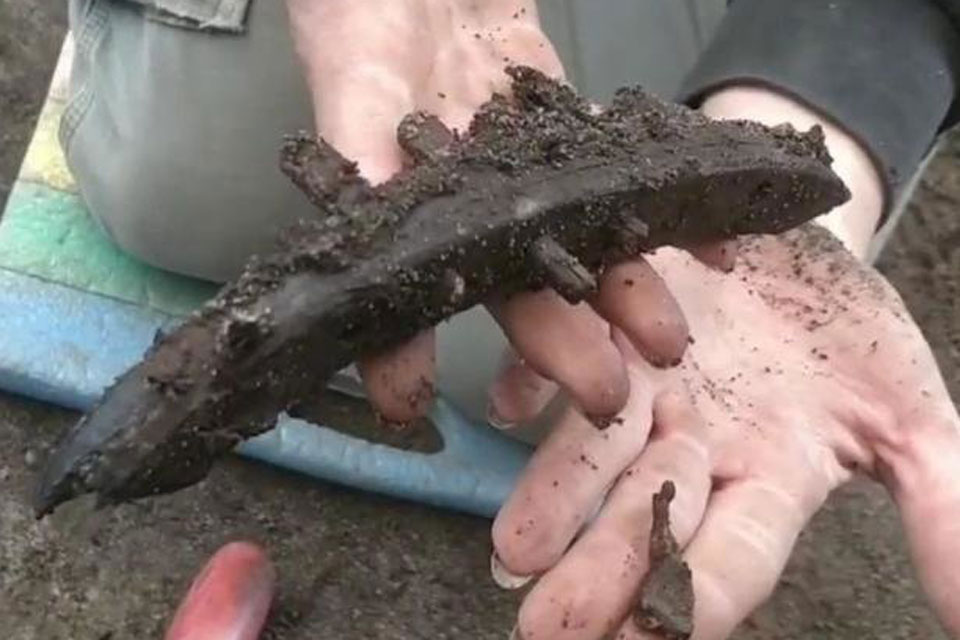
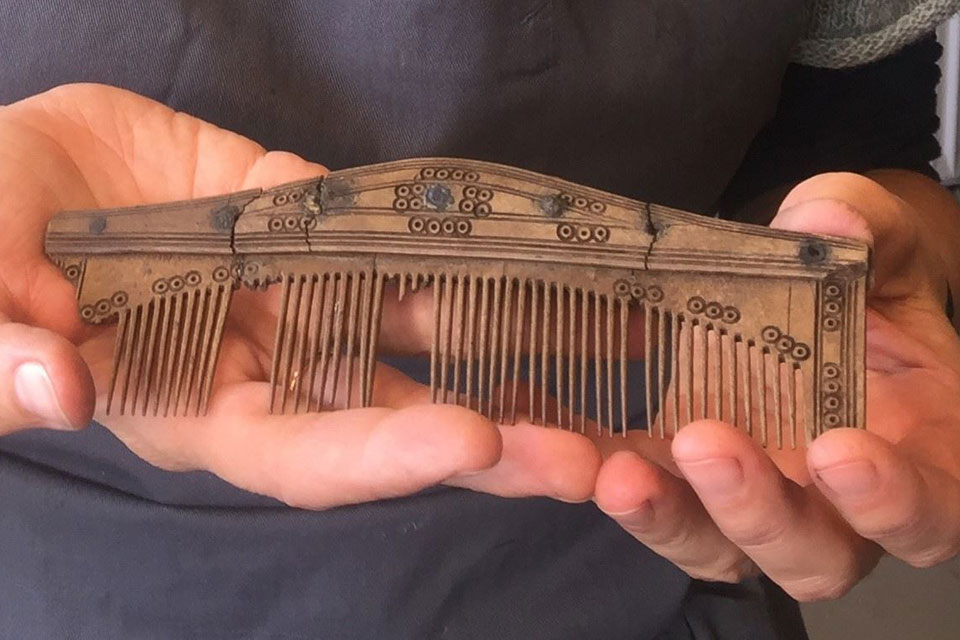
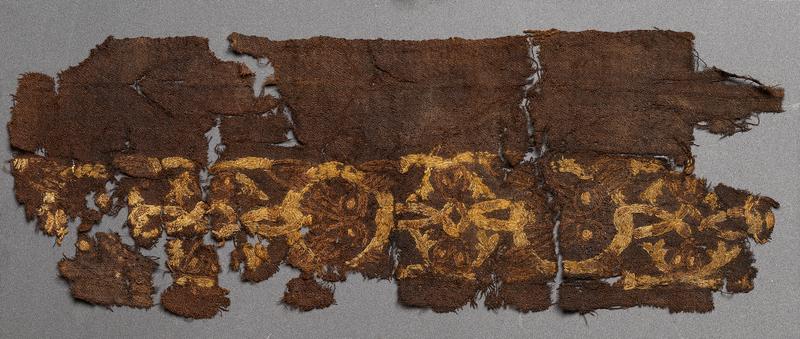
Reaching more than three metres down, the archaeologists have so far uncovered the remains of buildings covering more than 70 M2 and housing bead makers, bronze smiths, and shoemakers. However, not only remains of their workshops have been revealed, but also – uniquely – some of their more personal objects, like combs and caskets with Runic inscriptions, a fragment of a musical instrument, a lyre, and pieces of textiles. In one of the layers from c.800, three amulets were found featuring Christian crosses. As the pendants were found in a smithy together with the moulds, the find suggests that a mass production catering for a local Christian community took place at Ribe at least 50 years before the vita of St. Ansgar tells us the first church was built in town. The new find fits perfectly with the Christian burials excavated at a cemetery surrounding the later Cathedral on the southern side of the river. Isotopic analyses of the dead persons have shown that the people buried there grew up locally.

These and a multitude of other finds from the latest excavation are, however, still undergoing conservation, while the rethinking of how to fit the new results into the old has not even begun. Slowly, the contours of a vibrant early emporium from the very early period of the history of Denmark will undoubtedly surface

All very tantalising…

Fragments of glass to be used in bead production © Northern Emporium
Textile, Spong Hill type found at Ribe © Northern Emporium
Lyre c. 750 found at Ribe © Northern Emporium
Comb from Ribe © Northern Emporium

SOURCE:

Northern Emporium
Northern Emporium: The Archaeology of Network Urbanism in Ribe

Northern Emporium at Facebook
The Ribe Excavations

Thousands of objects discovered in Scandinavia’s first Viking city
By Søren M. Sindbæk
In Phys. Org 13.09.2018

READ MORE

Ribe: emporia and town in the 8thand 9thcentury.
By Claus Feveile
In: From one Sea to Another. Ed. by Saoro Gelichi and Richard Hodges.
Series: Scisam 3, Brepols 2012, pp. 111 – 122

Tidligkristne begravelser ved Ribe Domkirke – Ansgars kirkegård?
I: Arkæologi I Slesvig/Archäologie in Schleswig
Vol 13: 2010, pp. 147 – 164

Vikingegravplads I Ribe afslører arkæologisk mysterium
By Charlotte Price Persson
Videnskab.dk 12.06.2016

Semper Ardens forskningsprojekt gør sjældent Runefund i Ribe
Af Jane Benarroch
Carlsbergfondet 2018

VISIT

Ribe Viking Centre

The purpose of Ribe Viking Center is to communicate Ribe’s Viking Age history by bringing it to life in the reconstructed environments. Alongside the presentation, theories are tested and developed through experimental archaeology; not just as regards the reconstruction of buildings, garments, tools and equipment but also in relation to the sociological side of history: How did communal life take shape under the physical conditions and surroundings of the past.

Museet Ribes Vikinger

The Museum, ‘Ribes Vikinger’, reveals Ribe’s history from the Viking period and Middle Ages to the year 1700 in the very spot where the very first town was built c. 720

Location of Ribe Google Map

The post News about Ribe, an Early Medieval Emporium from the 8th Century appeared first on Medieval Histories.

Powered by WPeMatico

Spiritualists in Lincoln’s White House

by Philip Jett

“A simple faith in God is good enough for me, and beyond that, I do not concern myself very much,” Abraham Lincoln is reported to have said while president. Nonetheless, his White House was frequented by spiritualists at his wife’s behest. Though some warned the Lincolns of impending doom, none were able to save the president’s life or his wife’s sanity.

Spiritualism in the United States exploded during the Civil War, particularly in the nation’s capital. Fathers, husbands, and sons were dying on battlefields in this country at a rate never before imagined. It is estimated that 620,000 to 750,000 soldiers died by war’s end, or one in ten white men of military age. It’s not difficult to understand the desire of family members to hear from their deceased loved ones during such a terrible time, and few believed as strongly in spiritualism as Mary Todd Lincoln.

Having already lost her son Eddie in 1850, it was almost more than she could bear when eleven-year-old Willie died from typhoid fever in 1862. Mary locked herself away for weeks until she finally emerged donning black mourner’s clothes. “He was his mother’s favorite child,” Mary’s seamstress wrote. “Mrs. Lincoln’s grief is inconsolable.” At the suggestion of former First Lady Jane Pierce, who’d lost her sons years earlier, Mary invited well-known spiritualists, such as Nettie Maynard, to hold séances within the White House so that she might commune with her dead little boy.
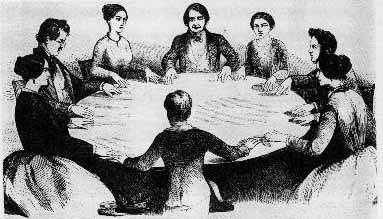
Seated in a circle about a table in the Red Room of the White House beneath a chandelier with its flames doused, a spiritualist would clasp hands with Mary and her friends as someone played music to attract spirits from the darkness. Adept at deception, the visiting spiritualist typically conjured tapping sounds somewhere within the room to indicate Willie’s spiritual presence. The trickery worked. Mary was so convinced that Willie had returned that she reported to her half-sister: “Willie lives. He comes to me every night and stands… with the same sweet, adorable smile he has always had. He does not always come alone. Little Eddie is sometimes with him… You cannot dream of the comfort this gives me.”

President Lincoln was also deeply affected by Willie’s death. Intelligent and personable, Willie most closely resembled his father. “I stood at the foot of the bed, my eyes full of tears, looking at the man in silent, awe-stricken wonder,” Mary’s seamstress wrote of the president. “His grief unnerved him, and made him a weak, passive child. I did not dream that his rugged nature could be so moved.” The lamenting Lincoln often visited his son’s corpse in a temporary vault in Oak Hill Cemetery where he’d sit for hours, sometimes directing that his son’s coffin be opened. “Do you ever find yourself talking with the dead?” Lincoln asked a Union officer during that heart-wrenching time. “Since Willie’s death, I catch myself every day involuntarily talking with him as if he were with me.”

Despite his intense grief, President Lincoln did not resort to spiritualism. “He was no dabbler in divination, astrology, horoscopy, prophecy, ghostly lore, or witcheries of any sort,” wrote a friend. The president did, however, humor Mary occasionally by attending séances where it was reported that he had more interest in observing the tricks than harboring any real expectation of communication.

Some spiritualists warned Lincoln of assassination, but it didn’t take a spiritualist to understand the ever-present danger to the president. When warned once, the president replied: “Colchester has been telling me that.” Colchester was the renowned spiritualist, Charles Colchester, who frequented the White House at Mary’s request. It turned out that Colchester may have had special insight into Lincoln’s peril that originated not from the spirit world, but rather a few blocks from the White House. Colchester was a friend of John Wilkes Booth.

Booth’s interest in spiritualism began soon after that of Mary Lincoln. Following the death of Booth’s sister-in-law in 1863, the already superstitious actor attended a number of séances conducted by Colchester. The two became friends and many noticed the men consorting at the same hotels and eating establishments about Washington, D.C. After the assassination, Colchester fled the capital city and was never questioned about the president’s death.
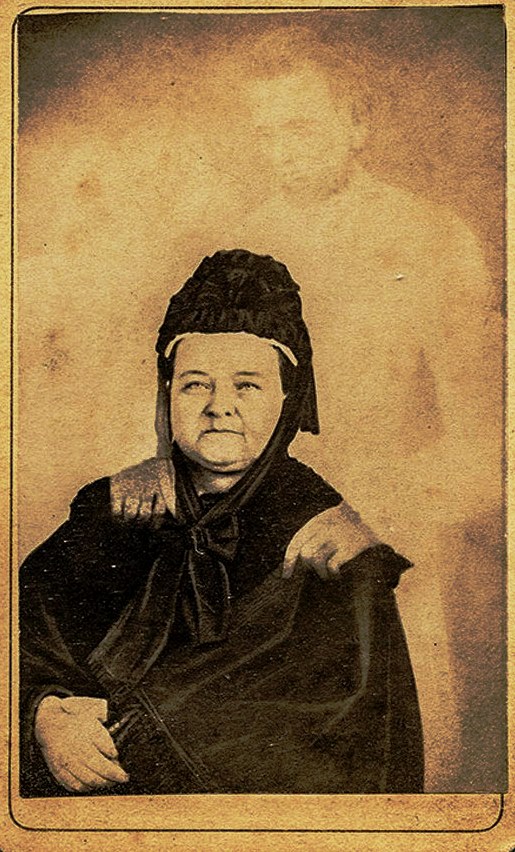
Mary’s dependence on spiritualists naturally intensified following her husband’s assassination. After moving to Chicago with her son Tad, who died six years later, and her oldest son, Robert, she frequently hosted séances in her home until Robert forbade it. Undeterred, she visited spiritualists in Chicago using assumed names. She also visited William Mumler, a “spirit photographer,” who produced a photograph of Lincoln’s spirit resting his consoling hands on Mary’s shoulders. Though clearly fake, Mary believed it to be authentic. “A very slight veil separates us from the loved and lost,” she wrote a friend, “though unseen by us, they are very near.”

While the hocus-pocus of spiritualists may have comforted Mary, their shenanigans were not enough to settle her unraveling sanity. In 1875, Robert Lincoln caused an arrest warrant to be issued for his mother, who was taken into custody, certified insane, and committed to Bellevue Place, a private asylum in Batavia, Illinois. She remained there for over a year until she stirred sufficient public interest in her plight that she was released. She lived out her life quietly with a sister in Illinois and never forgave Robert.

For Mary Lincoln, the ghostly and chilling realism feigned by charlatans and swindlers could not rival that of her actual life—three sons died in her arms, a husband was fatally shot while seated beside her, and she was committed to an insane asylum by her sole living son. Few, if any, can imagine the assault on her reason inflicted by such real-life horrors—and none in their right mind would want to suffer her heartbreaks.


PHILIP JETT is a former corporate attorney who has represented multinational corporations, CEOs, and celebrities from the music, television, and sports industries. He is the author of The Death of an Heir: Adolph Coors III and the Murder That Rocked an American Brewing Dynasty. Jett now lives in Nashville, Tennessee.

The post Spiritualists in Lincoln’s White House appeared first on The History Reader.

Powered by WPeMatico

Well-dressed in the Viking Age

What did Viking clothes and outfits look like? A large grant supports archaeologists and textile researchers exploring and recreating authentic textiles and dresses

Textile from the Mammen grave © National Museum in Copenhagen

Recently, a group of researchers have begun exploring what clothes and textiles looked like in the Viking Age and how they were worn. Part of the project is to reconstruct a man’s and a woman’s outfit. Another part of the project is to examine how people from all sorts of layers of society looked like.

The research project, Fashioning the Viking Age, is funded by the Velux Foundation with a grant of 5.5 million kroner and headed by senior researcher Ulla Mannering from the National Museum in Copenhagen in collaboration with Sagnlandet Lejre and the Center for Textile Research at the University of Copenhagen.

From fragments to full dresses


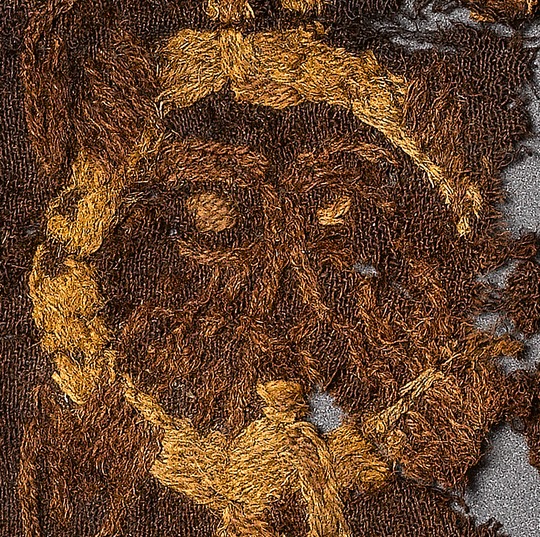
Face from The Mammen Textiles © National Museum in Copenhagen/Roberto Fortuna

Occasionally, archaeologists discover small pieces of textiles and fur attached to metal objects found in graves. Sometimes, they even find larger pieces as part of excavations.  The question, however, is how to reconstruct the complete outfits from these tiny rags

“It’s not easy to jump from small pieces of fabrics a full suit. It’s a puzzle game of small centimetres of textiles, images, and written sources,” explains Ulla Mannering, Project Manager on the research project and senior researcher at the National Museum to historie-online.dk

For instance, iconic pieces found in many female graves are the bossed oval brooches, which were used to hold up suspended dresses. But from images, we know that women might also wear blouses and skirts

“It is important to utilized a wide variety of different sources to find the breadth and variation of the Viking era dress. Much of our knowledge is based on archaeological findings from a few very rich graves,” explains Ulla Mannering.

A Practical Purpose

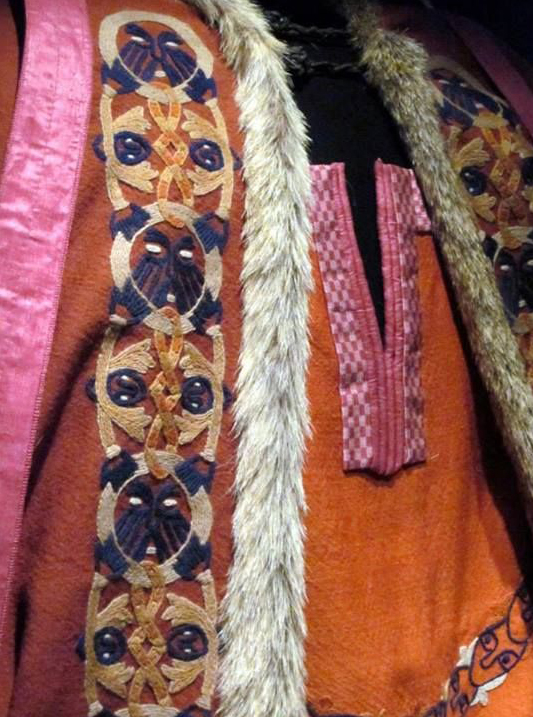
Detail of reconstructed dress from Mammen © Nation Museum in Copenhagen/B. S. Andersen

The team at the National Museum will not work alone. As part of the project, the researchers intend to reconstruct two outfits from the Viking age in collaboration with Sagnlandet Lejre and the Center for Textile Research at the University of Copenhagen. One is the outfit found in the Mammen grave, the other, the woman’s dress from Hvilehøj. Before they start, they intend to explore in detail which tools and materials the Vikings used, and which colours the outfits had. Both graves were high-status and probably linked to the elite surrounding the Jelling Dynasty. For instance, the burial of the Hvilehøj Woman yielded not only woven bands, but also four different fragments of silk, and six different fragments of wool as well as fur. The outfit of the man from Mammen sported a series of embroideries, depicting an acanthus vine, birds, gripping beasts, a leopard, as well as different types of masks. This particular outfit was reconstructed in the late 20thcentury based on the clothes, which King Cnut the Great wore in an illumination from Winchester… However, the new project plans to rethink this reconstruction, basing it on a new study of the fragments from the grave excavated in 1868 respectively 1880. The textiles, though, were carefully drawn preserving details since lost. Linen, wool and silk, but also gold and silver were used in such outfits.

“We want to reproduce the textiles and reconstruct the outfits of these two graves using as best we can, using the ancient tools, techniques, and methods,” says Ulla Mannering.

The aim is to “develop a new approach to disseminate textile, skin and clothing design to be used for exhibitions, teaching and in popular visualisations of the multifaceted life in the Viking Age. The project will give Danish textile research a renewed focus and impact, but will first and foremost result in a new visual and tactile understanding of textile production and clothing in the Viking Age that can be used in museums, in research, and by the broad public.

The intention is thus to provide as closely as possible, re-enactors and museums with scientifically correct reproductions to be used in Sagnlandet as well as in the future Viking exhibition, currently being planned at the National Museum in Copenhagen. But also to inspire reenactors and living historians to be authentic, when recreating the fashion of the Vikings.

SOURCE:

Vikingetiden bliver klædt på.
Historie-Online.dk

Fashioning the Viking Age – a new research project

READ MORE:

Vikinger i Uld og Guld. Om de danske vikingetidsdragter, baseret på tekstilfund i grave.
By Charlotte Rimstad. MA, University of Copenhagen

Denmark- Europe: Dress and Fashion in Denmark’s Viking Age.
By Anne Hedeager Krag
Northern Archaeological Textiles: NESAT VII: Textile Symposium in Edinburgh, 5th-7th May, Ed. by Frances Pritchard and John Peter Wild.
Oxbow 1999


The post Well-dressed in the Viking Age appeared first on Medieval Histories.

Powered by WPeMatico