Kinship and Culture in an Alemannic Burial Ground from the early 7th century

In 1962 an Alemannic graveyard in Niederstotzingen in Southern Germany was discovered and excavated. New studies of the aDNA of thirteen individuals – ten male adults and three infants – presents a snapshot of the local group of warriors.

The Alemannic graveyard in Niederstozingen dated to the end of the 6th century is famous for three reasons. First of all, the results were published soon after the excavation. Thus it came to define a horizon, against which other and later excavated burial grounds were compared. Secondly, some of the grave goods were exceptional, particularly the helmet and armour made in a Byzantine style from overlapping scales. Thirdly, one of the buried individuals was later identified as a woman, albeit buried with “male” grave-goods, This raised a scholarly debate on the phenomena of “amazons” in the migration period.

Recently, new studies were published adding to as well as offering corrections to the general understanding of the graves, the grave-goods, the interred individuals and not least the social structure of the group. The studies were carried out by researchers at the Eurac Research Centre in Bozen-Bolzano, Italy, and at the Max Planck Institute for the Science of Human History in Jena, in Germany.

No female warrior

Reconstruction of Lammellen Helmet from Niederstotzingen. Source: Wikipedia

First of all, the new studies laid the question of a “female” warrior to rest. Eleven of the thirteen individuals had enough DNA preserved to identify them as males, while no definitive sex could be determined for two. But “she” was not among these two. Accordingly, the graves witness to a burial practice with males to one side, and females to the other. If women were ever buried at the site, they were later translated from a pillaged grave and moved elsewhere.

Also, analyses of strontium showed that eleven out of thirteen individuals had grown up and lived locally, while two individuals, who had grown up in another locality, had lived as grown-ups in Niederstotzingen. These two individuals were further characterised by the wear and tear on their skeletons, signalling that they were professional soldiers. One of these individuals probably derived from Southern or South Eastern Europe.

A recent study of the aDNA of all the individuals aimed to reconstruct patterns of kinship. This new information has helped shed even more light on the cultural context presented by the funerary artefacts.

Genome-wide analyses helped to estimate the genetic affiliation of the majority to modern West Eurasians. Of these, at least five individuals belonged to the same patrilinear kin-group, consisting of two brothers – obviously leaders of the group – one of which had two sons, and a grandchild, thus constituting three generations. Mothers, though, had judged by the mapping of haplogroups been recruited from far away, confirming the results from other similar investigations that marriages were exogenous and patrilocal.

Panoply of grave goods
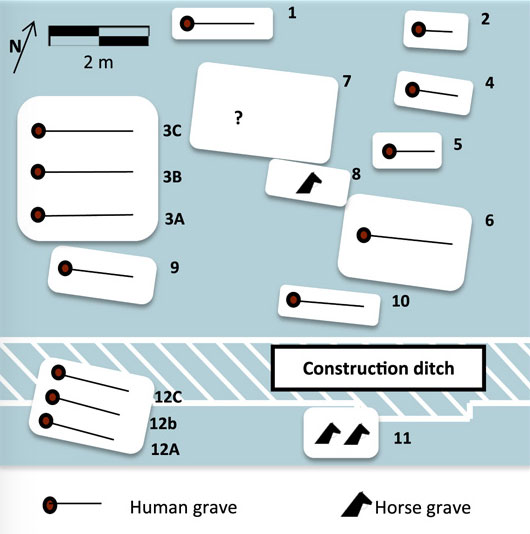
Graphic presentation of Burial Ground in Niederstozingen
Graphic presentation of Burial Ground in Niederstotzingen ©

Remarkably, though, neither kinship nor geographical origin could be related to the different ensembles of grave-goods. Thus, the objects found in the graves of the five individuals, who were identified as belonging to the same patrilineal kin-group, could be characterised as Byzantine, Franconian, as well as Lombardian. Especially the two assemblages, belonging to the two brothers in the first generation, are unusual: one was Byzantine, while the other was Franconian. Compared with the finds in all twelve graves, both these interred individuals were laid to rest with the most magnificent objects – respectively the Byzantine Helmet and the Franconian double-edged-ring-sword together with an engraved lance. In this context, it is interesting to note that the study of the strontium profiles of the two brothers showed that they had not only been born locally, they had for several years also lived together locally. Which means that we have two brothers born and living together with descendants and retinue while showing off military equipment of very diverse cultural styles. It does not seem farfetched to imagine that they laid their hands on the weapons and armour as part of raids less than gifts from the war-lords, for whose service, they had signed up. Perhaps, though, the Franconian Ring-sword did represent a gift from a Merovingian overlord recruiting our man to be the local official representative.

The research group publishing the results conclude that kinship and fellowship was held in equal regard. We might add, that the findings also show the outline of a small band of brothers with their retinue, who had settled on the crossroad of two former Roman highways living off the countryside as early medieval highway robbers. Or as the authors write, they constituted a “military outpost guarding an important land route”. The remaining question is: would there be a difference?

Sadly, the corresponding female burial ground has not been found and excavated.

SOURCE:

DNA of early medieval Alemannic warriors and their entourage decoded
Researchers from Eurac Research and the Max Planck Institute for the Science of Human History have analyzed human remains dated between 590 and 630 CE
EURAC RESEARCH/press Release September 2018

READ:

Ancient genome-wide analyses infer kinship structure in an Early Medieval Alemannic graveyard.
by Niall O’Sullivan, Cosimo Posth, Valentina Coia, Verena J. Schuenemann, T. Douglas Price, Joachim Wahl, Ron Pinhasi, Albert Zink, Johannes Krause, Frank Maixner. Ancient genome-wide analyses infer kinship structure in an Early Medieval Alemannic graveyard. Science Advances( 2018), vol. 4, no. 9

Neue Erkenntnisse zur frühmittelalterlichen Separatgrablege von Niederstotzingen, Kreis Heidenheim
By Joachim Wahl, Giovanna Cipollini, Valentina Coia, Michael Francken, Katerina Harvati-Papatheodorou, Mi-Ra Kim, Frank Maixner, Niall O’Sullivan, T. Douglas Price, Dieter Quast, Nivien Speith and Albert Zink. (2014)
In: Fundberichte aus Baden-Württemberg (2014) vol. 34, 2 p. 341-390

Helm und Ringschwet. Prunkbewaffnung und Rangabzeichen germanischer Krieger. Eine Übersicht.
By Heiko Stuer
In: Studien zur Sachsenforschung (1987) Vol. 6, pp. 190 – 236.

READ ALSO:

Genetic Perspective on the Bavarians from the Migration period
The Genetics of Longobard-Era Migrations

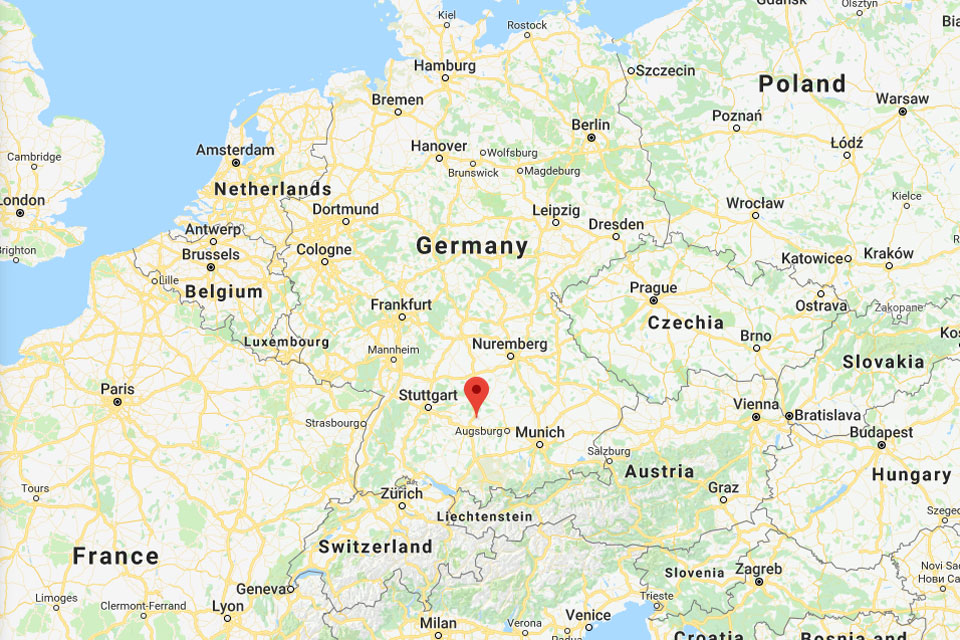
Map of Niederstotzingen, Germany

The post Kinship and Culture in an Alemannic Burial Ground from the early 7th century appeared first on Medieval Histories.

Powered by WPeMatico
Early Gothic Art from île-de-France 1135 – 50

After an extensive renovation of the Musée de Cluny in Paris, the first major exhibition focuses on the birth of the Gothic sculpture in and around Paris.

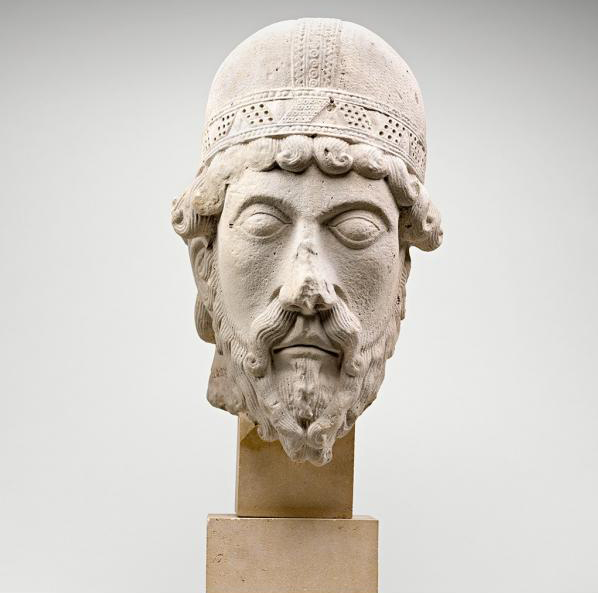
Prophete. St. Denis c. 1135 - 50. © Musée de ClunyBetween 1135 and 1150, a new and revolutionary art form was launched at St. Denis north of Paris. Here Abbot Suger ruled from 1122, and it was here, he propelled an aesthetic rethinking as well as the massive rebuilding of the Abbey church. In the following centuries, this came to set its mark from one end of Europe to the other. Labelled Gothic – that is antiquated and barbarous – by the masters of the Renaissance, contemporaries thought of it as highly modern.

Suger was a jack-of-all-trades. Accomplished politician, writer, and administrator, we never the less know him best as a dedicated patron of his Abbey, as witnessed today by the rebuilt western end, the famous ambulatory and shrine choir, and the creative use of stained windows and sculptural embellishments. Out of reverence for the old Merovingian church, Suger was keen to preserve the fabric of yesteryear. Nevertheless, the new Abbey Church at St. Denis came to be considered the crucible of Gothic Art. Not least, because we have personal reflections preserved in his writings and his testament on what he thought about his building projects – theologically, aesthetically, and regarding practicality.

Nevertheless, St. Denis has an obscure artistic context. The challenge is, that we seem to know so much about St. Denis, that we forget that considerable parts of the surrounding edifices and preserved artistic legacy is not so well dated. The question is, what and whom, inspired Suger? And what influence did Suger and St. Denis have on the burgeoning art scene of île-de-France? Thus, it is still debated whether Chartres inspired St. Denis or vice-versa. Also, did the choirs in the Cathedral at Noyon and in the Abbey church at St-Germer-de Fly predate or postdate the work of Suger?

One of the significant elements to ponder in connection with this question is the use of early Gothic Sculpture, which spread throughout the île-de-France region from 1135 – 1150. The most prominent feature was, of course, the use of triple portals flanked by sculptures, such as is still preserved at Chartres. We know from fragments of the portals from St. Denis as well as a series of pre-revolutionary drawings from the 18th century that such sculptured portals also graced the Abbey church.

However, this early Gothic sculpture was not limited to the emblematic portals adorned with column-statues, while new models circulated and new forms of expression were explored. An unprecedented virtuosity in the cutting and carving of stone allowed for infinite variations on decorative themes, which were shared with illuminations and stained-glass windows. With a sense for narration and a marked taste for the monumental, such refined and detailed work helped to spread the new artistic gospels across borders.

This autumn, Musée de Cluny invites the public to enjoy, study, and compare the magnificent sculptural heritage of the early 12th century and how it came to inspire Europe in a gigantic wave rapidly reaching the outer shores of England, Scotland, and Germany. With loans of statues from the Royal Portal at Chartres, the fragmentary vestiges of those from the western portals of the Abbey in Saint-Denis, as well as other sculptural remnants from the Sainte-Anne Portal of Notre-Dame de Paris and the Saint-Denis Cloister, visitors will be able to observe how the birth of a whole new form of art came about.

Afterwards, it is suggested to make a short detour to St. Denis, in order to experience the Cathedral, as it stands today, as well as the interesting archaeological museum where finds from extensive excavations are exhibited.

Under the leadership of its curators, Damien Berné and Philippe Plagnieux, the exhibition brings together about 130 works. In addition to the collections in the Musée de Cluny Museum and the Louvre, sculptures and other pieces of work have been loaned from museums in France as well as abroad

VISIT:

Birth of Gothic sculpture. Saint-Denis, Paris, Chartres 1135-1150
Cluny Museum – National Museum of the Middle Ages
10.10.2018 – 31.12.2018

Curators: Damien Berné, Heritage Curator at the Musée de Cluny, and Philippe Plagnieux, Professor of Medieval Art History (Université Paris 1 Panthéon-Sorbonne & École Nationale des Chartes). In partnership with RMN-GP.

SEE MORE:

Mapping Gothic France

With a database of images, texts, charts and historical maps, Mapping Gothic France invites you to explore the parallel stories of Gothic architecture and the formation of France in the 12th and 13th centuries, considered in three dimensions. The Mapping Gothic France project was initiated by Stephen Murray, Professor of Art History and Archaeology at Columbia University and Andrew Tallon, Assistant Professor of Art at Vassar College and funded through the generosity of the Andrew W. Mellon Foundation. Mapping Gothic France was developed within the framework of collaboration between the Media Center for Art History in the Department of Art History and Archaeology at Columbia University, the Visual Resources Library at Vassar College, and the Columbia University Libraries.

READ:

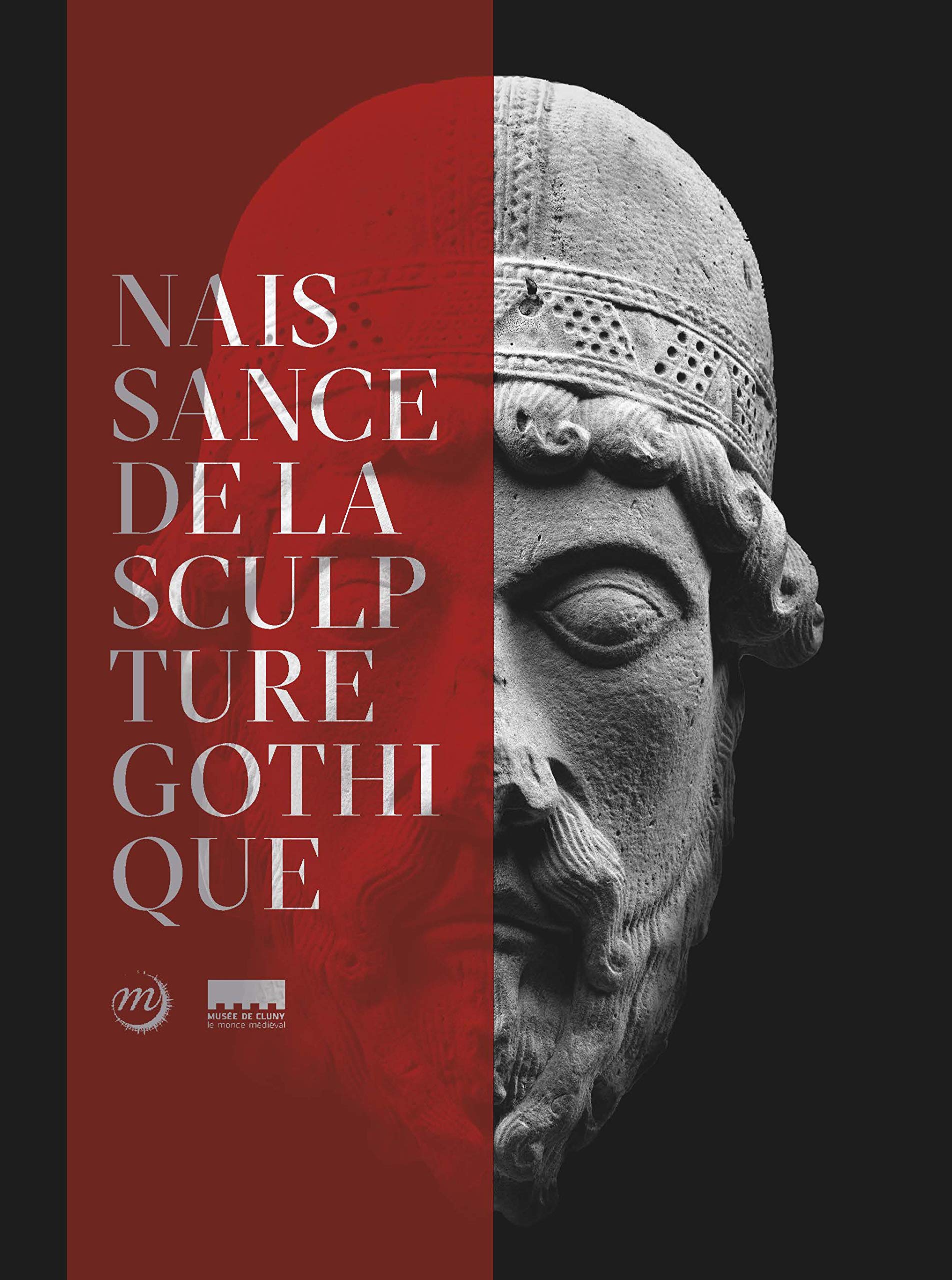
Catalogue La naissance de la sculpture gothique en Ile de France. RMN 2018La naissance de la sculpture gothique en Ile de France
de Collectif
Series: RMN Architectur
RMN 2018


Microarchitectures médiévales : L’échelle à l’épreuve de la matière Broché
Ed. by  Jean-Marie Guillouët (Sous la direction de), Ambre Vilain (Sous la direction de) Coédition Picard
Collection : PICARD HISTOIRE
ISBN-10: 2708410423 ISBN-13: 978-2708410428


READ ALSO:

Gothic Art and Architecture in Paderborn

Gothic Art and Style

The post Early Gothic Art from île-de-France 1135 – 50 appeared first on Medieval Histories.

Powered by WPeMatico
Gothic Art and Architecture in Paderborn

Vertical, emotional, illusional, terrifying… Gothic Art dominated the architecture as well as minor art forms from the 13thto 15thcenturies, lifting the soul of mankind towards the heavens. This autumn Paderborn houses a major exhibition on Gothic Architecture

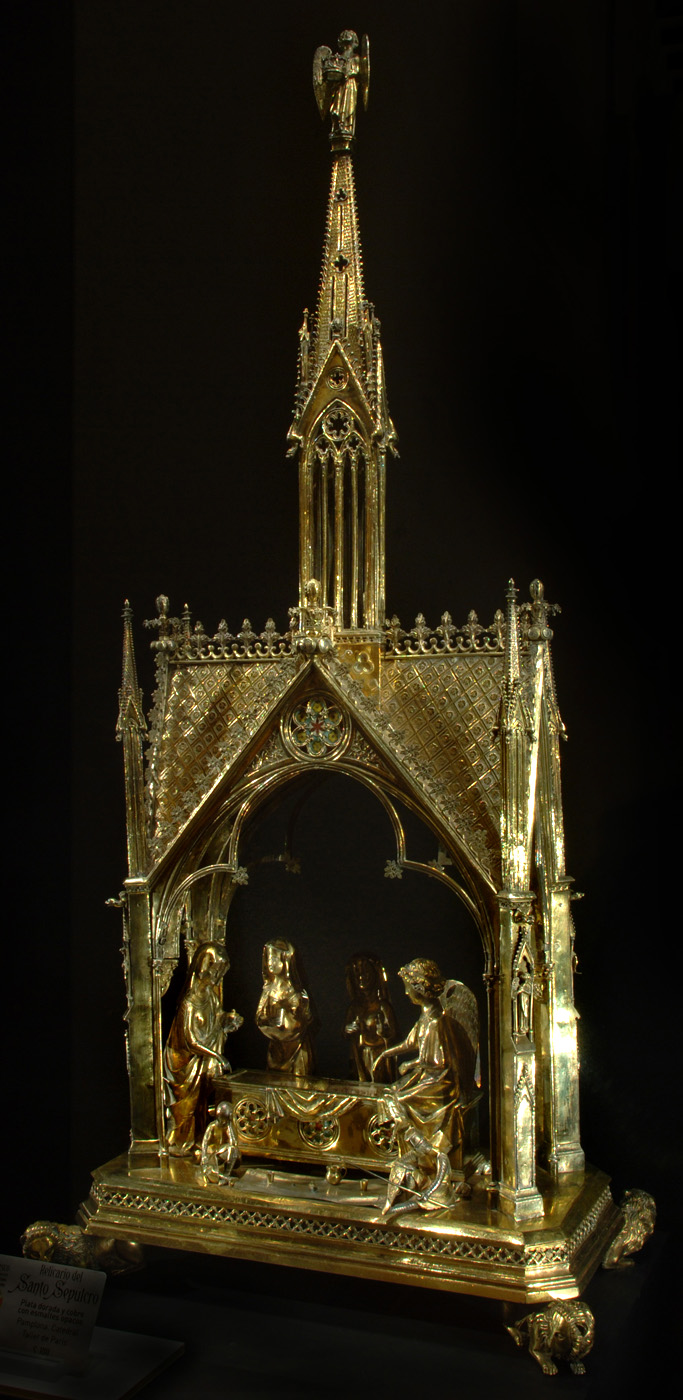
The reliquary of the Holy Sepulchre from Pamplona. Source: Wikipedia

Vertical, emotional, illusional, terrifying… Gothic Art dominated the architecture as well as minor art forms from the 13th to 15th centuries, lifting the soul of mankind towards the heavens. This autumn Paderborn houses a major exhibition on Gothic Architecture

Charlemagne may have commissioned the first cathedral in Paderborn. Completed in 799 it was trice destroyed by fires in the 11thand 12thcenturies, the present building dates to the 12thand 13thcenturies and presents itself predominantly as a Gothic monument. This autumn, the Cathedral and the Diocesan Museum mount a major exhibition on Gothic style, celebrating the 950-year anniversary of the building of the second cathedral.

The Diocesan Museum in Paderborn is renowned for its large exhibitions on its Carolingian past. 2018, the focus has shifted to a later epoch, the Gothic era. Parading treasures borrowed from Pamploma, Paris, Reims, Mainz, and elsewhere, the exhibition is shown in the Cathedral as well as the Diocesan Museum.

The aim is to present an overview of the Gothic style and how it spread as a distinctive architectural style from12th century France across Europe. And how the Gothic style came to reverberate in other art forms – stone sculptures, carvings, ivories, the works of goldsmiths, manuscripts etc.

Characteristic for Gothic Art is its fundamental links to the art of architecture and the main focus in the exhibition will be the interplay between the new forms of architecture, and the sculptural implementations of the new ideal. Other art forms, however, will also be represented – reliquaries, covers of manuscripts, ivories etc. All inspired by architecture. And ll inspired by the new idea of the contemplative soul moving vertically towards a full reunion with God.

Highlights

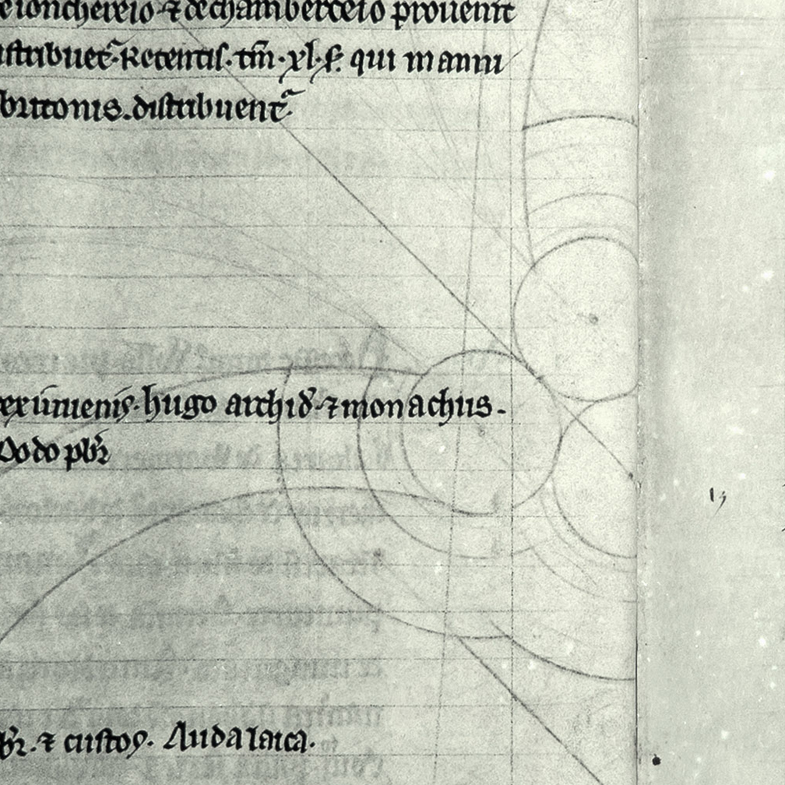
The Reims Palimpsest

Consisting of several sheets of parchment, which were used by a Gothic artist to draw various designs for church façades, choir stalls, and decorative details, the parchments were reused in a book of martyrs and obituaries from 1263 – 70. Although effaced and maltreated, the twenty parchments witness to the “Geometry of Creation”, the fashion of drawing elevations and work plans to design the new and complicated architectural forms of the Gothic style. © Archives départementales de la Marne, Reims

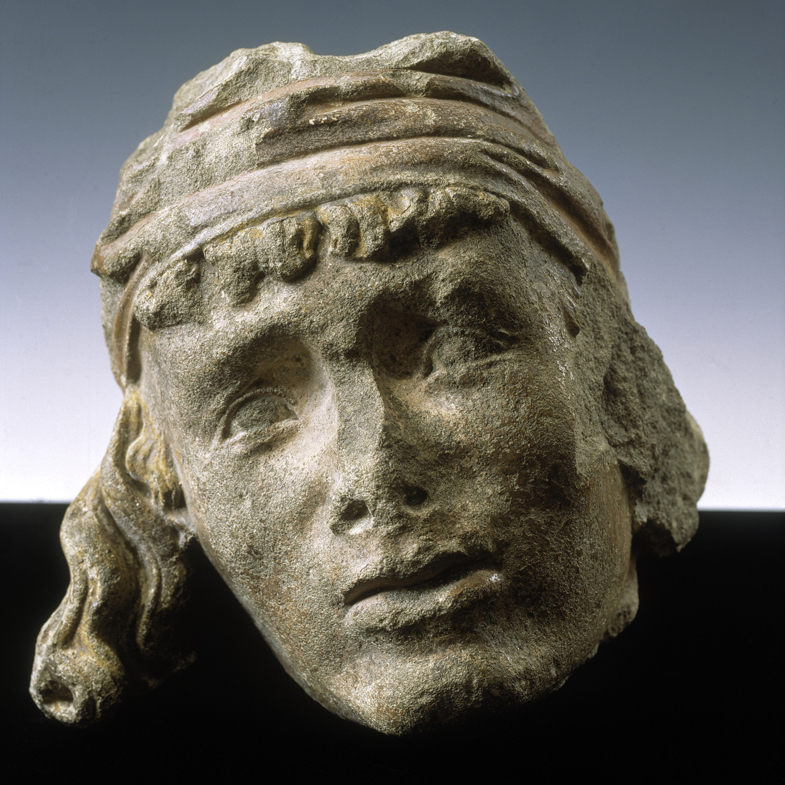
Head with a bandage (Kopf mit der Binde)

Haunting in its ephemeral beauty the sculptured head by the Naumburg Meister represents the Gothic vision of the bared soul reaching towards Heaven through the embodied pain. Discovered in the upper part of the Cathedral of Mainz in 1914, it represents the leading German artist of the early Gothic period: the Naumburger Meister. Known primarily for his lifelike mimics and plasticity of his arts, the name of the artist derives from his sculptural work in the Cathedral in Naumburg. © Copyright Bischöfliches Dom- und Diözesanmuseum, Mainz. Foto: Bernd Schermuly

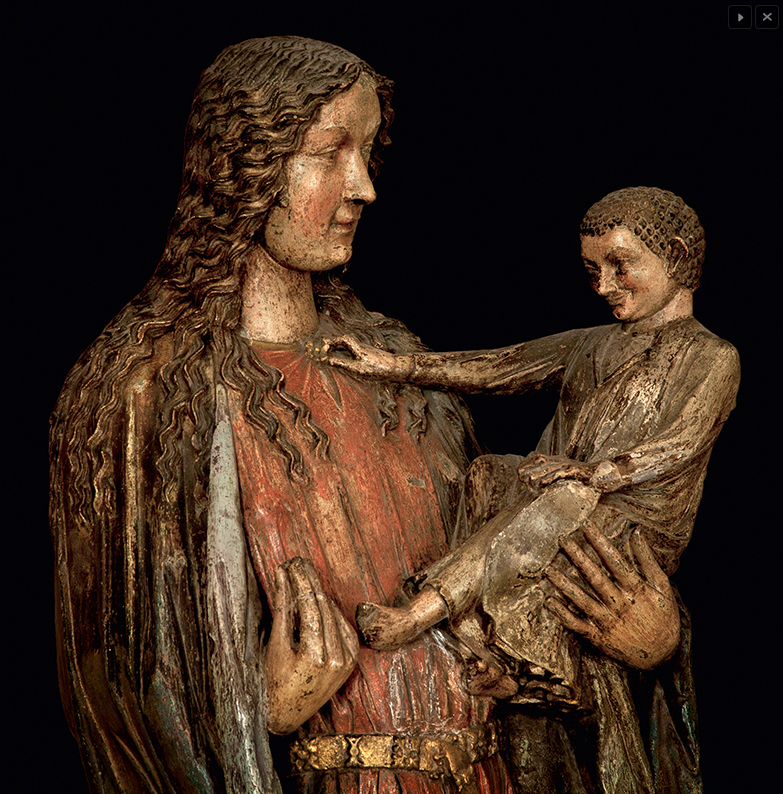
The Madonna from Fuststrasse

This sculpture was probably part of the original portal to the Cathedral in Mainz. Later, the Madonna got its name from the street, Fuststrasse, where it was located at a later date. A highly emotional bond between mother and child expressed eerily in the soft movements of their facial expressions as well as clothes and the grips of the hands, characterise the sculpture as pure Gothic. © Dom- und Diözesanmuseum Mainz, Foto: Marcel Schawe, Frankfurt a. M.

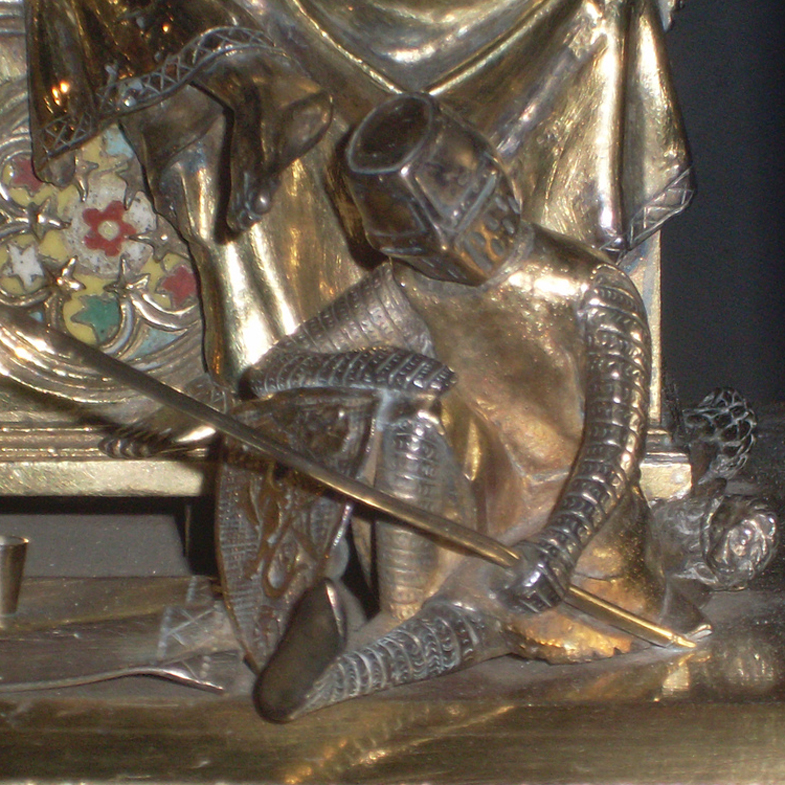
Reliquary of the Holy Grave from Pamploma

The famous reliquary is believed to have been a gift from St. Louis in connection with the marriage of his daughter, Isabel, to Theobald III, king of Navarre, in 1255. Another date proposed is 1284. The reliquary is a unique presentation of the scene at the empty grave when the women arrive early Easter morning. One of the peculiar characteristics may be seen from above. The open and otherwise empty tomb contains several relics, among them a presumed fragment of the Sudario (headcovering) of the Lord. Source: Wikipedia

Three –Tower-reliquary from Aachen

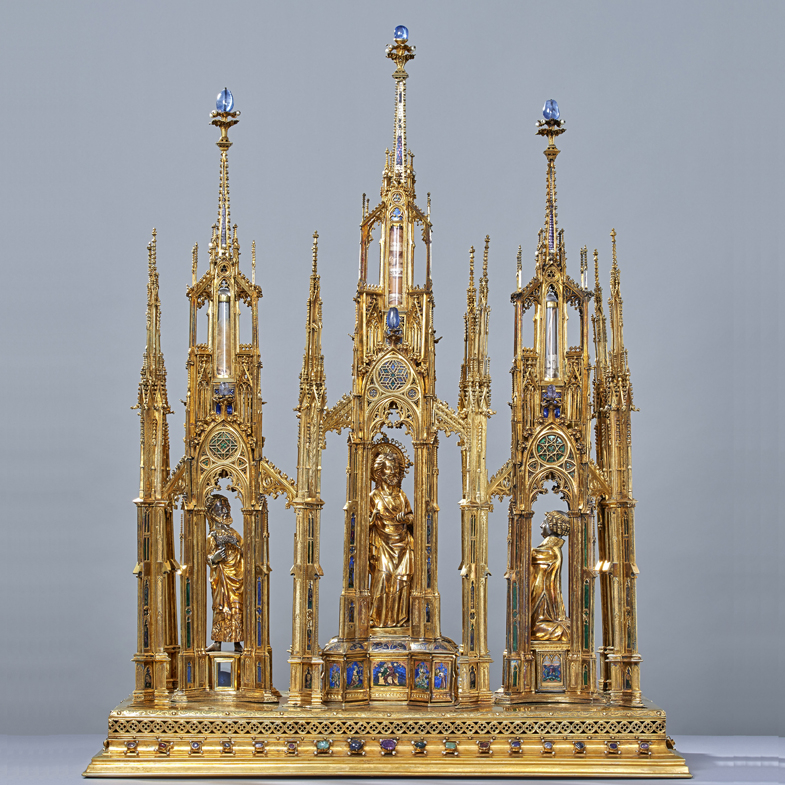
From Aachen comes the famous “Dreiturm” reliquary from c. 1370 -90. Made of chased and gilded silver, it measures nearly a meter. Central are the three towers fitted with tubes of transparent rock crystal showing off a fragment of St, John the Baptists hair-shirt, the sweat rag of Christ, and the Rod from his flagellation. Inside are the three figures of St. John, and Christ flanked by an unknown donor.© Domschatskammer Aachen, Foto: Ansgar Hoffmann, Schlangen

Diptych with Scenes from the Passion of Christ

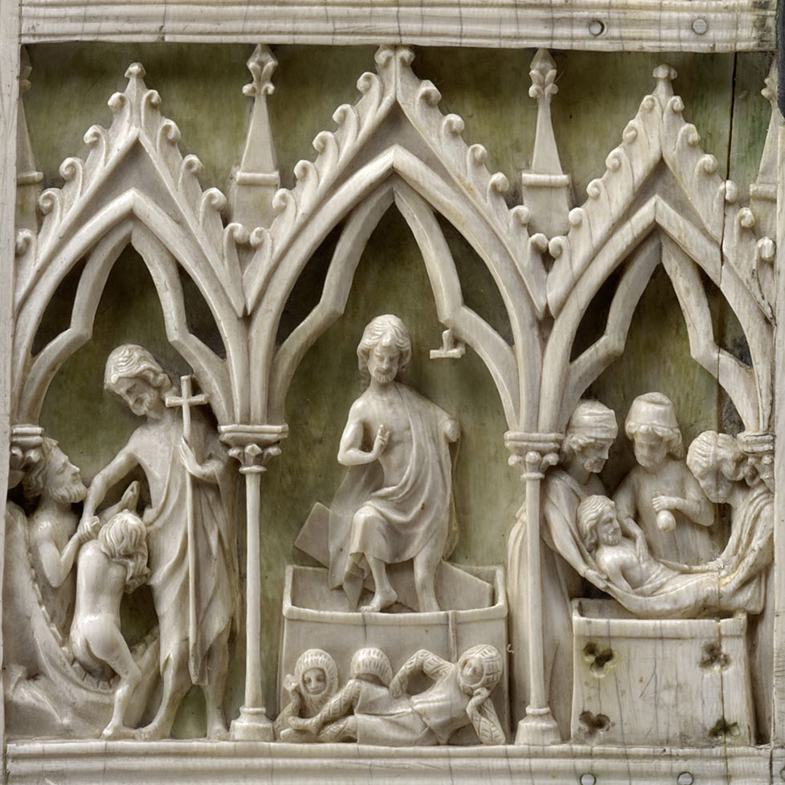
The Ivory diptych is dated to c. 1250 – 60 and was probably created at Soissons. Traces of gilding and colouring remains. It represents a typical Gothic art form, the small private alterpieces of the nobility. © Skulpturensammlung und Museum für Byzantinische Kunst der Staatlichen Museen zu Berlin – Preußischer Kulturbesitz
Foto: Antje Voigt

The Palimpsest from Reims
Kopf mit der Binde head with a bandage
Fuststrasse Madonna - detail © Dom- und Diözesanmuseum Mainz, Foto: Marcel Schawe, Frankfurt a. M.
Detail with knight from the reliquary of the Holy Sepulchre in Pamploma. Source: Wikipedia

Detail from a diptych with scenes from the Passion

VISIT:

Gotik. Der Paderborner Dom und die Baukulturerbes 13. Jahunderts in Europa

Erzbischöfiches Diözesanmuseum und Domschatzkammer
Markt 17 · 33098 Paderborn
21.09.2018 – 13.01.2019

READ:

Gotik. Der Paderborner Dom und die Baukulturerbes 13. Jahunderts in Europa

von Christoph Stiegemann
Imhof Verlag 2018
ISBN-10: 3731907348
ISBN-13: 978-3731907343


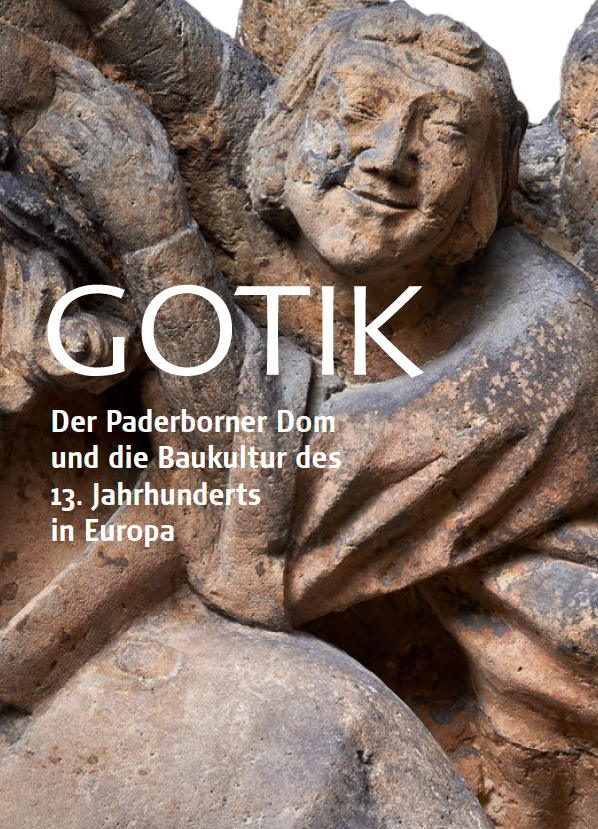
cover gothic paderbornGotik. Der Paderborner Dom und die Baukulturerbes 13. Jahunderts in Europa

Free programme and leaflet 2018


READ MORE:

Gothic Art and Style

Early Gothic Art from île-de-France 1135 – 50

READ ALSO:

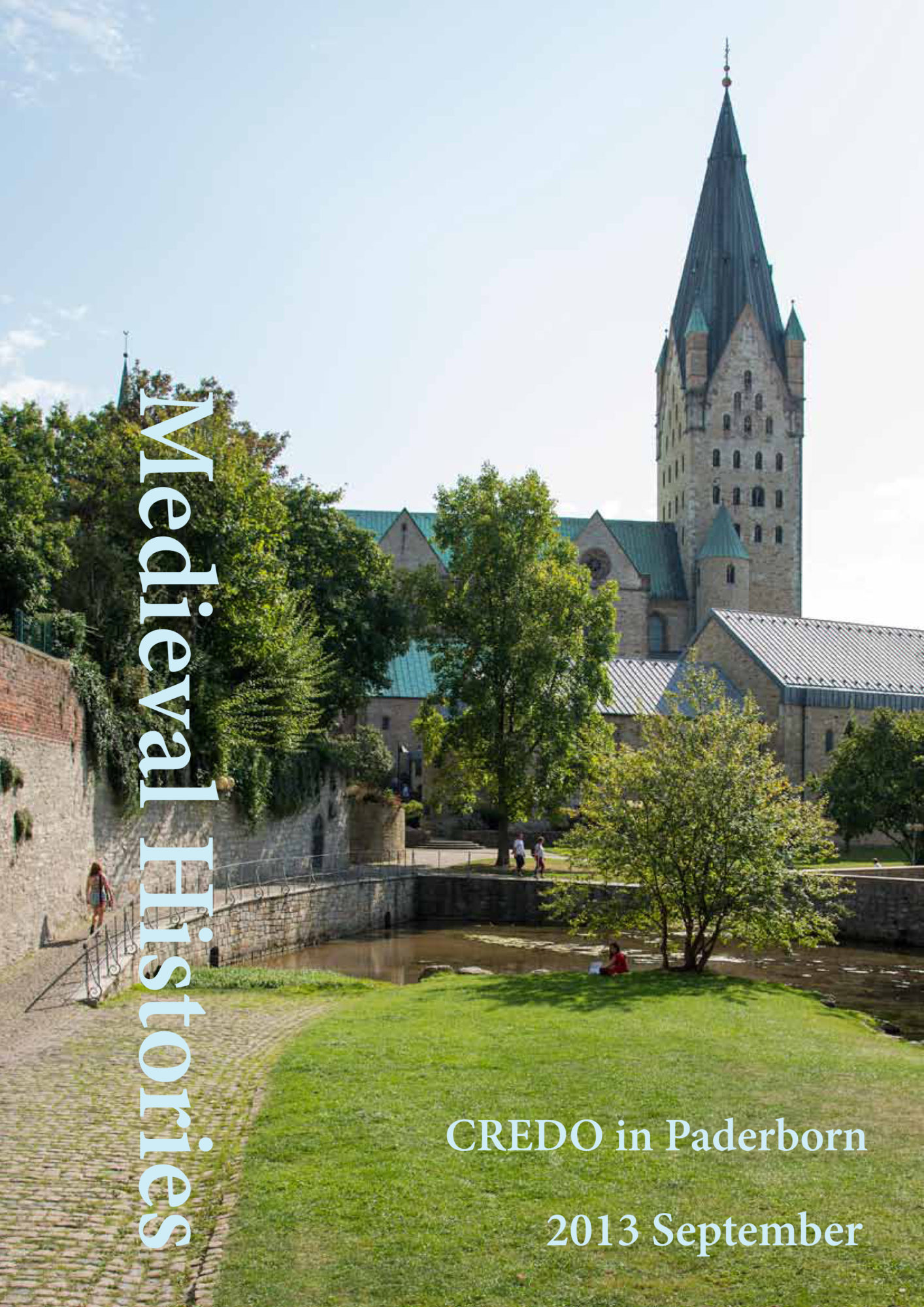
Cover Medieval Histories 2013 Paderborn

The post Gothic Art and Architecture in Paderborn appeared first on Medieval Histories.

Powered by WPeMatico
Gothic Art and Style

Architecture identifies Gothic Style. Just think of breath-taking cathedrals, mounting pillars, soaring vaults. It pays, though, to think of it as the physical expression of a special theological motive, the transgressing soul climbing through the Heavens. As such, it marked a plethora of other – minor – art forms.

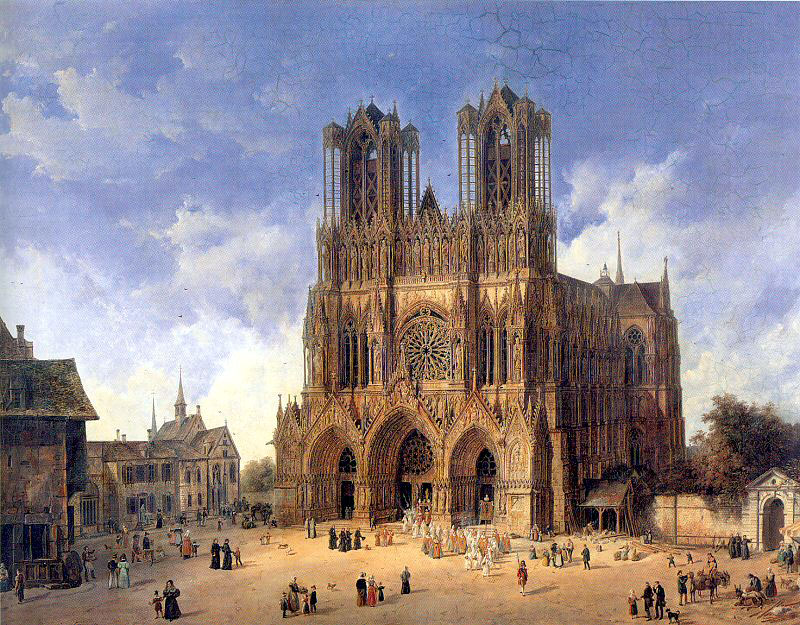
Painting of the Cathedral in Reims by Domenico Quaglio c. 1787. Notice the towering size of the edifice compared to the surrounding houses. Source: Wikipedia

Gothic architecture was the predominant art-form in 13th–15th century Europe. It arose out of the attempts of the medieval builder to lift massive masonry vaults over wide spans without causing the downward and outward pressures threatening to collapse the walls in an outward movement – such as happened in 1284 at Beauvais, when some of the vaultings in the choir fell causing an uproar in the international guild of masons; and perhaps, a turn towards less spectacular building projects. The significant constructional element in this new and innovative way of building large monuments was the invention of the ribbed vault, which was first applied in the rebuilding of the Cathedral of St. Denis in 1140. With its dispersion of the weight to the ribs, these might be supported by pillars and piers, which would replace the continuous thick walls. In between the pillars, light could be channelled through the impressive windows, graciously decorated with elaborately stained glass. The primary example of this – the Rayonnant or decorated Gothic style – is the Sainte Chapelle in Paris. With its jewel-like character, it seems to enshrine the visitor together with its most famous relic, the Crown of Thorns. Later, the style became even more flamboyant. We know this from numerous town- and guild-halls from the 15th century.

Detail from the interior of the Saint Etienne Cathedral, Beauvais, France.
Detail from the interior of the Saint Etienne Cathedral, Beauvais, France

However, Gothic cathedrals and later chapels were just one of the many Gothic pieces of art, which came to dominate the period. Reliquaries, altars, retables, tombs, fonts, pulpits, stalls, sculptures, ivories, manuscript covers and paintings as well as textiles all came to represent a kind of “micro-architecture”, typically featuring scenes framed or traced by pillars, buttresses and ribbed vaults.

Albeit these obejcts appear to have always been based on strict geometry, deft implementation of optical and colouristic elements overcame this, in the creation of micro-worlds or spectacles, inhabited by people gripped by all the spectres of emotion as may be seen in the famous Reliquary of the Holy Sepulchre from Pamplona.

We know from contracts that a dividing line was seldom drawn between metalwork, carpentry, and construction. This furthered dissemination of the artistic ideas from France and outwards to the peripheries to the north and east. As did the use of architectural drawing on parchement.

Gradually, through this diffusion of minor decorative pieces of art, Gothic also came to represent a particular idea of how to dress and comport yourself in gliding vertical movements enshrined in the tableaus of the courtly romances depicted on ivory caskets, jewellery and other objects of art.

In the end, the Gothic style gave away to the Renaissance, known to have designated the art form as precisely “Gothic”, that is quaint and barbarous.

The Idea of the Gothic

Reliquary of the Holy Sepulchre from the Cathedral in Pamploma. Source: Wikipedia

We may identify Gothic Art with cathedrals like those of St. Denis and later Reims, Amiens, Bourges, Chartres, Beauvais, Lincoln, Westminster and Cologne. The fact remains, however, that Gothic aesthetics was more visually present in the numerous pieces of decorative art as well as in literary renditions, found in poetry and novels in the later Middle Ages. We may think of the phantasmagoria of the grail and the temples erected to hide it from the unjustified. But also the rendition of the Heavenly Jerusalem in liturgies as well as in later poetry, like The Pearl. Another genre, Gothic in its inner core, is mysterious writing like “the Cloud of unknowing” offering a way into the mysterious “beyond” – through contemplation, ascension, transformation and finally transcendence and revelation.

SEE MORE:

The post Gothic Art and Style appeared first on Medieval Histories.

Powered by WPeMatico