Migration and Dialects in Northern Europe before and after the Migration Period

From the fourth to the 7thcenturies, the Germanic Languages underwent a series of rapid shifts, when the language split into a number of dialects. A new study maps the geographical routes along which these dialects spread.

In the 4thcentury – as witnessed by the Runic inscription on the golden horns from Gallehus – a linguistic unity ruled the Germanic languages in the North-West. After the migration period, however, this unity was split as witnessed by the emerging Old English and Old Frisian dialects on one hand and Continental Germanic (Old Low Franconian and Old High German) on the other. A likely explanation is the old linguistic unity was dissolved after people began to migrate.

In this process of the formation of the different Germanic dialects, Old Saxon has entertained an ambiguous position. Simply put, the new dialect shared various innovations with Old English and Old Frisian. On the other hand, it also featured traits common to Old High German. It seems, Old Saxon was a kind of bridge-builder between the shores of Frisia and the deep south-east of Eastphalia, including Merseburg and Magdeburg, the old Saxon heartland of the Ottonian and later Salian dynasties around the first millennium.

In ground-breaking new research, these shared features have been geographically mapped. This mapping shows that the distribution of the new linguistic features post-dating the migration period mirrors the traffic networks along the rivers Ems, Weser and Elbe. While the area south of the Ems turned “Franconian”, the river basins of the Weser and Elbe allowed contact between the coast and the inner parts of Saxony. It should be remembered that the area north of the Ems around Osnabrück was peaty and forested (the Teutoburger Forest). The authors conclude that although no more than approximately 40 km divided the two communicative corridors, people tended to move along the water-ways and eschew traversing the deep forests of the Teutoburger ridge and the peaty landscapes stretching from there to the north.

SOURCE:

Geography and Dialects of Old Saxon: River basin communication networks and the distributional patterns of Ingwaeonic features in Old Saxon
By Arjen Verslout and Elżbieta Adamczyk
In: Frisians and their North Sea Neighbours: from the fifth century to the viking age.
Ed. by John Hines and Nelleke IJssennagger
Woodbridge: The Boydell Press 2017,  pp. 125-148.

The post Migration and Dialects in Northern Europe before and after the Migration Period appeared first on Medieval Histories.

Powered by WPeMatico

Henry James, the Bowery, and New York Jews

by Alice Sparberg Alexiou

In 1904, at the apex of his career, Henry James came home from Europe for the first time in more than 20 years. He’d written many books—Daisy Miller, The Wings of the Dove, What Maisie Knew, Portrait of a Lady, The Golden Bowl—about his favorite subject: people like himself, genteel ex-patriots who’d embraced the luxury and ambiance of the Old World. He had looked at every facet of his obsession with Americans living abroad, and rendered their nuances into his gorgeous but often infuriating prose, with its too-long, overly embedded sentences. This was the idiom of an American writing in English, and living on the Continent. But now, James, back in the rude, fresh New World, had a whole new angle for viewing his compatriots.

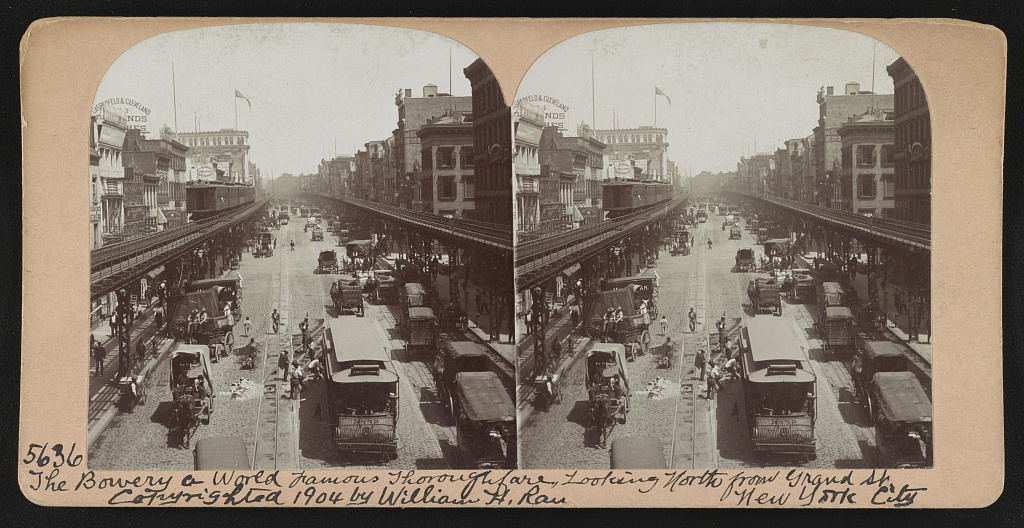
Image via Library of Congress.

He spent one year traveling around the States, giving lectures and taking lots of notes. The resulting travelogue—The American Scene, published in 1907—showed James with his famously keen eye, searching restlessly for a place in his native land to hang his hat. He’d been away for so long that you could hardly call him American anymore.

James was born in 1843 in New York to an old moneyed family. The city that he remembered from his childhood, with its gentle blocks of brownstones punctuated by the occasional church spire, was being overwhelmed by modern technology. Steel-frame structures reached to such afore-unheard of heights that a new word had to be coined for them—skyscrapers—and a brand-new underground train system was whisking people up and down the spine of Manhattan. Everywhere, buildings were being torn down and new ones erected; the noise was unbearable. Moreover, there were some five times more people living on Manhattan Island in 1904 than when James was born. At that time, the population increase came mostly from immigration, as hordes of impoverished foreigners poured through Ellis Island every day, and from there into the streets of the Lower East Side, making it the then-most densely populated place on the planet.

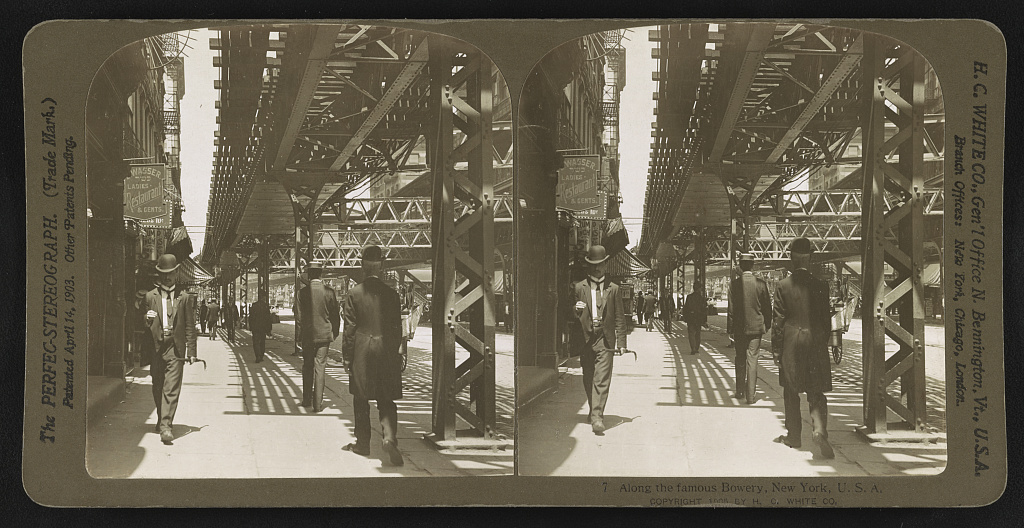
James was overwhelmed by the changes; and it was the immigrants, with their strange ways and babel of tongues, that most unnerved him. He fretted over what the word “American” even meant anymore: Immigrants, he agonized, are changing the very meaning of American-ness, the concept that has consumed him throughout his life. He was 61 when he returned to America in 1904. But at the same time, immigrants fascinated him; he tried to stop thinking about them, but he couldn’t. So he surrendered to his curiosity. The best place to observe the foreign-born, he discovered, was along the Bowery, that wide, shabby and most New York of thoroughfares (It was sooty, too, thanks to the El that screeched and roared over it, all day and night, in either direction.) The Bowery belonged to the city’s poorest denizens. On and around it, the residents—the vast majority of whome were foreigners—lived, worked, and played. James liked to observe them by riding along with them in the streetcars that traveled “the crepuscular, tunnel-like avenues that the ‘Elevated’ overarches,” as he wrote in The American Scene, p.122.

Image via Library of Congress.

“Face after face, unmistakenly, was ‘low,’” he remarked. He added that the charm that you associate with, say, Italians when you’re among them in their native country vanished when they became denizens of New York. Clearly, the Italian presence in New York—it was largely with their sweat that the New York subway tunnels got excavated—clashed with his gauzy fantasy-vision of a rich American ex-pat in Italy, a place he adored and used extensively in his writings. As for the Jews, then pouring out of boats every day by the thousands as refugees from pogroms in Russia, they offended him much more than the Italians. Walking through the clogged streets of the Lower East Side one summer evening, he marveled at how crowded it was, and, in addition, how much each denizen’s inherent Jewishness was concentrated to such a degree in each individual. The scene brought to his mind worms, creatures that, when cut into pieces, each “wriggles away contentedly and lives in the snippet as completely as in the whole. So the denizens of the New York Ghetto, heaped as thick as the splinters on the table of a glass-blower, had each, like the fine glass particle, his or her individual share of the whole hard glitter of Israel.”

Good god, Henry James, why did you have to deploy your sublimely crafted prose in the service of such awful thoughts? But like a moth drawn to a flame, he kept returning to the Bowery and the Lower East Side to observe Jews. No surprise, he found great material to write about; indeed, he devoted an entire chapter to the Bowery in The American Scene. The Bowery was lined with Yiddish theaters, and one evening, James dropped briefly into one of them—“a small crammed convivial theatre, an oblong hall, bristling with pipe and glass, at the end of which glowed for a moment, a little dingily, some broad passage of a Yiddish comedy of manners. It hovered there, briefly, as if seen through a spy-glass reaching, across the world, to some far-off dowdy Jewry.” He quickly left, but he later couldn’t get the image out of his mind.

Image via Library of Congress.

James’ visits to the Bowery corresponded to the golden age of Yiddish theater in New York. Writer Jacob Gordin was penning serious plays for such great actors as Jacob Adler, who spawned an acting dynasty, and the glamorous Bertha Kalisch, both of whom were drawing the attention of uptown critics. Then-culture vulture types were rushing down to the Bowery to see Adler and Kalisch play Shakespeare—in Yiddish—even though they couldn’t understand the language. So popular were both actors that both were offered roles, and played on Broadway, while James was in New York. Adler played Shylock—in Yiddish, since he did not know English—and Kalisch performed in Fedora, in what one newspaper called “her charmingly accented” English.

Uptown audiences were going nuts over these Yiddish stars, and this rankled James, the undisputed master of American letters.  The idea of Adler speaking Yiddish, or Kalisch her Yiddish-inflected English—as he snarkily put it, “a language only definable as not in intention Yiddish”—on the American stage felt especially intolerable to him.

Henry James returned to England in 1905. He revisited America only once more, in 1910. He became a British citizen in 1915, and died the following year. He’s one of my favorite authors—I, the granddaughter of some of those Lower East Side Jews whom James was both fascinated and repelled by. And it makes me smile to think of what the great writer would say if he knew that today, “New York” is a moniker for “Jewish.”

Visit our friends at Criminal Element for an excerpt of Alice Sparberg Alexiou’s new book Devil’s Mile, available wherever books are sold.


ALICE SPARBERG ALEXIOU is the author of Jane Jacobs: Urban Visionary and The Flatiron: The New York Landmark and the Incomparable City That Arose with ItShe is a contributing editor at Lilith magazine and she blogs for the Gotham Center. She is a graduate of Columbia University Graduate School of Journalism and has a Ph.D. in classics from Fordham University. She lives in New York.

The post Henry James, the Bowery, and New York Jews appeared first on The History Reader.

Powered by WPeMatico

The History Behind the Mystery: Maze Master

by Kathleen O’Neal Gear

A reporter once told me that our library could pass for a crime lab.  Skulls detailing the history of humanity line the shelves and perch on pedestals, beginning with a diminutive acrylic cast of Australopithecus afarensis, running through a variety of Homo erectus examples, then on to the impressive skulls of Neandertals, who had larger brains than modern humans, and finally through a selection of prehistoric human skulls from cultures around the world. The neatly defined sections of books beneath the skulls are devoted to the chronology of human evolution.  As anthropologists, my husband Michael and I are fascinated by the long journey of Homo sapiens.  The question every anthropologist wants to answer is: What are we and how did we come to be?

The Age of Genomics has significantly changed the way we answer that question.

Probably one of the most surprising revelations of the full mapping of the human genome, in 2003, was that the human body is filled with shards of ancient retroviruses.   In fact, about 8 to 9% of our DNA is composed of viral fragments, which, millions of years ago, began to infect our DNA.  How did that happen?  Retroviruses are special.  They store information in a single-stranded molecule of RNA, and when they infect a cell, they release an enzyme, called reverse transcriptase, that allows the virus to hijack our cellular machinery to copy and paste itself into the DNA of our cells.  That’s how a retrovirus begins the process of making billions of copies of itself, which makes us sick.

As more and more information about ancient genomes has come to light, it’s become clear that when modern humans left Africa and traveled to Europe and Asia around 100,000 years ago, they met and interbred with at least three archaic species, Neandertals, Denisovans, and a third unknown species.  The result is that modern non-African populations possess genes from these three species.   Like passing on a gene for eye color, those ancient ancestors passed on to us a recently active retrovirus called Human Endogenous Retrovirus K.  HERV-K for short.  They are called endogenous retroviruses because once they infect a species, their genes forever remain in that species’ DNA.

In 2012, Dr. Lorenzo Agoni, et al. discovered that HERV-K reinfected the germ lineage cells of Neandertals and Denisovans multiple times.  50,000 years ago, HERV-K’s infectious power was impressive, but over thousands of generations, these molecular fossils in our DNA have changed so much that when first discovered it was believed they were just interesting curiosities in our genome.  Extinct.  Broken.  Unable to replicate.

However, on April 23, 2015, Dr. Joanna Wysocka of Stanford University told the New York Times that she believed these fragments of HERV-K may guide the development of the human embryo. In the article, “Ancient Viruses, Once Foes, May Now Serve as Friends,” she pointed out that, for a few days, embryonic cells furiously make HERV-K.  They stop making HERV-K the instant the embryo implants in the uterus.  Why?  Has our genome tamed an ancient enemy and turned it into a helpful friend?  Or is HERV-K just a “very successful parasite”?  For example, Wysocka tried infecting embryonic cells with influenza, and those producing HERV-K were better able to resist the flu infection.  HERV-K apparently protected the cells, so it seemed to be doing something positive in human development.

On the other hand, Dr. John Coffin who studies HERV-K at Tufts University School of Medicine in Boston has documented high levels of HERV-K in many diseases, including several cancers, multiple sclerosis, schizophrenia, and possibly neurodegenerative illnesses like ALS, better known as Lou Gehrig’s disease.

So, is HERV-K a helpful friend guiding our evolutionary course through time, or the Loch Ness Monster of the human genome?

Finally, in 2016,  Coffin, et al reported in the Proceedings of the National Academy of Sciences that they had found the first intact virus in the human genome, and suggested it may have been traveling down human lineages for around 670,000 years.  Dr. Coffin said in a press release, “This one looks like it is capable of making infectious virus, which would be very exciting if true, as it would allow us to study a viral epidemic that took place long ago.”

Since genetic mutation is the toolbox of evolution, having a window into long past viral infections will also give us clues as to how HERV-K has mutated over time, and how those mutations have progressively altered the blueprint of our species.  Perhaps it will even allow us to project HERV-K’s next likely mutation.

That possibility was the inspiration for my novel Maze Master.  In the story, Dr. James Hakari is obsessed with documenting the molecular history of HERV-K and determining the next logical mutation. Will it be adaptive, helping us on the human journey or a Trojan horse that turns out to be the instrument of our extinction?  His research leads him down a viral maze into the ancient heart of HERV-K and to a startling vision of humanity’s future.  When a devastating new pandemic breaks out, Hakari disappears, and governments around the world wonder if he created the virus…or just predicted it.  Can he stop it?  They call on his former student, Anna Asher, to find him and bring him in.  But Hakari is a genius, a magician of viral geometry, finding him with the world collapsing around her is not going to be easy…

Writing Maze Master was a fascinating process of excavating the molecular past.   I hope you enjoy this science thriller.


KATHLEEN O’NEAL GEAR began writing full-time in 1986 and has over one hundred non-fiction publications in the fields of archaeology, history, writing, and buffalo conservation. She has authored several novels under her own name, and co-authored more than thirty international bestsellers with her husband, W. Michael Gear, including the North America’s Forgotten Past series (People of the LonghouseThe Dawn CountryPeople of the MistPeople of the Wolf, among others). Their books have been translated into twenty-one languages.

The post The History Behind the Mystery: Maze Master appeared first on The History Reader.

Powered by WPeMatico

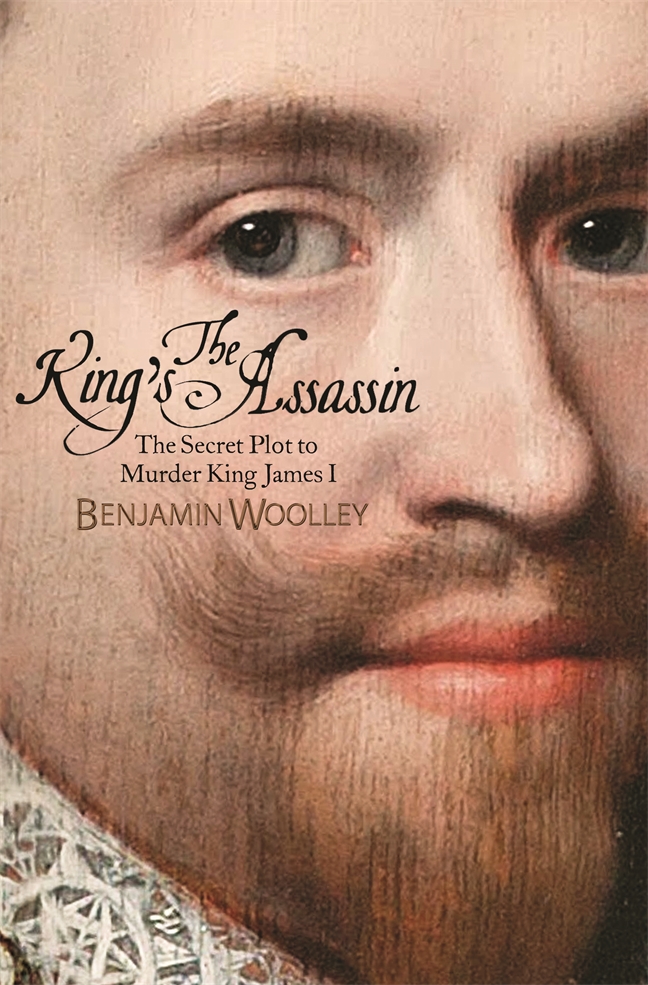
The Secret Plot to Murder King James I

by Benjamin Woolley

The rise of George Villiers from minor gentry to royal power seemed to defy gravity. Becoming gentleman of the royal bedchamber in 1615, the young gallant enraptured James, Britain’s first Stuart king, royal adoration reaching such an intensity that the king declared he wanted the courtier to become his ‘wife’. For a decade, Villiers was at the king’s side–at court, on state occasions, and in bed, right up to James’s death in March 1625.

Almost immediately, Villiers’ many enemies accused him of poisoning the king. A parliamentary investigation was launched, and scurrilous pamphlets and ballads circulated London’s streets. But the charges came to nothing and were relegated to a historical footnote.

Now, new research suggests that a deadly combination of hubris and vulnerability did indeed drive Villiers to kill the man who made him. It may have been by accident–the application of a quack remedy while the king was weakened by a malarial attack. But there is compelling evidence that Villiers, overcome by ambition and frustrated by James’s passive approach to government, poisoned him.

In The King’s Assassin, acclaimed author Benjamin Woolley examines this remarkable, even tragic story—keep reading for an excerpt.

* * * * *

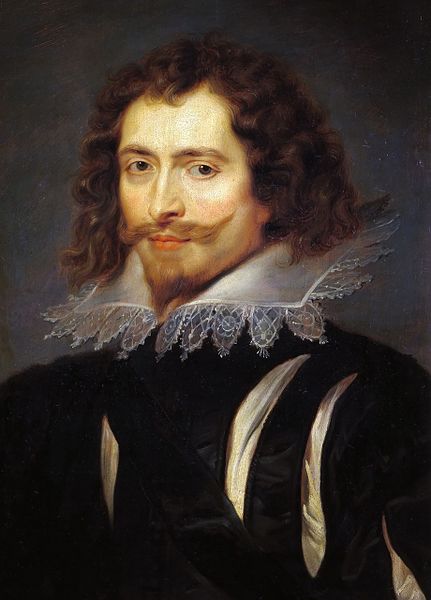
His charcoal moving across the paper in graceful arcs and sweeps, Peter Paul Rubens put the finishing touches to his sketch of George, being careful to capture the lively frizz of the duke’s long hair. He paid close attention to his eyebrows, delicately delineating each strand to emphasize their shape, and finished off the mustache with touches of a tawny-red chalk to catch the coloring. He tinted the lips with the same color, giving them the sort of full, rounded quality that came to be known as ‘Rubenesque’.

The irises of the eyes, which looked slightly askance at him, were filled in with cross-hatching and a light smudging of the chalk. A circle was drawn around them to give them definition. Rubens picked up a pen, dipped it into an inkwell, and marked a sharp punctuation point in the center of each eye, bringing a startling intensity to the duke’s gaze.

George Villiers, 1st Duke of Buckingham, attributed to Peter Paul Rubens (1577–1640). Image is in the public domain via Wikipedia.

The sketch was to form the basis of two new commissions from George for an equestrian portrait that would become the centerpiece of the main reception room in York House, and a ‘plafond’ or ceiling painting, for his bedchamber.

Rubens had already been given a commission to work on pictures to decorate the new Banqueting House in London, but there had been a dispute over the quality of the work he had produced, which turned out to be by his studio staff rather than his own hand. He had been forced to take it back and offer a replacement. Here was his chance to redeem himself.

George had seen Rubens’s work in Madrid, including a magnificent portrait of the Duke of Lerma in full armor mounted on a white steed, a military treatment which captured with vivid intensity the subject’s majestic confidence and power. That was the sort of quality the artist was now expected to reproduce for George. The plafond was to represent George’s astonishing social ascent using a classical theme. He would be featured in an almost Christ-like pose being conducted up to a temple in the heavens by Mercury and Minerva, with the figure of Envy pulling at his ankle, and a lion representing Anger threatening to bite his foot. A considerable fee of £500 had been agreed for the works – nearly twice the price the almost bankrupt duke had paid for Titian’s Ecce Homo.

Rubens was seated with a bandaged foot, a cobbler having wrenched it fitting a boot. As he sketched they talked. He was a diplomat and politician as well as a sought-after artist, a devout Catholic who acted as a confidential advisor and agent of Archduchess Isabella, governor of the Spanish Netherlands and aunt of Philip IV of Spain. A meeting with George provided him with a chance to size up a significant political figure, and one of the archduchess’s main antagonists.

They talked about the need for peace between religions as well as nations, Rubens later recalling the duke as showing a ‘laudable zeal’ for the ‘interests of Christianity’. Rubens had heard the military threats that had accompanied James’s final weeks, and expressed the hope that, now Charles was securely installed on the throne, his father’s more peaceful approach to diplomacy might be revived, focused on preventing rather than stirring up war, the ‘scourge from Heaven’.

Yet from behind the easel, the shrewd eye of the artist could see little to reassure him. George’s expression has both a relaxed and threatening quality to it, a suggestion of what Rubens later characterized as ‘caprice and arrogance’. The hint of a smile could be misleading, as an upward curve at the corners of the mouth was exaggerated by the flick of the long whiskers of his mustache. He emanated a vitality that teetered between the tragic and the heroic, the mercurial resolve of a man who had everything and nothing to lose. ‘He seems to me forced by his own daring either to triumph or to die gloriously,’ Rubens would recall.


Benjamin Woolley is an author and broadcaster whose work covers subjects ranging from the origins of virtual reality, to the Elizabethan philosopher, scientist and conjurer John Dee, and from the mathematician and computing pioneer (and daughter of Lord Byron) Ada Lovelace to the history of colonial America. His books, including The King’s Assassin, have been translated into German, Italian, Spanish, Japanese and Chinese, and his documentaries broadcast across the world. He lives in London.

The post The Secret Plot to Murder King James I appeared first on The History Reader.

Powered by WPeMatico

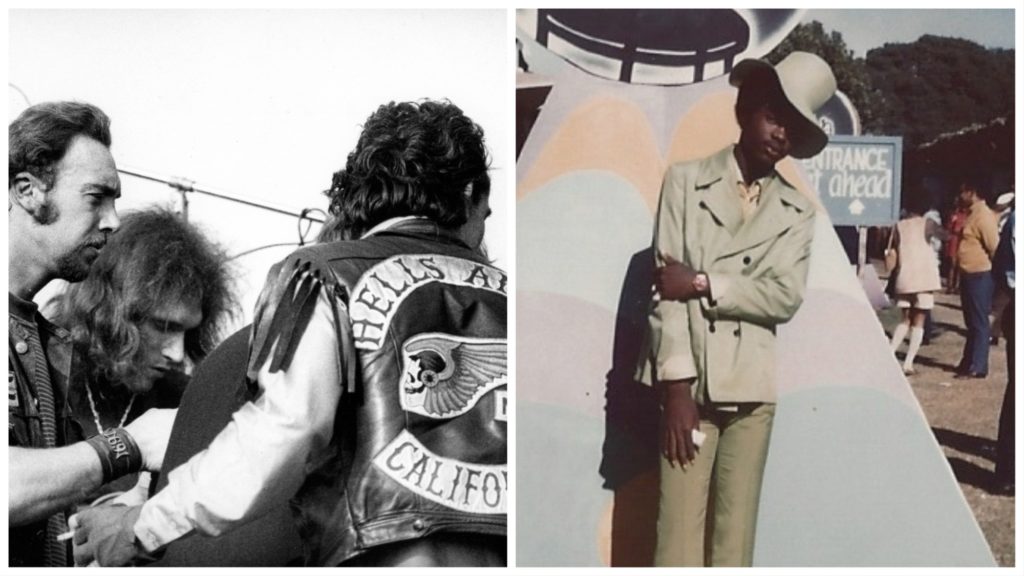
The Hells Angels’ Role at Altamont

by Saul Austerlitz

Puttering in mostly unnoticed among the stream of vehicles making their way onto the speedway grounds, a tan school bus crammed full of young men parked just behind the stage. From the exterior, this bus hardly differed from any of the other ramshackle vehicles to have arrived at Altamont that day. But unlike the majority of people attending, the men in the dun-colored bus had come to do a job. They were bikers, and the bus was owned by the San Francisco chapter of the Hells Angels. The vehicle containing the bulk of the security staff for Altamont rolled to a halt about one hundred yards away from the stage. The remainder of the Angels rode their Harleys—some solo and some with female passengers clinging to their backs—right up to the lip of the stage. The crowd frantically scattered out of the way of the sputtering motorcycles.

When the Hells Angels rode in to a new destination, they always followed a distinct pecking order. The full-fledged members would roar in on their motorcycles first, with the prospects, associates, and assorted hangers-on bringing up the rear. What was true of their entrances was true of all the bikers did. The members would always lead the way. The others, particularly the prospects who hoped to curry enough favor to join the club, would always follow the lead of their superiors.

There would be little oversight of the Hells Angels at the start of the concert, either from the festival staff or the Angels’ leaders. Few, if any, bikers present would be concerned with the long-term reputation of the Hells Angels, and how the broader public might perceive their actions. Oakland Angel chief Sonny Barger, perhaps the most respected (and feared) of the Bay Area Angels, was absent at the start of the concert, attending an officers’ meeting along with numerous other high-ranking Hells Angels. In their absence, the Angels dispatched many of their younger and more spirited members, along with prospects intent on proving their mettle under battle conditions.

On this day, there were approximately twenty or twenty-five Hells Angels present, with another few dozen prospects and hangers-on with them. The prospects, in particular, knew that the best way to win the Angels’ acceptance was with a demonstration of their unyielding toughness. With little police presence at Altamont, and almost no security presence besides the Hells Angels, bikers had carte blanche to strong-arm the audience. And as fans kept pushing forward from the back, those up front would get dangerously close to the Hells Angels and their motorcycles.

Three hundred thousand people arrived at Altamont over the course of the morning and early afternoon, and the only protection they had from chaos was itself fomenting that very same chaos. There was no visible police presence, and little security beyond the Hells Angels, who, whatever services they might have provided in the past, were clearly uninterested in keeping the peace at Altamont. As the Angels took their places, a huge contingent of fans was attracted, as if by invisible magnets, into close proximity to the bikers, near the lip of the stage. They were impelled by an unconscious desire to be as close as possible to the Rolling Stones, and by the layout of the speedway itself. Everyone crept closer and closer, and for the people at the front, there was nowhere to go.

The raceway was enormous, and the stage tiny in comparison. From a distance, the figures on the stage were hardly more than dots, and fans who had made the trek from the Bay Area wanted to come home with firsthand reports of having seen Mick Jagger in the flesh. They began to push in. The fans already standing near the front were crunched ever closer to the stage. A tight-knit crowd became standing-room-only, and standing-room-only became not quite enough room to stand.

Some onlookers thought the whole scene resembled a New York subway car at rush hour. There you were, holding on to a strap, breathing in the fumes of someone’s wet armpits, and convinced it could not possibly get any more crowded. There simply was not room for another human being in this car. Then the train stopped at the next station, and another crush of human beings shoved their way on. Then the same scene repeated at the next stop, and the one after that. The fifty or sixty yards nearest the stage rapidly transformed into a carpet of people, a breathing mass of undifferentiated humanity too crammed together to separate. It was terrifying to be so closely packed in, to have one’s well-being be so thoroughly at the mercy of the crowd.

From the moment of the Angels’ arrival, violent conflicts broke out everywhere. Wherever bikers were, violence spontaneously erupted. If you asked the bikers themselves, they would tell you it was because their reputations preceded them. Everywhere they went, there would be someone with a hard-on for a biker, intent on kicking some Angel ass so they could go home and brag to all their friends. Detractors might argue that the bikers themselves treated violence as a blunt instrument, capable of dealing out punishment, retribution, or a much-needed lesson after a perceived infraction. Altamont was no dif­ferent. Bikers grabbed women by the hair and assaulted them. They spotted attractive women in the crowd and yanked them up forcibly to the top of their bus. They snatched cameras out of fans’ hands and ripped out the film after being photographed without their permission. They threatened to kill concertgoers who accidentally stepped on their fingers. The bikers had established a closed system in which they were simultaneously the criminals and the police force tasked with preserving order. Those looking for justice would find nowhere to turn other than to those who had violated their trust.

Five-foot-seven and 175 pounds, all muscle from his day job as a roofer, “Hawkeye” came with three knives and a .22 revolver, in the mood to party and only too glad to hassle anyone who got in the way of his fun. Hawkeye and his friends from another motorcycle group, the Sons of Hawaii, had come with a fistful of counterfeit $20 bills they had printed at a local copy shop, planning to use them to buy drugs from sellers in the crowd. Upon arrival at Altamont, they realized there would be no need for such elaborate chicanery. He and his friends would steal money and drugs from those displaying their stashes or their bankrolls, and then violently manhandle them when they complained. The victims would almost inevitably head off to find their friends, and when they came back, spoiling for a fight, Hawkeye and his friends would beat them once more. The victims were scared, and desperate for a security presence to resolve the situation, but no authority was higher than that of the Hells Angels. Hawkeye didn’t worry about their complaints, or even their fitful attempts to get rough. Unless they came back with an army, they would have no chance at all. He and his friends were pushing people around, kicking ass, and stealing girlfriends, and having the time of their lives doing it.

The only thing missing for Hawkeye and his friends was a pad and a pencil. There were so many free-love girls there, all flashing their breasts and flirting outrageously with the bikers, that he later wished he had gotten some of their numbers for later use. This was a party, and they were the guests of honor. They never wanted it to end. Hawkeye and his friends felt free, unquestioned, even loved. They tossed some overzealous band handlers off the stage, and basked in the glow of the audience’s pleasure at seeing this literal leveling. The whole crowd laughed with them, or at least it felt that way for these young men, high on crank—a variant of methamphetamine— and their own authority.

Four or five plainclothes Alameda County sheriffs stood around backstage, their weapons in their holsters. After intervening in one of the early fights between the Hells Angels and fans, they took note of how thoroughly outnumbered they were, and thereafter ceded the field to the Angels. Few fans or performers saw them for the remainder of the day.

The counterculture saw the Hells Angels as they wanted to see them, turning a blind eye to their professed love of violence, their misbegotten politics, and their outright racism. That alliance was in the process of breaking down this Saturday, shattered by the overly ambitious professional demands imposed on the Angels, and a creeping rage toward the music-loving masses.

The bikers’ ferociousness, and their remarkable sense of cohesion, made for a notable contrast with the idealism of the crowd they patrolled. The counterculture believed itself to be an organized mass, intent on fomenting change in the United States: ending a war, returning power to the people. But seeing the Hells Angels was a reminder of the counterculture’s limitations, embodied in the actions of their foes.

The Angels were violent authoritarians in the guise of bikers, intent on imposing their will on an unruly crowd. They were also a cohesive unit, acting in unison. The Angels had determined who would run Altamont, and what was and was not permissible there, and no one would be permitted to question the new order. This was the day’s new reality. The counterculture spoke of unity, but the Hells Angels lived it. It was so powerful in action that it could hold hundreds of thousands in its thrall. What good was a peace sign against someone wielding a pool cue?

Some of the Angels approached Sam Cutler, guiding the action onstage, looking for guidance about how to handle unruly crowd members. This rushed tête-à-tête only further underscored the differences between Altamont and previous concerts, in which the Angels had putatively provided security but rarely interacted with the crowd. “We don’t give a fuck,” Cutler bluntly told the Angels. “Just keep these people away.” Whether or not the Stones and their representatives knew what they were doing in hiring the Hells Angels, they had now given them explicit authority to manhandle the crowd. Passive negligence regarding the show’s security had now become, due to the disinterest of the Rolling Stones and their handlers, an active policy of violence and domination. The Angels were now patrolling deeper into the crowd, targeting the 18-wheelers that had been parked next to the stage. The Angels seized fans sitting atop the trucks and flung them off, a dozen or more feet down to the hard ground.

To continue reading how the Hells Angels were involved in the tragedy at Altamont, pick up Just A Shot Away by Saul Austerlitz.


SAUL AUSTERLITZ has had work published in the LA TimesNY TimesBoston GlobeSlate, the Village VoiceThe New Republic, the SF ChronicleSpinRolling Stone, and Paste. He is the author of several previous books, including Money for Nothing: A History of the Music Video from the Beatles to the White Stripes. He lives in Brooklyn.

The post The Hells Angels’ Role at Altamont appeared first on The History Reader.

Powered by WPeMatico

Magical Unicorns at Musée de Cluny

Musée de Cluny opens again after a major renovation with an exhibition on Magical Unicorns from the Middle Ages and later

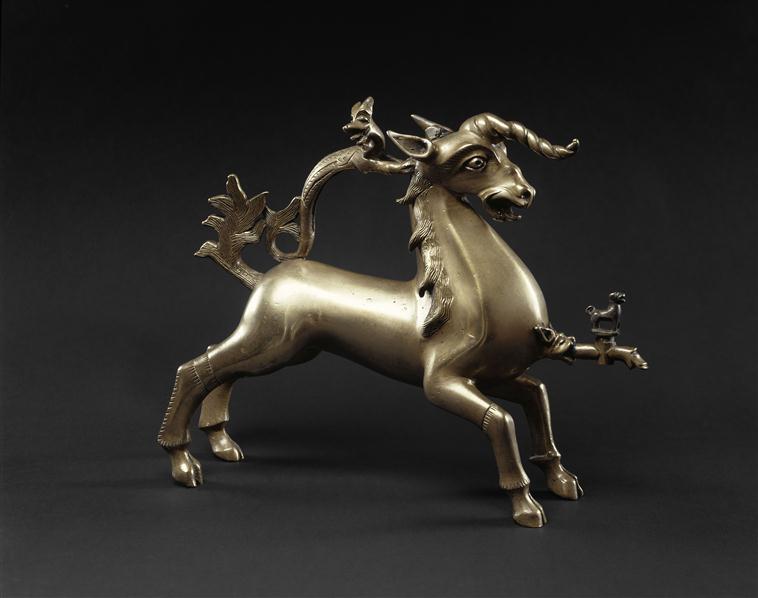
Aquamanile © Réunion des Musées Nationaux-Grand Palais

Musée de Cluny is the only museum in Europe, solely dedicated to the Middle Ages. After major renovations, it opens this weekend with an exhibition on magical unicorns

One of the most famous objects preserved in the collections of the Musée de Cluny in Paris are the six Unicorn Tapestries. To celebrate this unique treasure, recently on loan to Sydney, as well as the reopening of the museum after a major renovation, we are treated to a fine exhibition on “Magical Unicorns”.

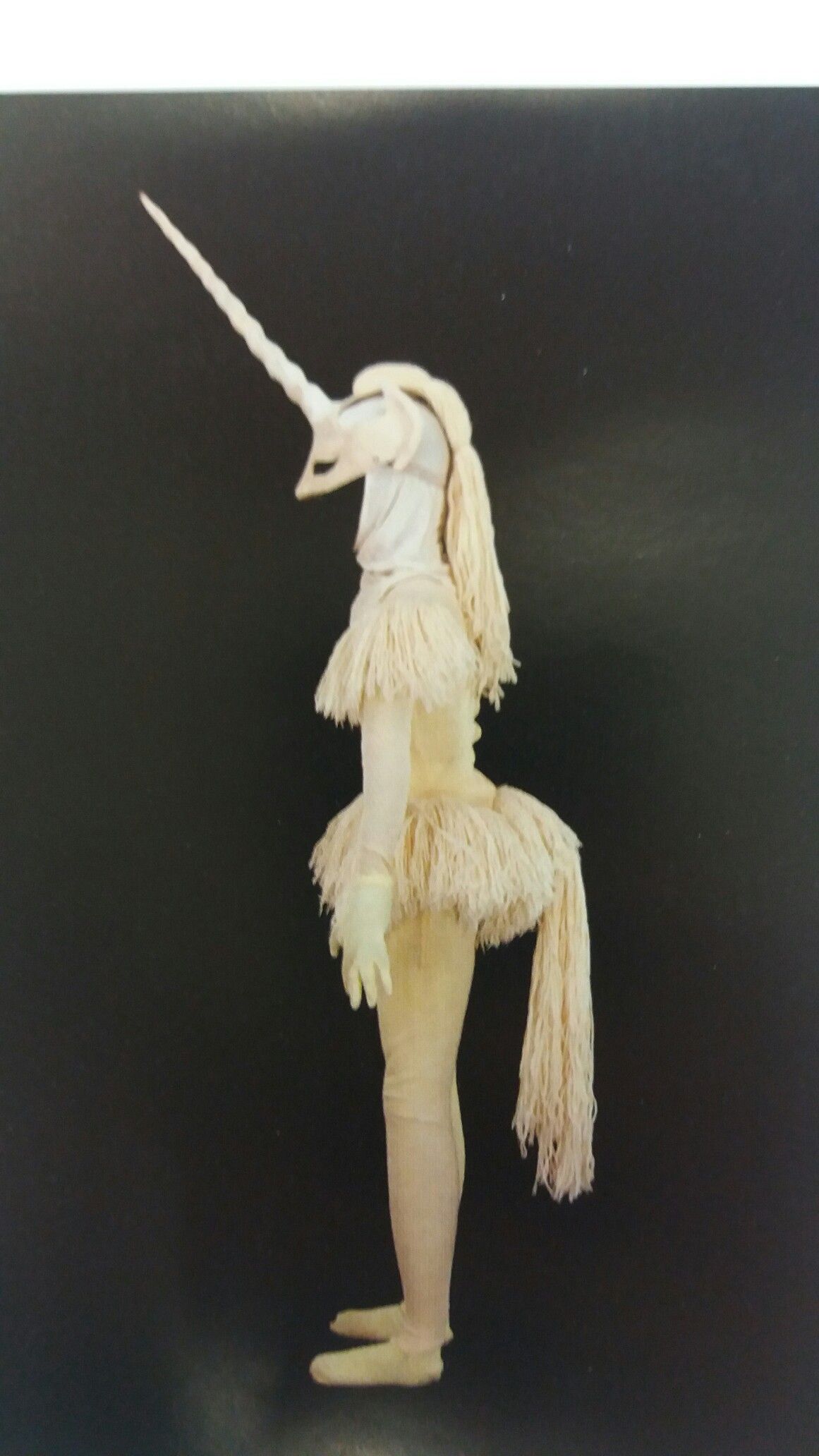
Costume de la licorne by Jean Cocteau

Throughout history, the mysterious, enigmatic and tantalising unicorns have ignited the fantasy of artists as well as common people. In antiquity, unicorns were considered fabled creatures living in India. It is likely, they were inspired by the rhinoceros. Later, in the Middle Ages, the creature turned into a mythical beast, which featured as the incarnation in an allegory where the animal sees the maiden alias the Virgin Mary and lays its head in her lap and falls asleep. Later, the allegory was extended by French troubadours such as Thibaut de Champagne and Richard de Fourneval, who reworked the myth as a love story, emblematic of chaste love and faithful marriages. One central motive was the entrapment of the unicorn by a virgin. As such, the unicorn entered the emblematic world of heraldry and coats of arms.

In the Middle Ages tusks of narwhals were peddled as horns from the Unicorns and were highly prized. Apart from pieces of art, they were used for cups, as the horns from unicorns were believed to neutralize poison. It was not until the 17thcentury, this myth was publicly punctured by a Danish scientist, Ole Worm.

At the centre of the exhibition, we find the six tapestries from c. 1500, which the Museum acquired in 1882. Discovered in 1841 at the Boussac Castle, they were slowly composting from damp and mould. After careful conservation, though, they were returned to a part of their former glory. This inspired numerous artists as Gustave Moreau and le Corbusier as well as well as a ballet by Jean Cocteau.

The exhibition not only features medieval pieces of art celebrating the Unicorn, but also modern renderings of the myth in the form of paintings, posters, videos and the original costumes created by Cocteau. It ends with a series of five new tapestries by Claude Rutault.

VISIT:

Magiques Licornes
Musée de Cluny
6 place Paul Painlevé 75005 Paris
24.07.2018 – 25.02.2019

Tenture de la Dame à la Licorne
A special website dedicated to the Lady of the Unicorn tapestries

Bestiaire a BnF
La Licorne

READ MORE:

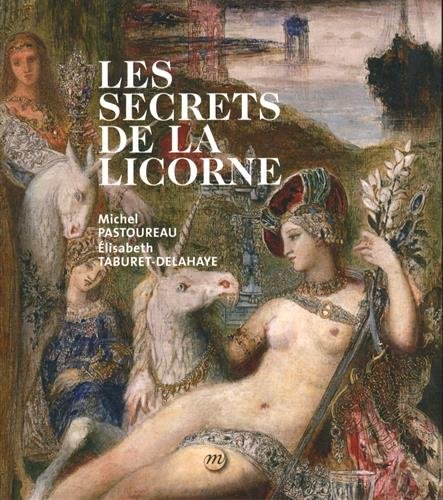
les secrets de la licorne coverLes secrets de la licorne
By Elisabeth Taburet-Delahaye and Michel Pastoureau
RMN-GP 2018

La dame à la licorne
By Elisabeth Taburet-Delahaye and Béatrice de Chancel Bardelots.
RMN-GP 2018


Collection: Musée Gustave Moreau, Paris

Image rights: © RMN-GP / René-Gabriel Ojéda


The post Magical Unicorns at Musée de Cluny appeared first on Medieval Histories.

Powered by WPeMatico

Minor Medieval News July 2018

Ever so often we stumble on some minor medieval news which does not merit a full article, but nevertheless, deserves a short notice.

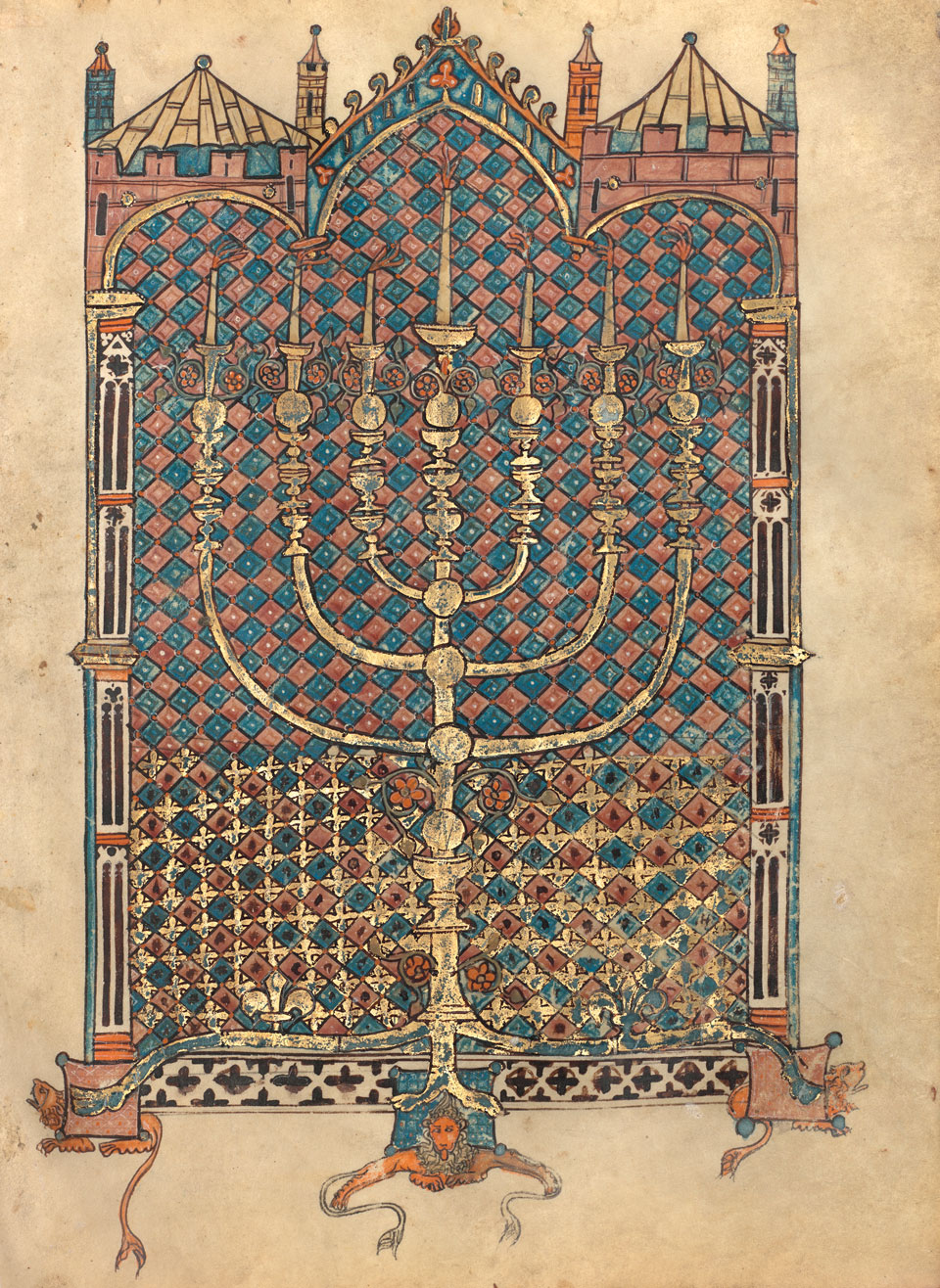
J. Paul Getty Museum announces the landmark Acquisition of a Medieval Hebrew Manuscript, the Rothschild Pentateuch

The Rotschild PentateuchThe Rothschild Pentateuch is one of the most elaborate illuminated Hebrew Bibles to survive from the Middle Ages. The manuscript (Ms. 116 (2018.43) dates from 1296 and is one of the most spectacular Hebrew manuscripts to become available in more than a century.

Created by an unknown artist and dated 1296, the manuscript’s pages are filled with lively decorative motifs, hybrid animals and humanoid figures, and astonishing examples of micrography–virtuosic displays of tiny calligraphy in elaborate patterns and designs. The vibrant colours and gleaming gold distinguish this manuscript from most medieval Hebrew book production, which followed a largely textual tradition. It stands apart from other medieval examples through the appeal and extent of its illustrated program. The text contains features that indicate it may have been written in France for Jewish emigres who had been expelled from England in 1290. The illumination was likely completed in France or Germany…

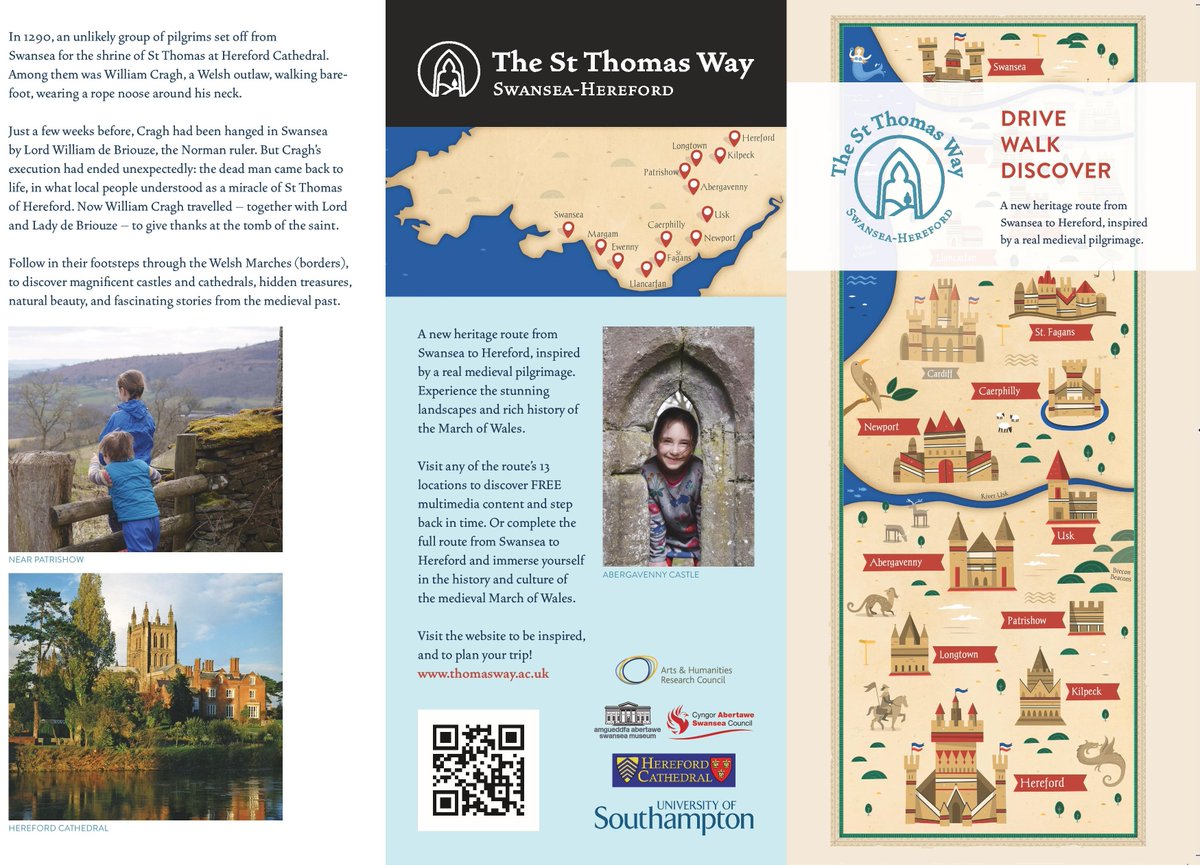
Research brings medieval pilgrimage back to life

Brochure for the st. Thomas Way © Hereford CathedralMedieval scholars at the University of Southampton are helping visitors to the Welsh borders follow in the footsteps of a medieval outlaw and explore the historic route of a remarkable pilgrimage. A new trail is being launched, inspired by the journey made by William Cragh, who was hanged in 1290 but seemingly, miraculously came back to life and then went on a pilgrimage, accompanied by the Norman Lord who’d tried to execute him…


Save

Save

Save

Save

Save

Save

Save

Save

Save

Save

Save

Save

Save

Save

Save

Save

Save

Save

Save

Save

Save

Save

Save

Save

Save

Save

Save

Save

Save

Save

Save

Save

Save

Save

Save

Save

The post Minor Medieval News July 2018 appeared first on Medieval Histories.

Powered by WPeMatico

Cherven Towns – a Medieval Polish Settlement from the 10th century.

Cherven Towns was a fortified settlement located on the frontier between Lesser Poland and Rus (Ruthenia). Fought over since at least the late 10thcentury, archaeological explorations of the region was hampered by the two world wars. Only recently a more scientific exploration has been undertaken.

“Vladimir marched upon the Lyakhs and took their cities: Peremshl, Cherven, and other towns, all of which are subject to the Rus even today” (AD 981).
As quoted in Woloszyn 2016, p. 692)

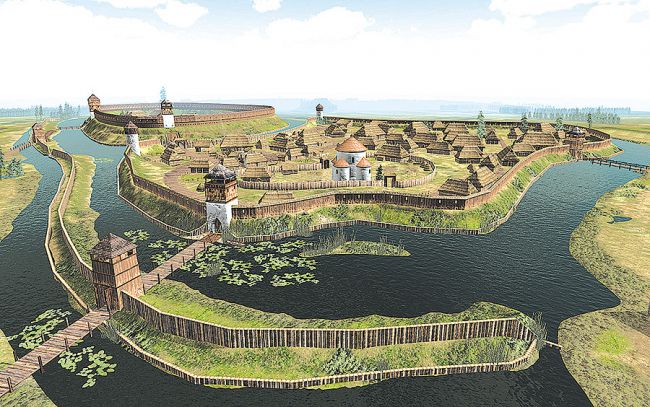
Reconstruction of Cherven (Czermno)
Reconstruction of Cherven (Czermno). See video below.

Although Cherven Towns, an area in the south-eastern corner of present-day Poland, was already settled in the Avar period, its major role seems to have played out as a fortified stronghold in the skirmishes between Kiev and the Piast dynasty, which was consolidating its grip on Poland in the 10thcentury. It continued to be fought over, until its destruction in the 13thcentury by the Mongols

It is believed that Cherven had its urban fortified centre at present-day Czermno in the Tomaszów Lubelski district and that it was located in a marshy area at the confluence of the rivers Huczwa and Sieniocha, which feed the river Bug, present-day border between Ukraine and Poland. Now drained, the area presents itself as a flat and fertile landscape. At the turn of the first millennium, though, it was a humid and damp place holding a large fortress with open settlements nearby. The area covers c. 75 – 150 hectares.

The current study of the Cherven Towns is being carried out by a cooperation between the Leipzig Centre of the History and Culture of East Central Europe, The Institute of Archaeology and Ethnology at the Polish Academy of Sciences in Cracow-Warsaw, the Institute for Archaeology at the University of Rzeszów and the Institute of Archaeology at the Marie-Curie-Sklodowska University in Lublin. The aim is to review earlier finds and unpublished reports as well as carry out the wider area and geographical context. The project is called “Cherven Cities – the golden apple of Polish archaeology” and a website is currently under construction.

Ramparts and Hoards

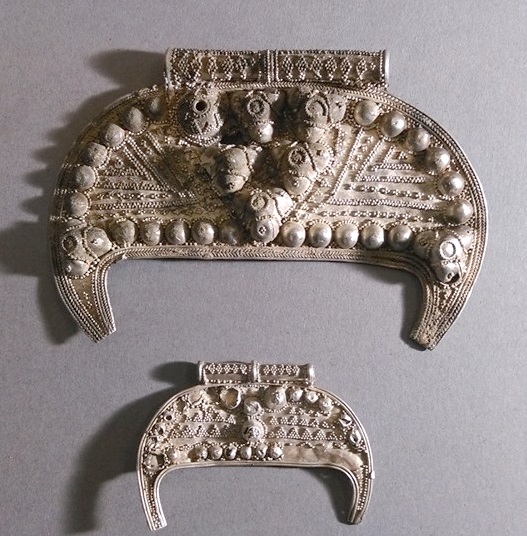
Lunule from hoard from late 10th century found at Cherven. Source: wikipedia
Lunule from hoard from late 10th century found at Cherven. © Regional Museum in Tomaszów Lubelski

Of primary importance is the dendrochronological dating of the remains of the ramparts as well as the timber pathways laid out to facilitate communication through the swamp and marshes surrounding the fortress.

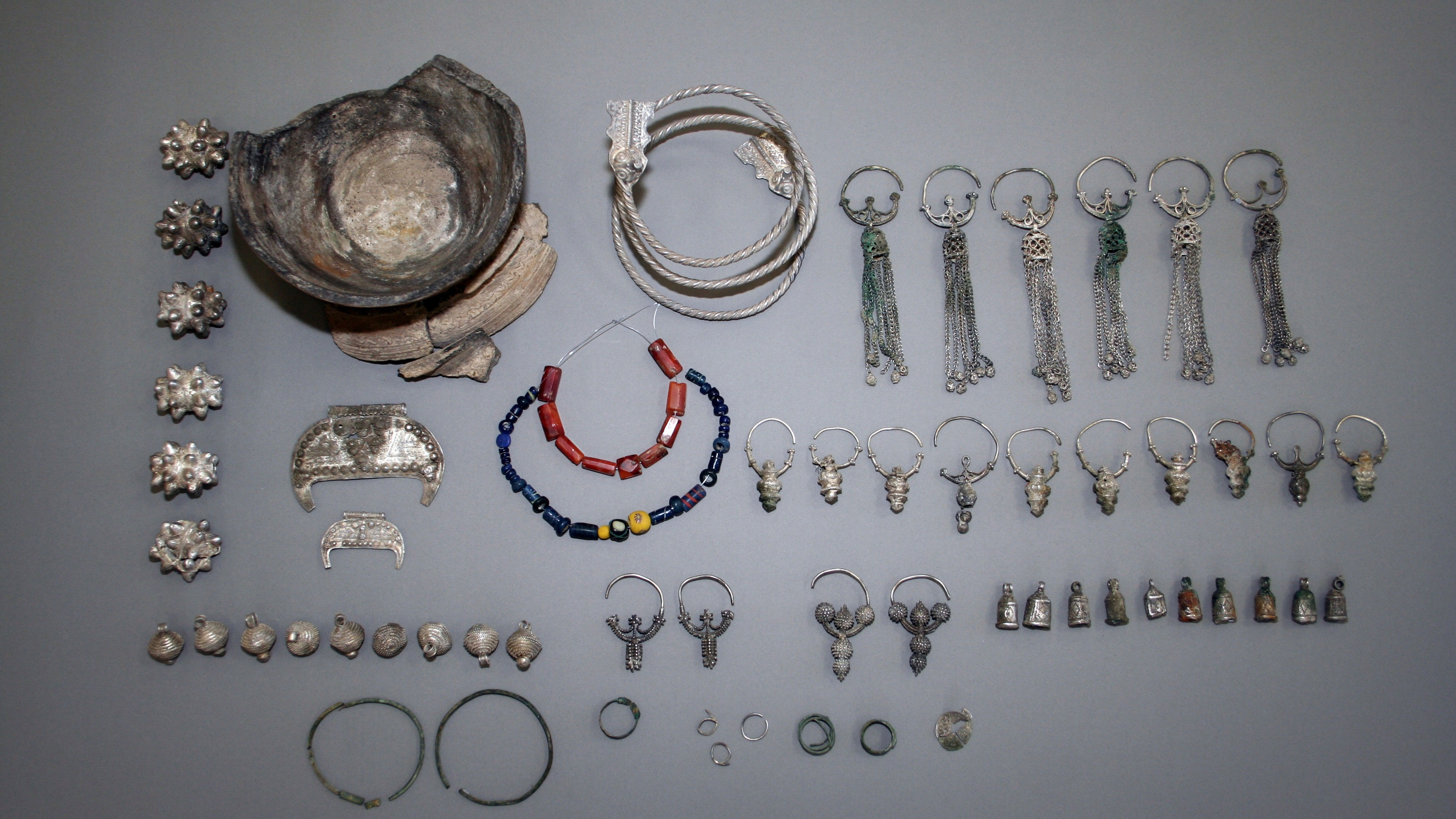
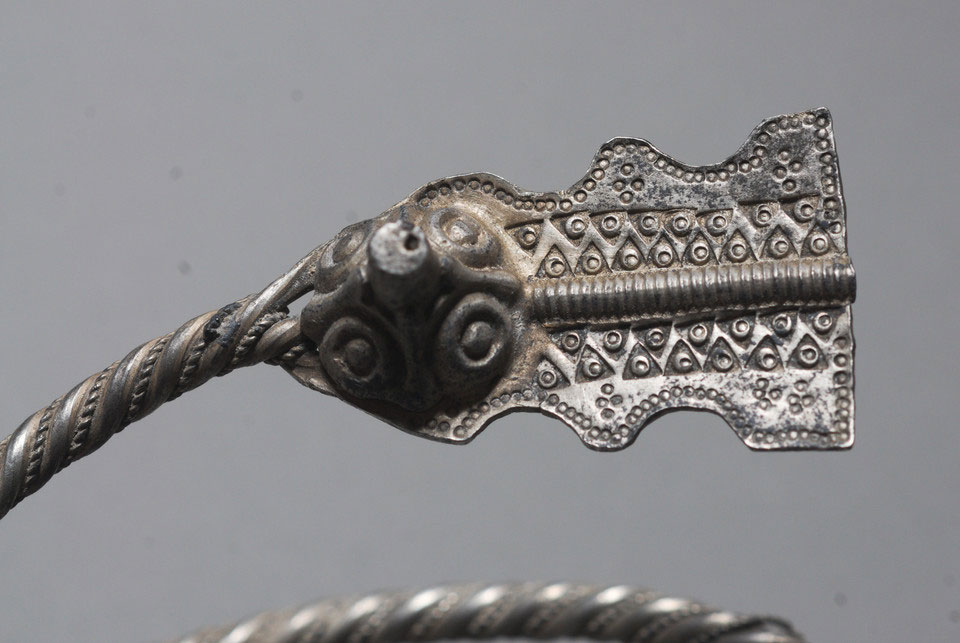
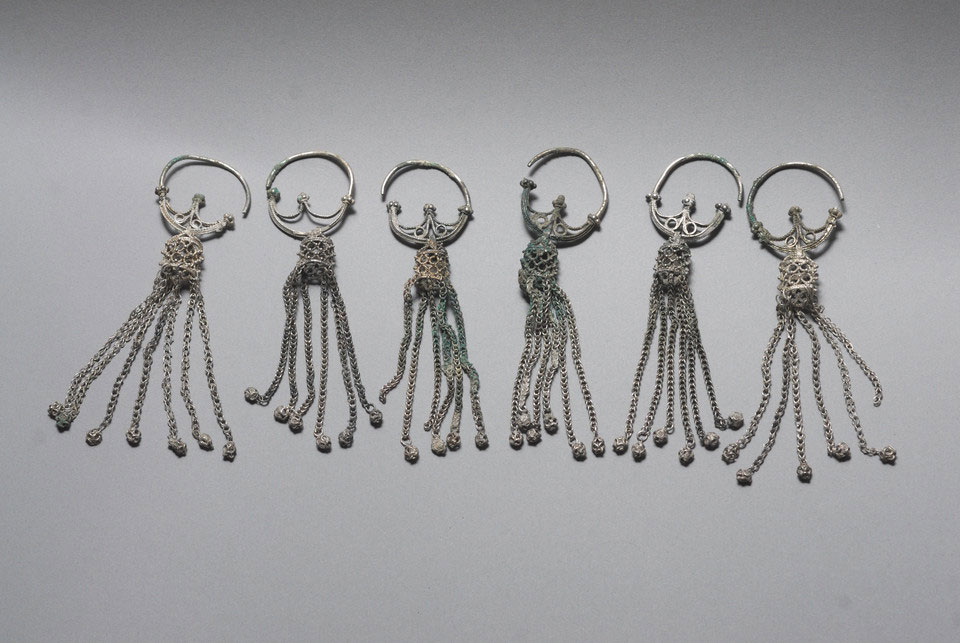
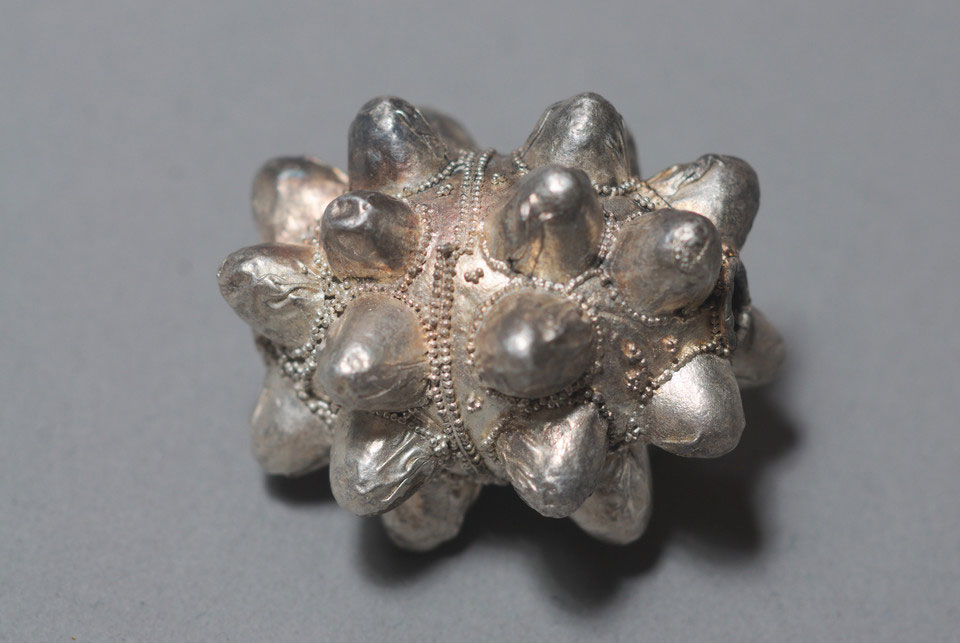
Recently, several hoards were discovered hidden in the ramparts and dating from the end of the 10thcentury. Although still undergoing conservation, the hoards demonstrate the rich character of the fortress and its function as a trading post in the frontier region between the Kievan Rus and the burgeoning Polish Kingdom. One hoard contained a fully preserved Lunula pendant, a fragment of another, three intact beads, two partly preserved earrings and fragments of other silver ornaments. The other hoard consisted of a clay vessel containing 52 silver ornaments – bracelets, earrings, beads, bronze ornaments and some made of glass.

The ornaments have been characterised as possessing a very high artistic quality and must have been produced by very skilled artisans. Whether they were produced locally or brought to the place is currently not known. It is believed, one of these hoards were hidden around AD 970; another is from a later date (probably during the Mongol Invasions in the middle of the 13th century).

Hoard from the 10th century in Cherven Towns © Museum In Tomaszow Lubelski

Landscape

A key to understanding the location of Cherven (Czermno) is the surrounding landscape. Recently an interdisciplinary group of archaeologists, geographers and historians have published the results of geo-archaeological investigations, which have been carried out as part of the research project. Using a geomorphological, climatic and hydrological approach the soil and vegetation were analysed.

The results are that the climate in the 7thand 8thcenturies must have been relatively cold and dry. At this time, the first settlements – perhaps by Avars – could be registered in the vicinity of the site, which appears to have been heavily forested. It is during the 7thcentury that the first signs of a man-made moat can be detected.

During the next period, people began to level and drain the ground as well as construct moats, ramparts and log-paved roads. The embankment measuring 1.5 to 3 metres in the height was constructed by using material from the moats. At this time the rivers flowed closer to the fortification. At that time, the river Bug was probably navigable and it is likely the settlement was serviced by the traffic of prams from the larger river. It is possible that there was a river landing, a stage on the trade route running from Regensburg to Prague, Cracow and Kiev.

Human impact was especially strong during the mid-9thcentury on to the turn of the 10thand beginning of the 11thcenturies, when the surroundings seem to have been brought under the plough.  Finally, the site saw a burst of activity in the 12thcentury. The whole of this period would be characterised as humid and warm.

Detail from 10th-century hoard © Museum In Tomaszow Lubelski

SOURCES:

Environmental conditions of settlement in the vicinity of the mediaeval capital of the Cherven Towns (Czermno site, Hrubieszów Basin, Eastern Poland)
By Radosław Dobrowolski, Jan Rodzik, Przemysław Mroczek, Piotr Zagórski, Krystyna Bałaga, Marcin Wołoszyn, Tomasz Dzieńkowski, Irka Hajdas, and Stanisław Fedorowicz
In: Quarternary International. Online 02.07.2018

Cherven before Cherven Towns. Some Remarks on the History of the Cherven Towns Area (Eastern Poland) until the end of the 10thcentury.
By Marcin Woloszyn, Iwona Florkiewics, Tomasz Dzienkowski, Sylvester Sadowski, Elzbieta M. Nosek and Janusz Stepinski.
In: Between Byzantium and the Steppe. Archaeological and Historical Studies in Honour of Csanád Bálint on the Occasion of his 70thBirthday. Ed. by Ádam Bollók, Gergely Csiky and Tivadar Vida. Institute for Archaeology, Research Centre for the Humanities, Hungarian Academy of Sciences. Budapest 2016, pp. 689 – 717

Beyond boundaries … of medieval principalities, cultures and scientific disciplines. Cherven Towns – insights from archaeology, cartography and palaeogeography
By Marcin Woloszyn et al.
In: Castellum, Civitas, Urbs. Centres and Elites in Early Medieval East-Central Europe. Ed. by Orsolya Heinrich-Tamáska, Hajnalka Herols, Péter Straub and Tivadar Vida. Castellum Pannonicum Pelsonense, Vol 6. Budapest 2015, p. 177-196

Dying and Dating. A Burial in the Rampart of the Stronghold in Czermno-Cherven’ and its Significance for the Chronology of the Cherven’ Towns
By Woloszyn, Marcin, Tomasz Dzienkowski, Katarzyna Kuniarska, Elzbieta Nosek, Janusz Stepinski,  Iwona Florkiewicz, and Piotr Wlodarcz.
In: Lebenswelten zwischen Archäologie und Geschichte. Festschrift für Falko Daim zu seinem 65. Geburtstag. Monographien des RGZM, Band 150, ed. by Jörg Drauschke et al, Mainz 2018, p. 459-480


The post Cherven Towns – a Medieval Polish Settlement from the 10th century. appeared first on Medieval Histories.

Powered by WPeMatico

Seven Medieval Sites added to the UNESCO World Heritage List

The World Heritage Committee of UNESCO recently added seven more medieval sites to its World Heritage List. Of special interest are the nomination of Danevirke and Haithabu (Hedeby), The Cathedral of Naumburg, and the Caliphate city of Medina Azahara.

The Archaeological Border Complex of Hedeby and the Danevirke in Germany

Haithabu near Schleswig. Reconstruction c. 900.
Haithabu near Schleswig. Reconstruction c. 900. Source: Wikipedia

A natural border between present-day Germany and Denmark is located at the foot of Jutland with the marshy landscape of the river Eider and Trene to the west and the firth of the Schlei to the east. In between, an isthmus or a narrow strip of passable land, stretches no more than 18 – 20 km. The first fortifications in the form of a wall a wall called Danevirke have been dated to before AD 500. Later, the fortifications were rebuilt several times, in the 8th, 10th, and 12th centuries. The last fortifications were planned in 1944 by the Nazi regime. To the east, an emporium was founded in the beginning of the 9th century. Known as Haithabu (Hedeby or Haddeby) it became one of the foremost Viking trading centres, functioning as a hub between the North Sea, the Baltic Sea and the wider trading networks reaching all over Medieval Europe. Extensive excavations have shown the contours of life in a vibrant and exciting early Viking emporium. Recently renovated, the local museum as well as the open-air museum is a must for travellers from all over the world. To this trip should be added a tour of the impressive collections in the Museum at the Gottorp Castle as well as the medieval town of Schleswig, which took over from Haithabu, which harbour silted up around 1000.

Cathedral of Naumburg in Germany

Founders of the Cathedral in Naumburg. Source: wikipedia

Located in the eastern part of the Thuringian Basin, the Cathedral of Naumburg, whose construction began in 1028, is an outstanding testimony to medieval art and architecture. Its Romanesque structure, flanked by two Gothic choirs, demonstrates the stylistic transition from late Romanesque to early Gothic. The west choir, dating to the first half of the 13th century reflects changes in religious practice and the appearance of science and nature in the figurative arts. Foremost, though, the choir with its life-size sculptures of the founders of the Cathedral are masterpieces of the workshop known as the “Naumburger Master”. Originally, the petition was to have the Cathedral nominated as part of a wider complex of medieval monuments and landscapes in the region of the Saale and Unstrut, a central part of the Romanesque Route in Sachsen-Anhalt. After a prolonged dialogue with UNESCO and its partners, it was decided to restrict the nomination to Naumburg.

Caliphate City of Medina Azahara in Spain

The Assembly Room of the Caliph at Medina Azahara. Source: wikipedia

When the Arabs settled in southern Spain after AD 711, the control and exploitation of the local landscape was initially a gradual affair. For instance, the Visigothic church, which was later rebuilt as the Mesquita, was initially bought from the Christian congregation. Later, however, the control and suppression took other forms. Part of this was the “shining city”, the Media Azahara, which was built outside Cordoba by Abd-ar-Rahman III in the beginning of the 10th century. He was the first Umayyad Caliph of Córdoba. After prospering for several years, it was laid to waste during the civil war that put an end to the Caliphate in 1009-10. The remains of the city were forgotten for almost 1,000 years until their rediscovery in the early 20th century. The archaeological excavations have uncovered roads, bridges, water systems, buildings, decorative elements and everyday objects as well as the remains of the military architecture demonstrating the power of the Caliphate. So far, however, only 10 % has been excavated and dazzling finds continue to surface. Medina Azahara provides in-depth knowledge of the now vanished Western Islamic civilization of Al-Andalus, at the height of its splendour.

The World Heritage List now numbers 1092 sites in 167 countries. Click here to learn more about all the sites.

The other four sites are the Thimlich Ohinga archeological site in Kenya, Ancient City of Qalhat (Oman), the Sassanid Archaeological Landscape of Fars region in Iran, and the Sansa, Buddhist Mountain Monasteries in Korea.

The World Heritage Listnow numbers 1092 sites in 167 countries.

Medieval sites inscribed by UNESCO as World Heritage 2018

The post Seven Medieval Sites added to the UNESCO World Heritage List appeared first on Medieval Histories.

Powered by WPeMatico

A Reporter’s Journey Behind the Lines of ISIS

by Souad Mekhennet

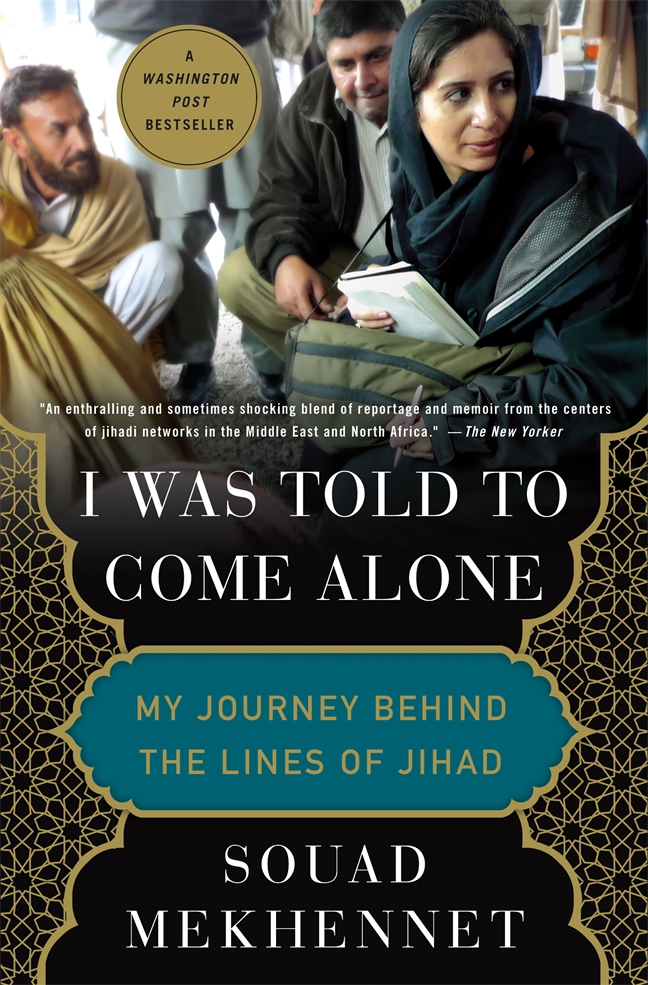
I was told to come alone. I was not to carry any identification and would have to leave my cell phone, audio recorder, watch, and purse at my hotel in Antakya, Turkey. All I could bring were a notebook and a pen.

In return, I wanted to speak to someone in authority, someone who could explain the long-term strategy of the Islamic State of Iraq and al-Sham, or ISIS. It was the summer of 2014, three weeks before the group became a household name by releasing a video of the beheading of the American journalist James Foley. Even then, I suspected that ISIS would become an important player in the world of global jihad. As a journalist covering Islamic militancy across Europe and the Middle East for the New York Times, major German news outlets, and now the Washington Post, I had watched the group take shape in the world created by the September 11 attacks, two U.S.-led wars, and the upheaval known as the Arab Spring. I had been talking to some of its future members for years.

I told my contacts with ISIS that I would ask whatever questions I wanted and that I wouldn’t clear quotes or show them the article before it was published. I also needed their guarantee that I wouldn’t be kidnapped. And since I’d been told not to bring anyone else from the Post, I asked that the trusted contact who had helped arrange the interview be allowed to accompany me.
“I’m not married,” I told the ISIS leaders. “I cannot be alone with you.”

As a Muslim woman of Moroccan-Turkish descent, born and raised in Germany, I am an outlier among the journalists covering global jihad. But in the years since I started reporting on the September 11 hijackers as a college student, my background has given me unique access to underground militant leaders such as the man I was to meet that July day in Turkey.

I knew that ISIS was holding journalists hostage. What I didn’t know was that the leader I would meet oversaw the group’s hostage program, supervising the British-accented killer who would appear on the videos and become known to the world as Jihadi John. I would learn later that the man I met that summer, who was known as Abu Yusaf, had taken a leading role in torturing the hostages, including waterboarding them.

I had asked to meet Abu Yusaf during the day in a public place but was told that wouldn’t be possible. The meeting would be at night, and in private. A few hours beforehand, my contact moved the time back to 11:30 p.m. This was not a comforting development. A year earlier, members of the German antiterrorism police unit had knocked on my door at home to tell me they had learned of an Islamist plot to lure me to the Middle East with the promise of an exclusive interview, then kidnap me and force me to marry a militant. Those threats came back to me now, as I wondered if I was crazy to be doing this. Despite my nerves, I pressed on. If everything worked out, I would be the first Western journalist to interview a senior ISIS commander and live to tell the story.
It was a hot day toward the end of Ramadan, and I wore jeans and a T-shirt as I prepared my questions at the hotel in Antakya. Before leaving, I put on a black abaya, a traditional Middle Eastern garment that covers the whole body except for the face, hands, and feet. One of Abu Musab al-Zarqawi’s associates had chosen it for me years earlier, when I’d visited the late Al Qaeda leader’s hometown of Zarqa, Jordan. The Zarqawi associate had bragged that this abaya, which had pink embroidery, was one of the nicest styles in the shop, and the fabric was thin enough to be comfortable even in hot weather. Since then, it has become a sort of good luck charm. I always wear it on difficult assignments.

We were to meet Abu Yusaf along the Turkish-Syrian border, not far from the border crossing at Reyhanli. I knew the area well: my mother had grown up nearby, and I had visited often as a child.

I said good-bye to my Post colleague Anthony Faiola, who would stay behind at the hotel, leaving phone numbers he could use to reach my family in case anything went wrong. At about 10:15 p.m., the man who had helped arrange this interview, whom I’ll call Akram, picked me up at the hotel. After a forty-minute drive, we pulled into the parking lot of a hotel restaurant near the border and waited. Two cars soon appeared out of the darkness. The driver of the lead car, a white Honda, got out; Akram and I got in. Akram sat behind the wheel and I climbed into the passenger seat.

I twisted around to look at the man I had come to interview, who sat in the back. Abu Yusaf looked to be twenty-seven or twenty-eight and wore a white baseball cap and tinted glasses that masked his eyes. He was tall and well built, with a short beard and curly, shoulder-length hair. Dressed in a polo shirt and khaki cargo pants, he would have blended in seamlessly on any European street.

Three older Nokia or Samsung cell phones lay on the seat beside him. For security reasons, he explained, no one in his position would use an iPhone, which could make him especially vulnerable to surveillance. He wore a digital watch similar to those I’d seen on American soldiers in Iraq and Afghanistan. His right pocket bulged; I assumed he was carrying a gun. I wondered what would happen if the Turkish police stopped us.

Akram turned the key in the ignition, and the car began to move in darkness along the Turkish side of the border, sometimes passing through small villages. I could hear the wind against the car windows. I tried to keep track of where we were, but my conversation with Abu Yusaf drew me in.

He spoke softly and calmly. He tried to hide that he was of Moroccan descent and where exactly in Europe he came from, but I noticed his North African features, and when I switched from classical Arabic to Moroccan Arabic he understood and answered in kind. It turned out he had been born in Morocco but had lived in the Netherlands since his teens. “If you want to check my French as well, just tell me,” he said, smiling. He also spoke Dutch. I would learn later that he had been trained as an engineer.

As we drove, he explained his vision: ISIS would free Muslims from Palestine to Morocco and Spain and then go farther, spreading Islam all over the world. Anyone who resisted would be treated as an enemy. “If the U.S. hits us with flowers, we will hit them back with flowers,” Abu Yusaf said. “But if they hit us with fire, we will hit them back with fire, also inside their homeland. This will be the same with any other Western country.”

ISIS had plenty of resources and expertise, he told me. In fact, the group had begun quietly establishing itself long before it appeared on the world stage. Its members included educated people from Western countries, highly trained security officers from Saddam Hussein’s presidential guard, and former Al Qaeda acolytes. “You just think we have nutcases coming to join us?” he asked. “No. We have people from all over the world. We have brothers from Britain with university degrees and of various descents: Pakistani, Somali, Yemeni, and even Kuwaiti.” Later, I would realize that he was also talking about the guards that several ISIS hostages would dub “the Beatles”: Jihadi John and three others with English accents.

I asked what had pushed him to join the group. Abu Yusaf said that he’d grown fed up with the hypocrisy of Western governments, which were always talking about the importance of human rights and religious freedoms, while relegating their Muslim residents to a kind of second-class citizenship. “In Europe, look how we have been treated,” he told me. “I wanted to be in the society I grew up with, but I felt, ‘You’re just the Muslim, you’re just the Moroccan, you will never be accepted.’”

The U.S. invasion of Iraq in 2003 had been unjust, he said: there were no weapons of mass destruction, Iraqis were tortured in Abu Ghraib, and the Americans faced no consequences. “Then they’re pointing at us and saying how barbaric we are.”

“You say you’re against the killing of innocent people,” I said. “So why are you killing and kidnapping innocent people?”

He was silent for a few seconds. “Every country has a chance to get their people free,” he said. “If they don’t, that’s their problem. We didn’t attack them; they attacked us.”

“When you take people hostage, what do you expect?” I responded.

He then started talking about his Moroccan grandfather, who had fought the French colonialists for freedom, drawing a parallel between that jihad and this one. “This is all the outcome of the Americans colonizing Iraq,” he said. “Now we’re fighting the jihad to free the Muslim world.”

But my grandfather had been a freedom fighter in Morocco, too. When I was a little girl, he’d talked to me about that “jihad,” about how Muslims and their “Jewish brothers” had fought to expel the French who had seized control of their ancestral lands. “We did not kill any women and children, and no civilians,” my grandfather had told me. “That’s not allowed in jihad.” His rebellion was nothing like the horrors perpetrated by ISIS.

“But he was in his country,” I said. “This is not your country.”

“This is Muslim land. This is the country of all Muslims.”

“I grew up in Europe like you,” I told him. “I studied like you in Europe.”

“Why do you still believe the European system is fair and just?” he asked.

“What is the alternative?”

“The alternative is the caliphate.”

Our debate had grown heated, personal. There seemed to be so many parallels between his background and mine. Yet we had chosen different paths, and mine wasn’t what he would call the “right way” for a Muslim woman, not the Islamic way.

“Why are you doing this to yourself?” he asked. “You really believe that the West respects us? Treats us Muslims equally? The only right way is our way,” by which he meant the way of the so-called Islamic State.

“I’ve read your stuff,” he told me. “You interviewed the head of Al Qaeda in the Islamic Maghreb. Why are you just a reporter? Why don’t you have your own TV show in Germany? Why are you not making a career in Germany, with all the awards you’ve won?”

I couldn’t pretend I didn’t know what he was talking about. Coming of age and making my way professionally as a Muslim in Europe had at times been trying. I don’t wear a head scarf; I’m considered a liberal and a feminist; I’ve cowritten a book about finding one of the last living Nazis in Cairo and won prestigious fellowships in America. But Abu Yusaf was right: I don’t have a TV show in Germany. To rise in my home country as a Muslim migrant, or even as the child of migrants, you have to toe the line and praise Europe’s progressiveness. If you criticize the government too loudly or raise serious questions about anything from foreign policy to Islamophobia, the backlash can be intense.

I obviously didn’t agree with Abu Yusaf that the caliphate was the solution. But I couldn’t help thinking that Western societies and politicians have made little progress toward addressing the policies that radicalize young men like him. More intelligence services putting more restrictions on people is not the solution, nor are global surveillance networks that compromise the privacy of the innocent along with the guilty. Abu Yusaf was part of a generation of young Muslims who were radicalized by the invasion of Iraq, much as the generation before him had been radicalized by the Soviet invasion of Afghanistan in 1979. In some ways, he reminded me of my younger brother, and I felt a big sister’s responsibility to protect him. But I knew it was too late for that.

“You may be right that we face discrimination and the world is unfair,” I told him. “But this is not the jihad, what you’re fighting. Jihad would have been if you’d stayed in Europe and made your career. It would have been a lot harder. You have taken the easiest way out.”

For a few seconds, no one said anything.

Abu Yusaf had insisted on taking me back to Antakya rather than returning to our original meeting point, and by this time we were close to my hotel. I thanked him and climbed out of the car. Even at this hour, the coffee shops were busy with people eating before dawn, as is common in Ramadan, when Muslims fast during the day. I felt glad to have gotten the interview, but I was also worried. Abu Yusaf had spoken with such confidence and fury. “Whoever attacks us will be attacked in the heart of their countries,” he had said, “no matter if it’s the USA, France, Britain, or any Arab country.”

We’re losing one after the other, I thought. This guy could have been somebody different. He could have had a different life.


Souad Mekhennet is a national security correspondent for The Washington Post, and she has reported on terrorism for The New York Times and other news organizations. She is the coauthor of three previous books and was named a Young Global Leader by the World Economic Forum. She was a Nieman Fellow at Harvard University and has also held fellowships at the Johns Hopkins School of Advanced International Studies and the Geneva Center for Security Policy.

Souad is the author of I Was Told to Come Alone: My Journey Behind the Lines of Jihad and coauthor, with Nicholas Kulish, of The Eternal Nazi.

The post A Reporter’s Journey Behind the Lines of ISIS appeared first on The History Reader.
Powered by WPeMatico