This year the Romanesque Route in Sachsen-Anhalt celebrates its 25th anniversary. In connection with the celebrations, three exhibitions have been organised. Also, a new Cathedral Museum in Magdeburg is scheduled to open its doors this autumn.
Germany in the 10th century was a European superpower. From the ranks of the ruling dynasties – the Ottonians and Salians – a number of remarkable kings and emperors were seen to take the mantle form the Carolingians. Albeit based on the exploitation of the new-found silver mines near Goslar, the heartland for the itinerant royals was the lush and rich agrarian landscape on the corridors through which the River Elbe and its tributaries flow. To the south, winegrowing is a thousand -year old tradition. To experience this landscape a cultural route was marked out in the landscape of Sachsen-Anhalt in 1993, The Romanesque Route. Celebrating its 25th year anniversary in 2018, three exhibitions and one new museum are scheduled to open up the region for cultural tourists and not least medievalists.
Memleben – Wissen & Macht
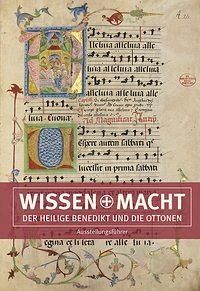
![Wissen und Macht cover]() Archaeological excavations in the 20thcentury have demonstrated that the grand ideas behind the construction of a special memorial shrine for the Ottonian dynasty at Memleben foundered. Apart from the innards of Otto I (the Great), the Ottonians were buried elsewhere. And the plans hatched by Otto II and his queen Theophanu fell to the earth when he died in Italy and she had to scramble to secure the reign of her under-age son. Also, soon after the foundation of the Benedictine monastery, they had orchestrated as part of the building programme, was attacked in a Slavic uprising. Today, the magnificent cathedral in Memleben can only be traced through the ground plan as it is marked in the landscape.
Archaeological excavations in the 20thcentury have demonstrated that the grand ideas behind the construction of a special memorial shrine for the Ottonian dynasty at Memleben foundered. Apart from the innards of Otto I (the Great), the Ottonians were buried elsewhere. And the plans hatched by Otto II and his queen Theophanu fell to the earth when he died in Italy and she had to scramble to secure the reign of her under-age son. Also, soon after the foundation of the Benedictine monastery, they had orchestrated as part of the building programme, was attacked in a Slavic uprising. Today, the magnificent cathedral in Memleben can only be traced through the ground plan as it is marked in the landscape.
In the now-defunct monastery, a local museum tells the story about the place. This year, a special exhibition aims to shed light on the main protagonists of the story – The emperor, Otto II, the queen, Theophanu, Benedikt of Nursia and the Benedictines and the eremite Heimerad. By circling their life-world, visitors get a glimpse of what it meant to live in the 10thcentury in a world marked out by palaces, bishoprics, and monasteries. This was a sacral landscape bent on emphasizing the sacred nature of the royal power, commitments and entitlements (so-called Sakalkönigstum).
Merseburg – Thietmar’s Welt
Thietmar of Merseburg (975 – 18) bishop of Merseburg 1009 – 1018, was an idiosyncratic chronicler providing his readers with countless juicy details and descriptions of the lifeworlds of people in the 10thand 11thcenturies. As next of kin to the ruling elite of Saxony, not least the royal family, he was abreast of all that happened in his lifetime as well as the period leading up to the events around the millennium. Without his chronicle, the world of the Ottonians would definitely lose their lustre. No wonder, German medievalists have literally “plundered” his text for insight into the mentality of people living at the millennial turn.
This year, a special exhibition is planned in Merseburg to celebrate his life-world. The exhibition opens to the public in July and as yet details are not available. According to the early presentation, though, the exhibition promises to help visitors visualise and sense life as he and his protagonists experienced it.
Saale-Anstrut – The World of the Monasteries
The south corner of Sachsen-Anhalt falls between two tributaries to the river Elbe, the Saale and the Unstrut. The corridors around the riverbanks provided a lush and rich agrarian landscape. No wonder, the Ottonians sought to develop the region through founding monasteries and bishoprics, which might function as well-equipped stepping stones on their itinerant schedules.
This year, a series of the more prominent monasteries in the Saale-Unstrut region have teamed up to shed light on their medieval heritage. Read more about the programme here
Dommuseum Ottonianum Magdeburg
Autumn 2018 a brand new cathedral museum in Magdeburg is scheduled to open its doors. The new museum will be housed in the former Reichsbank from 1924, which is located next to the cathedral in Magdeburg. With 650 m2 the intention is to focus on Otto the Great (912-973) and his queen, Editha (910 -946), both buried in the Cathedral. Another important part will be played by the finds from the recent archaeological excavations in and around the cathedral. On show will be the fragments of the sumptuous textiles, the queen was buried with as well as the results from the extensive studies of her remains and her interment. Other exhibits are provided from the tomb of Archbishops Wichmann von Seeburg (1115-1192) and Otto von Hesse (1301-1361). Currently, a virtual interactive reconstruction of the first Gothic Cathedral begun in 1207 on German soil is under preparation.
VISIT:
Memleben – Wissen & Macht
Kloster und Kaiserpfalz Memleben
Thomas-Müntzer-Str. 48
D-06642 Memleben
Germany
Merseburg – Thietmar’s Welt
Merseburger Dom
Domplatz 7
06217 Merseburg
Saale-Anstrut – The World of the Monasteries
Kloster und Kaiserpfalz Memleben
Thomas-Müntzer-Str. 48
D-06642 Memleben
Germany
Dommuseum Ottonianum Magdeburg
Am Dom 1
39104 Magdeburg
Germany
The post Macht & Mythos in Sachsen-Anhalt 2018 appeared first on Medieval Histories.