Recovering History’s Most Expensive Turtle

by Peter Laufer

The clash of old and new in Yunnan Province, China, is mind-numbing. Ancient Buddhist temples vie for attention with massive infrastructure projects around the provincial capital, Kunming: parades of towering apartment blocks, superhighways and bullet trains. One ancient that seemed gone without a trace was the gentle Yunnan box turtle, Cuora yunnanensis. Hunted—as are turtles and tortoises worldwide—for pets, food and medicine, the shy animal disappeared.
Turtle researchers thought they saw the last Yunnan box turtle in 1940. When it died turtle aficionados worldwide mourned the loss and the species was officially listed as extinct. Extinct: it’s a sobering word for natural historians. Threatened and endangered animals stand a chance of recovering, of re-establishing a viable population. But extinct is forever. Gone from the Earth. And one more lost link closing in toward our own human extinction. Because biodiversity equals survival.

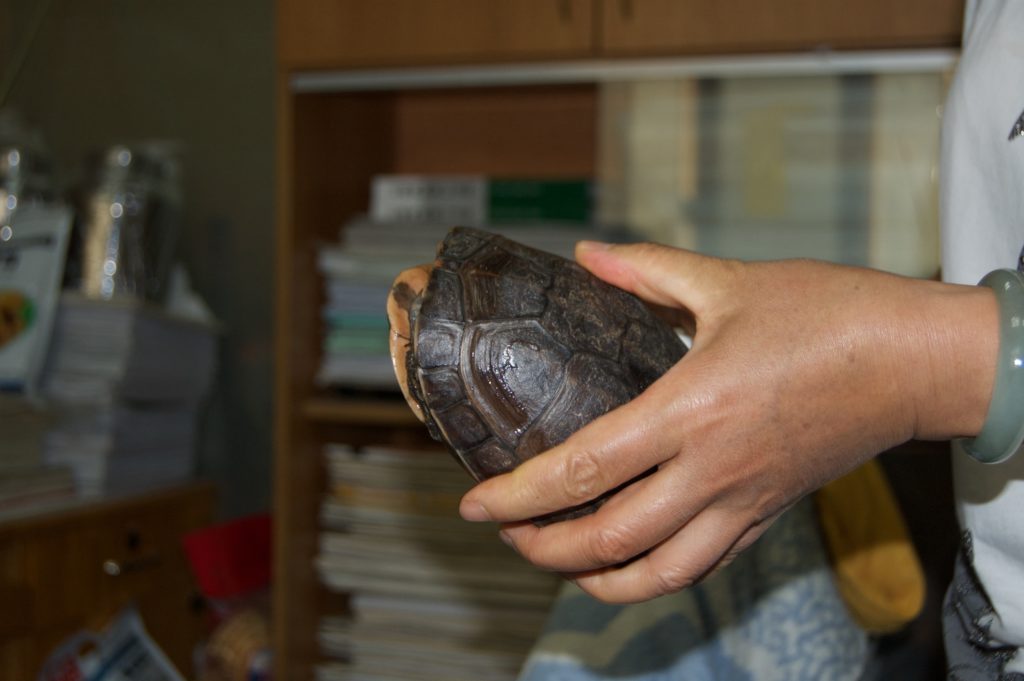
Over sixty-five years later, in 2006, a mysterious turtle showed up in the animal section of Kunming’s sprawling Jingxing market, its handler asking passersby and shopkeepers if they knew its identity. No turtle purveyors could help, but a snapshot was uploaded to the internet and the crowdsourcing worked. Excited researchers, breeders, and turtle lovers learned that the species they thought was lost forever had in fact survived. Yet where other individuals may be located was unknown. A year later a second was found in an older man’s Yunnan home. (He could have had it since he was a child; both the turtle and its keeper were youngsters back when the species thrived.)
The Kunming Institute of Zoology now is home to at least some of the few Yunnan box turtles known to exist. Scientists there are hard at work taking advantage of the unexpected resurfacing of the native species as they try to prevent reporting a second extinction. Herpetologist Rao Dingqi had already been searching the wilds of Yunnan when news reached him of the specimen for sale at the Jingxing market and the other one at the house where it was kept as a good luck pet. Soon after that news, Rao found three more himself and then after a few more years of prowling what’s left of the Yunnan wilds, another three more. Exactly where he discovered the rare turtles he kept a close-guarded secret; he was competing with poachers. Because of its rarity and the lust of collectors, Cuora yunnanensis may be the priciest turtle on the global black market.

Herpetologist Rao Dingqi in his lab.

At last count Herpetologist Rao and his colleagues have collected ten wild-caught Yunnan box turtles, turtles they keep in an assurance colony at the Institute. There they’ve managed to double the colony size by successfully breeding the wild turtles. The Kunming Institute of Biology is seeking financial aid from the Chinese government and from the private sector to support its ongoing research of the rare box turtle and for its development of a viable captive-bred colony. Institute scientists also seek help cordoning off and policing the areas where Rao discovered the wild animals.
Meanwhile, Rao keeps looking for more, as do competing scientists from Europe and North America. Of course, they are not alone: with the high price tag as an indication of potential compensation for illicit trafficking of Yunnan box turtles, poachers are motivated to be out in force around the province seeking one of the rarest turtle species in the world – not for science but for profit.

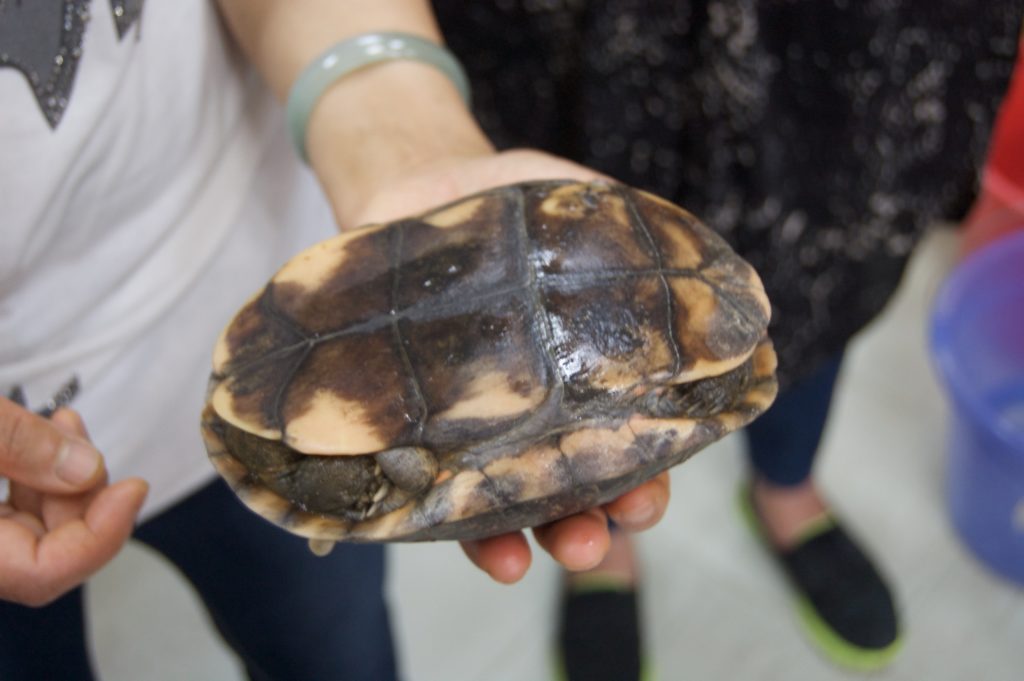
What does this cousin of common box turtles look like? Unlike the colorful turtle and tortoise species that can be found elsewhere in Asia, like the spectacular Burmese star, Yunnan box turtles show off a rather drab brown coloring on their high-domed carapaces. The plastron adds some yellow to its costume. Head to tail it’s a little smaller than a football. Nonetheless, according to even scientist Rao, it’s a powerful animal. As is the case with other turtles and tortoises, touching one, according to Chinese tradition, brings good fortune.

That role of good luck charm adds to the underground value of the Yunnan box turtle and all other Chelonians. About the turtle and tortoise resale economy, the president of the Turtle Conservancy, Eric Goode, says, “Turtles are on steroids!”
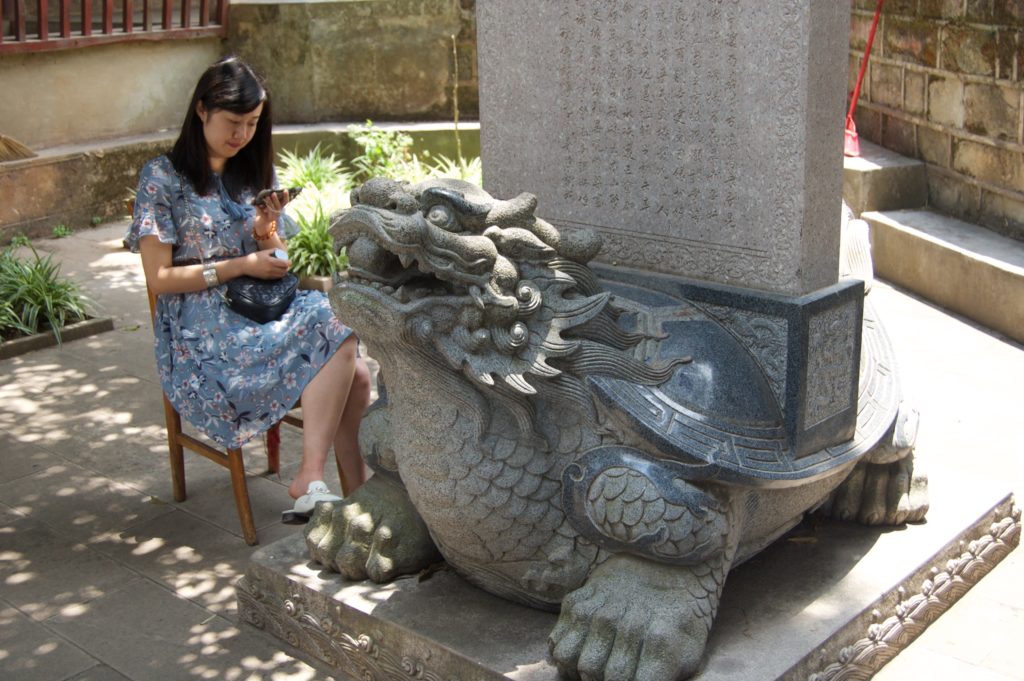
Turtle at the Pan Long Temple.

Just how much does Cuora yunnanensis command in the black marketplace? Rao Dingqi has seen them advertised in China for $15,000. But back in the States the number quoted is over ten times higher with at least one asking price for a healthy adult Yunnan box turtle a hard-to-fathom $200,000.

The bullet train ride across China from Kunming to Hong Kong is fast, less than eight hours. But before boarding and after the trip back in time with Yunnan box turtles, a stop at the Pan Long Temple to visit the Smiling Buddha offers perspective. The Buddha is displayed behind glass, smiling as a guide offers a goodbye message. “Forget troubles,” he says. “Everything is happy. Everything is okay. You don’t have to worry because he has a belly and you can put everything in it.”

Comforting words of farewell.


Journalist Peter Laufer is the James Wallace Chair Professor in Journalism at the University of Oregon School of Journalism and Communication. He is the author of Dreaming in Turtle: A Journey Through the Passion, Profit, and Peril of Our Most Coveted Prehistoric Creatures and Organic: A Journalist’s Quest to Discover the Truth Behind Food Labeling.

The post Recovering History’s Most Expensive Turtle appeared first on The History Reader.

Powered by WPeMatico
Christmas in 1920s America

by Maia Chance

In 1921, Frances Lester Warner described a Christmas Eve scene in Boston with “red and white crystal” in shop windows, “lights gleaming on the slippery cross-streets, throngs of last-minute shoppers” and “bright posters still cheerfully advising us to do our shopping early.” She wrote of a “tall Santa Claus, bearded and red-cheeked, scarlet-coated, white-furred, with a sprig of holly in his cap,” of girls ringing Salvation Army bells, gaily-colored Christmas magazines on the newsstand, wreaths for sale at the flower stall, and a peddler on the corner selling glossy holly from a crate.

Despite being nearly one hundred years old, this is a familiar, homelike scene to those who have spent Christmases in urban America. There are certainly interesting differences between how Americans celebrated Christmas in the 1920s and today, yet in my research what I have discovered is that some of the elements of Christmas that in 2018 we consider “classic” in fact originated or crystallized in the 20s.

Christmas was increasingly family-centered in the 20s, Susan Waggoner writes, as opposed to the whirl of social and public activities that characterized Christmastime in earlier eras. Nativity plays performed by little children became the norm. For example, the cast of characters for Maude Summer Smith’s The Busy Christmas Fairies: A Short Operetta for Kindergarten or First Grade Children, published in 1922, includes:

The Wicked Night Wind Fairy—a small boy.
Santa Claus—a large boy or girl.
Christmas Fairies—not more than twelve, both boys and girls.
Earth Children—The rest of the Kindergarten.

Sounds absurdly cute, doesn’t it? Radios, available for use in the privacy of the home, also boosted the more domestic nature of Christmas in the decade. And as radio ownership increased, so did the demand for seasonal songs. Chart-topping Christmas songs of the 20s include “Adeste Fideles” performed by the Associated Glee Clubs of America in 1925, and “Auld Lang Syne” performed by the Peerless Quartet in 1921. “Parade of the Wooden Soldiers”—a sprightly march written in 1897 and probably familiar to some of you—was a repeat hit with chart-topping versions performed by the Vincent Lopez Orchestra in 1922, Carl Fenton’s Orchestra in 1922, and Paul Whiteman and his Orchestra in 1923. I admit that “Parade of the Wooden Soldiers” is catchy, but there must be some mysterious ingredient that made it so very beloved to people in the 20s. You can listen to some of these tracks on YouTube and judge for yourself.

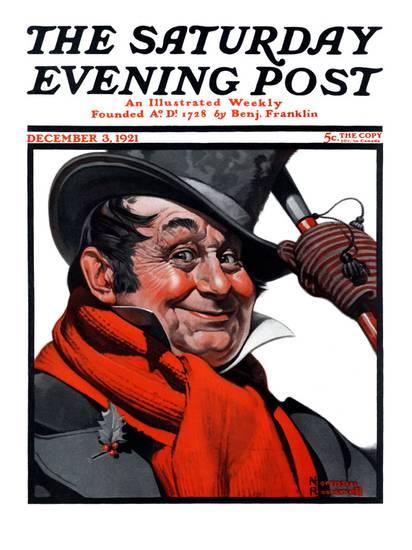
Judith Waggoner writes that “After the shock of World War I, people craved the comfort of more innocent times. They found it in the world of Charles Dickens. There were four different film versions of A Christmas Carol to choose from, and magazine covers of the era often depicted scenes with the flavor of merry old England.” The “old English” sort of Christmas, by the way, never really existed in America; U.S. Puritan heritage has been decidedly opposed to Christmas merrymaking. Thus, the pseudo-Dickensian yuletide of the 1920s amounted to pure nostalgic fantasy. This nostalgia translated into decorations with carriage lantern and antique candle holder motifs, and Victorian-style paper silhouettes, while English holly, rather than today’s pine boughs, were the favored holiday greenery. (In fact, in my home region of Western Washington State, holly planted in the 1920s as a holiday cash crop is now considered an out-of-control invasive species.) In keeping with that pseudo-Dickensian theme, Norman Rockwell’s cover for The Saturday Evening Post’s December 3, 1921 issue depicts a ruddy-cheeked coachman in a Victorian top hat and collar, with holly on his lapel. Similarly, Rockwell’s December 8, 1928 cover shows a man and woman in mid-nineteenth-century attire dancing beneath the mistletoe. They, too, are ruddy-cheeked. Must be something in the punch.
However, at the same time that the Prohibition era gazed back, misty-eyed, to a more wholesome Christmas Past, it also embraced new technology and design during the Christmas season. For example, General Electric introduced its new cone-shaped Christmas tree light bulbs in 1922, Art Deco motifs emerged on wrapping paper, newfangled toys like Pogo sticks and Lincoln Logs showed up beneath Christmas trees, and innovations in plastic allowed Kewpie dolls to come into existence (Oh happy day). What is more, once the financial prosperity of the 20s really got rolling, it helped to solidify the frantic shopping that Americans to this day both celebrate and lament.

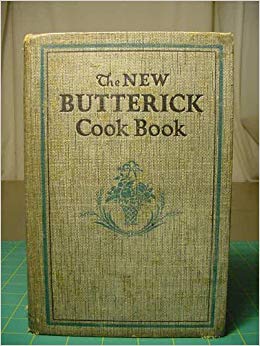
The New Butterick Cook-Book, published in 1924, offers these two menu options for Christmas dinner:

Christmas Dinner: No.1: Oyster Cocktails in Green Pepper Shells, Celery, Ripe Olives, Roast Goose with Potato Stuffing, Apple Sauce, String Beans, Potato Puff, Lettuce Salad with Riced Cheese and Bar-le-Duc French Dressing, Toasted Wafers, English Plum Pudding, Bonbons, Coffee. No.2: Cream of Celery Soup, Bread Sticks, Salted Peanuts, Stuffed Olives, Roast Beef, Yorkshire Pudding, Potato Soufflé, Spinach in Eggs, White Grape Salad with Guava Jelly, French Dressing, Toasted Crackers, Plum Pudding, Hard Sauce, Bonbons, Coffee.

In keeping with that pseudo-Dickensian nostalgia, notice that the menus include the Tiny Tim Cratchit-worthy entrees of roast goose and roast beef with Yorkshire pudding, and both menus include the oh-so-English plum pudding. On the other hand, the 20s were positioned near the beginnings of Big Food: “Wonder Bread, Girl Scout cookies, Kool-Aid, and Popsicles all made their first appearance during the decade,” P. J. Hamel writes, “Jell-O, introduced in 1897, became a pantry staple, and by the 1920s was termed ‘America’s most favorite dessert’.” In 1911, Proctor & Gamble had placed Crisco on market shelves, and although the product at first was met with resistance from cooks reluctant to replace butter and lard, by the 20s it had become a common household staple.

Last but not least, there was the outlawed booze. A coveted Christmas gift for the fellows was top-shelf tipply smuggled down from Canada. A single bottle of illicit Seagram’s cost the equivalent of $142 in today’s currency once it reached New York City. Judith Flanders writes of an eyebrow-raising connection between Santa Claus and black-market alcohol. During the 20s, the image of a florid, jelly-bellied Santa Claus, although around since the mid-Nineteenth Century, was cemented as “the” image and became mass-produced, particularly in print ad campaigns.

“One of the earliest extended campaigns to make use of Santa was that of the Wisconsin-based White Rock mineral-water company, which ran advertisements from 1915 to 1925 showing Santa at home, at work, making deliveries. Although White Rock was merely carbonated water, it was used as a mixer for alcoholic drinks. Gradually, therefore, as the advertisements ran during Prohibition, White Rock became a synonym for alcohol.”

Naughty, naughty, Santa.

Here are a few more fun facts about 1920s American Christmases:

  • Americans had a preference for girthy, round Christmas trees, the bulgier the better.
  • Lametta, a type of tinsel manufactured in Germany, was made of lead alloy foil with tin bonded on top. Keep that away from the kids. Other tinsel was ultra-flammable paper-covered aluminum.
  • Paper decorations were popular, including the ubiquitous red tissue honeycomb bell.
  • Snow Babies figurines (you’ve seen those, right?) date back to the 20s.
  • Since Scotch tape had not yet been invented, gift-wrappers had to make do with decorative, lick ‘em adhesive seals.

Maia Chance is the author of several mystery novels, including The Discreet Retrieval Agency mysteries, the Agnes and Effie Mysteries, and the Fairy Tale Fatal series. Her latest mystery, Naughty on Ice (Discreet Retrieval Agency #4), set during Christmastime in 1923 Vermont, is available wherever books are sold. Find Maia at facebook.com/MaiaChance and at maiachance.com.

Works Cited:
Drahl, Carmen. “What Is Tinsel Made Of?” C&EN: Chemical Engineering News, 15 December 2014, cen.acs.org/articles/92/i50/Tinsel-MadeChanged-Over-Years.html.
Editors of Peter Pauper Press. A Century of Christmas Memories: 1900-1999. White Plains NY: Peter Pauper Press Inc., 2009.
Flanders, Judith. Christmas: A Biography. New York: Thomas Dunne Books, 2017.
Forbes, Bruce David. Christmas: A Candid History. Berkeley and Los Angeles: University of California Press, 2007.
Hamel, P. J. “American Baking Down the Decades, 1920-1929: Cake Meets Technology.” Flourish, 9 March 2015, blog.kingarthurflour.com/2015/03/09/american-baking-decades-1920-1929
Macdonald, Fiona. Christmas: A Very Peculiar History. Brighton, UK: The Salariya Book Company Ltd., 2012.
Olver, Lynne. “Historic American Christmas Dinner Menus.” Food Timeline, 3 January 2015, foodtimeline.org/christmasmenu.html.
Smith, Maude Summer. The Busy Christmas Fairies: A Short Operetta for Kindergarten or First Grade Children. Franklin, Ohio: Eldridge Entertainment House, 1922.
Waggoner, Susan. Christmas Memories: Gifts, Activities, Fads, and Fancies, 1920s-1960s. New York: Stewart, Tabori & Chang, 2009.
Waggoner, Susan. Have Yourself a Very Vintage Christmas. New York: Stewart, Tabori & Chang, 2011.
Warner, Frances Lester. Merry Christmas from Boston. Boston: The Atlantic Monthly Press, 1921.

The post Christmas in 1920s America appeared first on The History Reader.

Powered by WPeMatico

Therese Anne Fowler’s A Well-Behaved Woman: A Novel of the Vanderbilts

by Therese Anne Fowler

Alva Smith, her southern family destitute after the Civil War, married into one of America’s great Gilded Age dynasties: the newly wealthy but socially shunned Vanderbilts. Ignored by New York’s old-money circles and determined to win respect, she designed and built nine mansions, hosted grand balls, and arranged for her daughter to marry a duke. But Alva also defied convention for women of her time, asserting power within her marriage and becoming a leader in the women’s suffrage movement.

In A Well-Behaved Woman, with a nod to Jane Austen and Edith Wharton, Therese Anne Fowler paints a glittering world of enormous wealth contrasted against desperate poverty, of social ambition and social scorn, of friendship and betrayal, and an unforgettable story of a remarkable woman. Meet Alva Smith Vanderbilt Belmont, living proof that history is made by those who know the rules—and how to break them. Keep reading for an excerpt of A Well-Behaved Woman.

* * * * *

Alva decided to attend a meeting of the Society for the Betterment of Working Children, which Armide had joined not long before. The group met once each month at the home of its president. Miss Annalisa Beekman was a young Knickerbocker lady whose pale eyes and pale hair and pale skin made her vulnerable to disappearance if she stood too near draperies or wallpaper of similar tones. Alva joined her and some ten other young ladies in the Beekman drawing room, which looked out onto Tenth Street. Among those ten: Lydia Roosevelt, who upon seeing Alva assessed her figure and said, “Well, Mrs. Vanderbilt, who would have expected you here?”
“This is a cause I support heartily. When my sister told me of the meeting, I didn’t wish to miss it.”

“How good of you. Do accept my condolences on the loss of your husband’s grandfather. Who knew he was so well off? It does, of course, enable you to be charitable—which is only to our benefit.”

“Rather, to the benefit of the children, you mean,” Alva said.

“Of course.”

“Of course. And you will recall that I have been engaged with charitable
efforts for years.”

Miss Beekman said, “Ladies, shall we come to order?”

“Do forgive me for being late,” called Armide as she hurried into the room. Behind her was a young lady Alva didn’t recognize. Armide ushered the lady in with her.

“Allow me to introduce Miss Mabel Crane. She’s newly arrived from San Francisco, California, and is eager to involve herself with good endeavors.”

The others gave polite smiles. Miss Beekman said, “California, you say? My, that’s far from here.”

“It was a really long journey,” said Miss Crane. She was a handsome girl, and well dressed. There was, however, no question that she was different. Her skin tone was more golden, her cheeks freckled, her hairstyle less formal than anyone else’s here. She was dressed as well as any of them, though, suggesting to Alva that she came from money but that the money was new.

“And will you be in our city for a while?” asked Miss Roosevelt.

“Oh, yes, I live here. My father got a house on Park Avenue near Fortieth—which I guess is a good part of town?”

“Many new residents are buying there,” Miss Roosevelt said. “Most of us live here in this area of town, where New York’s first families settled.”

Alva said, “Thank you, Miss Roosevelt. We all needed that history lesson.”

Armide and Miss Crane found seats, and Miss Beekman, appearing flustered, said, “I was about to bring us to order, so I’ll proceed.”

“Yes, do,” said Alva. “I know we are all eager to get to the business of this event.”

Miss Beekman laid out the agenda for the meeting, the first item being the secretary’s report on what they’d done at the previous month’s meeting, followed by another report of the activities they had accomplished on behalf of the society in the intervening weeks as well as in recent months. Alva listened with diminishing attentiveness; her back was aching, and the baby kept kicking her beneath her left ribs, and these reports were interminably boring.

“Forgive the interruption,” she said, shifting in her chair. “I want to be certain I understand the nature of this group. By what I’ve just heard, it appears that you raise money by hosting subscription teas and luncheons and dinner dances, and then the society writes a check to one children’s aid agency or another.”

“Yes,” said Miss Beekman. “That’s correct.”

“How many of the workplaces have you seen in person? That is to say, do you visit the factories? And what about the hospitals or the homes where the maimed children convalesce? This is not to malign any particular agency—but how do you know how the money is being spent?”

Miss Roosevelt said, “Have you forgotten our visit to that horrible tenement? I told these ladies all about it. None of us is interested in going to those places.”

“She said it was quite horrible,” Miss Beekman reiterated. “Seeing a dead girl—”

“Miss Roosevelt did not see the girl, she—”

“We prefer not to risk exposure,” Miss Roosevelt pressed on. “We send money.”

Alva smiled. “Well, this is of course commendable. But it risks ineffectiveness,” she said, addressing the group. “I believe we should see for ourselves what the real needs are, and then direct the money specifically and confirm its uses. Certainly you read the newspapers; too often the money ends up in the pockets of crooks. I’d like to propose an outing for midmorning tomorrow. We’ll visit the hospitals and inquire as to what materials these children most need.”

“That is a fine idea,” Miss Crane said. “We should have specifics, and give money directly.”

Miss Roosevelt sat forward in her chair. “Miss Beekman, it is apparent to me that there is a tremendous chasm between our approach and that of our prospective new members. Rather than see an eruption of conflict, which might delay our charitable efforts unduly, I move to invite those prospective new members to form their own society, separate from this one.”

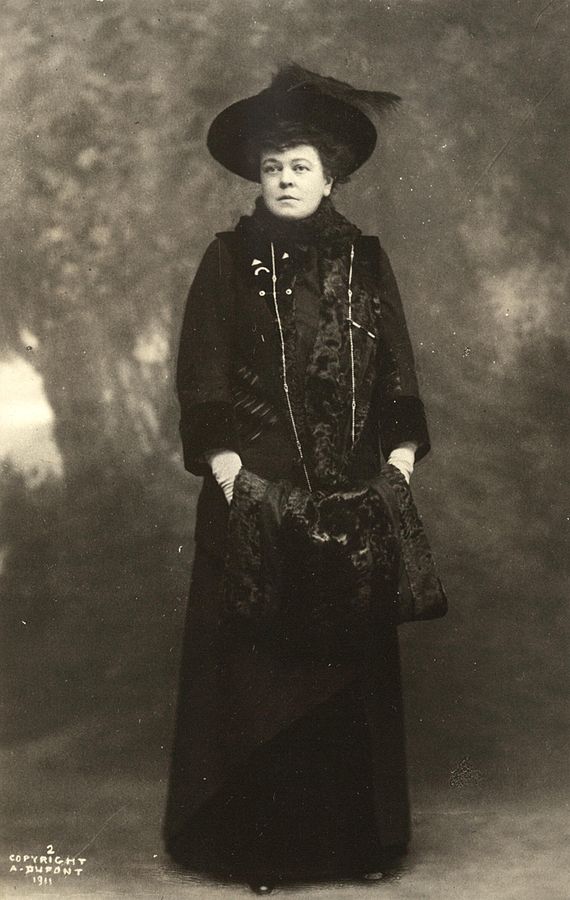
Stadler Photographing Co., New York-Chicago. Image is in the public domain via Wikipedia.

Alva said, “You’re denying my membership?”

“Yours and Miss Crane’s, and any others who prefer your approach. All in favor?”

The secretary said, “You need someone to second your motion.”

“I second it,” said one of the other ladies.

“All in favor?” Lydia said, looking straight at Alva while she raised her hand.

Alva stood up, her own hand raised. “I could not approve more heartily.”

The next morning found Alva, Armide, Miss Crane, and Alva’s younger sisters at Charity Hospital on Blackwell’s Island, their first stop on a tour of welfare facilities throughout New York City. Avoiding the wards housing prisoners or anyone with contagions, they met children missing limbs and eyes, children who cried about being unable to work again, children who stared blankly at dingy walls and did not respond to conversation. They questioned nurses and doctors about how best to help and made lists of needed supplies.

In Alva’s parlor that evening, Jenny made tallies while Alva poured wine for everyone. She handed around the glasses. All of them were weary and overwhelmed by what they’d seen.

Julia said, “I didn’t wish to go this morning, but I suppose I’m glad I did. We almost ended up like those people. I mean, not injured, but so poor! If Alva hadn’t married William… ”

Miss Crane said, “Before my daddy found himself a little bit of gold and started building hotels, we lived in a two-room shack that didn’t even have water. I had a job digging rocks out of wherever the city was putting sidewalks in.”

Jenny drank her wine all in one go, then handed back the glass to Alva for refill. “I’ll go slower this time, don’t worry.”

Armide said, “One can see why Miss Roosevelt and the others prefer their approach.”

“Yes, it is easy to see,” Alva replied. “In the morning, I’ll make a list of the factories we should visit next week.”


THERESE ANNE FOWLER is the author of the New York Times bestselling novel Z: A Novel of Zelda Fitzgerald. Raised in the Midwest, she moved to North Carolina in 1995. She holds a BA in sociology/cultural anthropology and an MFA in creative writing from North Carolina State University.

The post Therese Anne Fowler’s A Well-Behaved Woman: A Novel of the Vanderbilts appeared first on The History Reader.

Powered by WPeMatico

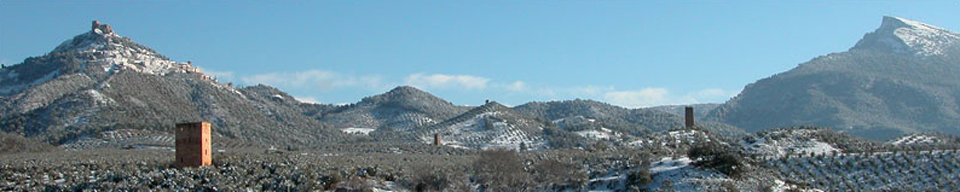
Islamic Towers from the 12th century in Sierra de Segura near Jaen in Spain

In the 11thand 12thcenturies small “husun”, tiny castles and enclosures with towers, came to dominate the border region between western and eastern Andalusia. Since 2003, a project has worked to study and preserve these towers.

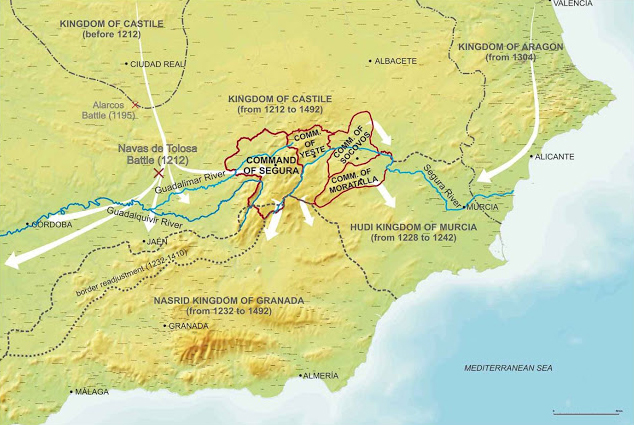
Map of Segura Torres © Santiago Queseda.

Between Sevilla, Valencia and Granada run a system of major roads, some of which dates back to antiquity. In the high Middle Ages, during the final years of the Islamic period, the border region between the major Taifas and the encroaching Christian Kingdom of Castille came to be dominated by a complex system of large castles, small castles, “husun”, as well as villages with towers. As the roads would run along the rivers, the fortifications would be visible from the road, yet towering above, ready to provide the first line of defence as well as a base for extraction of customs payable to the lord residing in the castle higher up. Such towers were built with a specific technology, as rammed-earth constructions.

It has long been recognised that these towers mark out a distinct cultural landscape, providing information about the territorial and agricultural organisation. The watchtowers were peculiar for their location on top of hills but without further defensive structures. Nevertheless, they controlled the access to the castle higher up.

Construction of the towers was characterised by the use of tapia (tabia), a technology featuring stamped earth and lime. Described by Pliny in his 35thbook of natural history, the technology was not exclusively Islamic. Rather, it appears to have been in general uses since antiquity.

The smaller castles, however, appears to have been built with another type of technology, using at the bottom a foundation of perfectly rounded stones, laid with mortar. On top of this, walls would be constructed by using a mixture of gravel, sand, and lime.

Since 2003 a major project has been underway to carry out a systematic study and analysis based on archaeological surveys and written sources. The aim has been to get a better sense of how the landscape was organised in the period after the year 1031, when the Caliphate in Córdoba collapsed. So far, the project has provided photo-documentation and topographic surveys of all the remaining (ruins) of towers, dated (C14) to the period between 1018 and 1155, which means they were probably constructed under the auspices of the Taifa Moorish Kingdom of Saqura and carried into the Almohad period.

After the battle of Navas de Tolosa in 1212, the region was given by the King of Castille to the military Order of Santiago – together with its rich and fertile landscape filled with forests, irrigated land, salt mines, vineyards, rivers, mills, fisheries, meadows, pastures, and tolls. A dominant part of this landscape, however, continued to be the “husun”, which were used by the local population as community refuges.

Torres Santa Catalina at Orcera © Santiago Queseda.

Cultural Heritage Routes

The project has aimed at providing information of how to restore and preserve this unique landscape. Part of the intent, however, has also been to provide people access to the landscape by organising hiking and cycling routes. In the future dossiers, guides and itineraries will be disseminated on the dedicated website, Santiago Queseda.  The Group has also produced an exhibition, currently on show in Seville.

SOURCES:

The detached farmstead towers from 12thCentury Sierra de Segura (Jaén, Spain): contributions to the territorial settlement of the al-Andalus period. 
By S. Quesada-García & G. Romero-Vergara School of Architecture, University of Seville, Seville, Spain
In: Heritage 2018. Proceedings of the 6thInternational Conference on Heritage and Sustainable Development. Ed. by Gogéria Amêda et al.
Editorial Universidad de Granada and Green Lines Institute for Sustainable Development 2018

The frontier Landscape between al-Andalus and the military order of Santiago
Blog post on Nosotros y ella, la arquitectura Santiago Quesada.

A proposal for the restoration of the Islamic Towers in the Segura de la Sierra Valley (Spain). Significance and values of this cultural landscape
International Conference on Preservation, Maintenance and Rehabilitation of Historical Buildings and Structures, p 333-344. Tomar (Portugal) 2014

VISIT:

Cazorla, Sierra de Segura y las Villas Natural Park

SEE MORE:


The post Islamic Towers from the 12th century in Sierra de Segura near Jaen in Spain appeared first on Medieval Histories.

Powered by WPeMatico

The St Eustace Head Reliquary

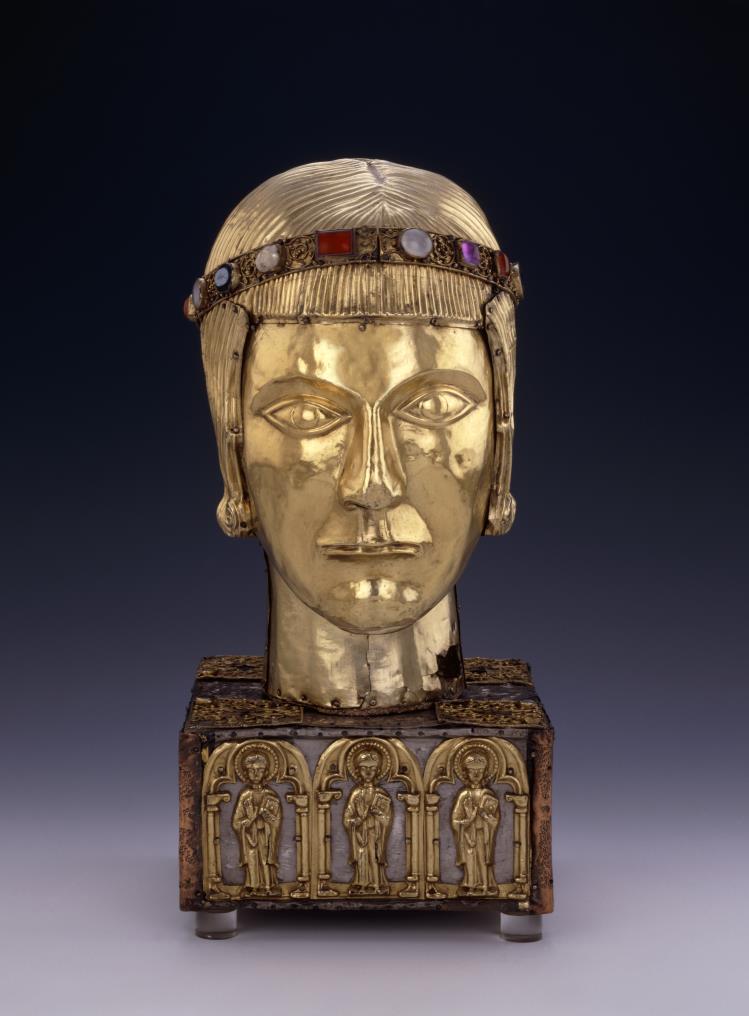
Head reliquary of St Eustace c. 1180 -1200 belongs to the category of “Speaking Reliquaries”, which informs us of their content.

Head reliquary of St. Eustace © British Museum

In the 19thcentury the treasures preserved in the Cathedral in Basle went on the market. One of the outstanding pieces was the reliquary of St. Eustace from the 12thcentury. Such head reliquaries, also known as `chefs’, were popular in the medieval period. They belong to the category of so-called “speaking” reliquaries, which through their form indicate their content. In 1850, the reliquary was acquired by the British Museum.

The head itself is made of silver-gilt repoussé metal sheets with a gem-set filigree circlet binding the straight hair. The head measures (H) 35 cm x (W)16,6 cm x (D)18,4 cm and weighs 1,6 kg. The head is supported by a fully carved core made of sycamore wood. Also in the shape of a head, the top forms a lid covering a hollow compartment for relics. The existence of the inner wooden head was not discovered until 1956, when the silver case was being cleaned. The relic compartment was then opened, and a number of fragments of bone wrapped in cloth and identified by vellum (relic tituli) were found, which hitherto had clearly not been disturbed. Some of these relics were supposedly fragments of the skull of Saint Eustace, a Roman military saint. The relics were returned to Basle, but the vellum `tituli’, cloth fragments and cotton wadding were retained by the British Museum.

It is thought that the wooden head was the original reliquary, which was then covered in silver-gilt sheets and fitted with the diadem.

The gem-set filigree circlet is especially valuable. Such circlets might be gifts from wealthy nobles. And may perhaps have been worn in a secular context before being donated. This diadem is made of filigree adorned with a series of gems recycles from the Roman past. Nine gems are composed of varieties of quartz (rock crystal, chalcedony, amethyst, carnelian), two of aragonite (pearl, mother of pearl), one of obsidian and six of glass. This use of Roman materials reveals the value placed on the classical past by medieval goldsmiths and their patrons.

Around the plinth are gold plaques in the form of the twelve apostles standing under an arcade of trefoil-headed arches. This will also have been decorated with recycles ems and glass fragments, but only two remain.

St Eustace

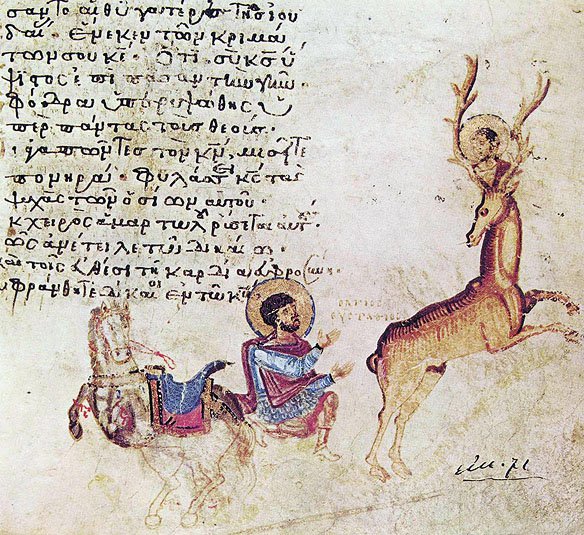
the vision of St Eustace. From Mansucript, Athos. Source: Wikipedia
The vision of St Eustace. From Manuscript, Athos. Source: Wikipedia

St. Eustace was a Roman soldier and Christian martyr. Before his conversion, legend has it he was a Roman general serving under Trajan and known under the name of Placidus. While hunting a stag near Tivoli, he saw a crucifix lodged in between the antlers of the stag. This led to the conversion of his whole family as well as the change of his name to Eustatius (from Greek, Eustachios, meaning fruitful, well standing, steadfast). His vita is preserved in the form of a highly romantic legend presenting him as a Job-figure, until his martyrdom in AD 118, when he was supposedly roasted to death with his family inside a bronze statue of an ox.

According to Pope Gregory II (731 – 41), an early church was dedicated to him in Rome. Veneration, though, is mainly dated to the 12thcentury. One of the earlier presentations, though may be found on the Harbaville Triptych from Byzantium, now in Louvre, showing a panoply of Roman soldiers turned martyrs – St Theodore the Recruit, St Theodore the General, St George, and St Eustace. Later, we find his relics at an altar in the royal basilica of St. Denis as well as depicted on a Romanesque capital at the Abbey in Vézeley. The saint may also be found in psalters illustrating Psalm 96, 2 – 12. St. Eustace obviously belonged to the group of martyrs celebrated for their conversion from Roman Soldier to Miles Christi.

SEE MORE

St. Eustace Head reliquary c.1180-1200, Basle, Switzerland (British Museum)

READ MORE:

Treasures of Heaven: Saints, Relics and Devotion in Medieval Europe
By Martina Bagnoli, Holger Klein, C. Griffith Mann, and James Robinson.
London, British Museum Press, 2011


Matter of Faith: An Interdisciplinary Study of Relics and Relic Veneration in the Medieval Period
Edited by James Robinson, Lloyd de Beer and Anna Harnden
The British Museum Press 2018

The post The St Eustace Head Reliquary appeared first on Medieval Histories.

Powered by WPeMatico

The Making of the Medieval Middle East

A bold new religious history of the late antique and medieval Middle East that places ordinary Christians at the centre of the story

The Making of the Medieval Middle East. Religion, Society, and Simple Believers
By Jack Tannous
Princeton University Press 2018

In the second half of the first millennium, the Christian Middle East fractured irreparably into competing churches. MeanwWhile the Arabs conquered the region, setting in motion a process that would lead to its eventual conversion to Islam. Jack Tannous argues that the key to understanding these dramatic religious transformations were the ordinary religious believers, often called “the simple” in late antique and medieval sources. Largely agrarian and illiterate, these Christians outnumbered Muslims well into the era of the Crusades, and yet they have typically been invisible in our understanding of the Middle East’s history.

What did it mean for Christian communities to break apart over theological disagreements that most people could not understand? How does our view of the rise of Islam change if we take seriously the fact that Muslims remained a demographic minority for much of the Middle Ages? In addressing these and other questions, Tannous provides a sweeping reinterpretation of the religious history of the medieval Middle East.

This provocative book draws on a wealth of Greek, Syriac, and Arabic sources to recast these conquered lands as largely Christian ones whose growing Muslim populations are properly understood as converting away from and in competition with the non-Muslim communities around them.

ABOUT THE AUTHOR

Jack Tannous is an assistant professor of history at Princeton University.

READ MORE

Read the introduction

FEATURED PHOTO:

Mosaic from Madaba. The Apostles’ Church. © Jordan Tourism


The post The Making of the Medieval Middle East appeared first on Medieval Histories.

Powered by WPeMatico

Medieval England and France, 700 – 1200

Since 2016 the national libraries in England and France have worked together to create a digitised collection of their medieval manuscripts from England and France between 700-1200.

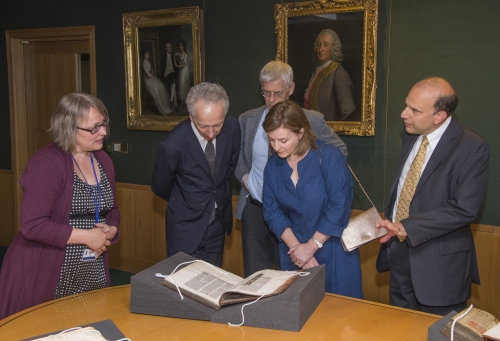
Admiring - British Library Royal MS 4 D II
Tuija Ainonen, Project Curator, Roly Keating, Chief Executive of the British Library, Kristian Jensen, Head of Collections and Curation of the British Library, Rachel Polonsky, and Marc Polonsky viewing a manuscript of the Gospel of Mark (British Library Royal MS 4 D II).

Thanks to the patronage of The Polonsky Foundation, the Bibliothèque nationale de France and the British Library have established an unprecedented partnership in the field of medieval manuscripts. The project aims to digitise and study more than 800 medieval manuscripts, one part held by the BnF and the other half by the British Library

The manuscripts were selected because of their importance for the history of French and English relations in the Middle Ages, as well as for their artistic, historical or literary value. Written between the 8th and the 12th centuries, they represent the variety and spread of the intellectual production of the early Middle Ages and the Romanesque era.

“This project brings together riches of the Bibliothèque nationale de France and the British Library and makes them available to researchers and the wider public in innovative and attractive ways. Our Foundation is privileged to support this collaboration, which continues the cultural exchange and profound mutual influence that characterises the history of these two nations over many centuries”  says Dr Leonard S. Polonsky on behalf of The Polonsky Foundation.

Next week, an international conference in Paris marks the launch of the two websites created by the joint project. As of now (19.11.2018) only the English website is accessible, but hopefully, the French part will be open for visitors in the days to come. The French website will allow us to see all 800 manuscripts, while the English partner will present a choice of manuscripts in detail while exploring their significance through articles written by specialists.

The Conference

The international conference marks the launch of the two websites created by the joint project. The conference shines a new light upon the rich heritage made available online thanks to The Polonsky Foundation, and upon the historical, literary and artistic relationships between medieval England and France.

The 21st November showcase the new resources created by the joint project and will consist of a dialogue between the project collaborators. They will present the achievements and the lessons of this partnership that for the first time brings together the medieval collections of both institutions. A special focus will be placed on the opportunities created by the development of digital humanities and by image interoperability, which are transforming research practices.

The 22nd and 23rd November will be devoted to the manuscripts, their illumination, their texts and their dissemination. Specialists from various fields will gather together for interdisciplinary presentations and discussion.

The Partners

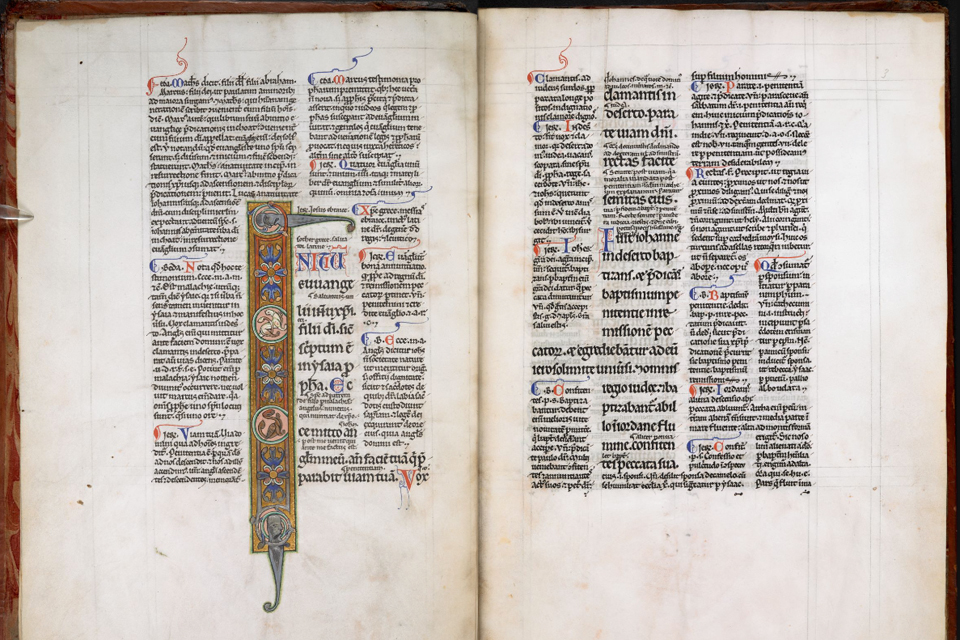
Royal MS 4 D II c 1175-c 1225 Title Gospel of St Mark with the Glossa Ordinaria,
And here is what they admired: Royal MS 4 D II c 1175-c 1225. Gospel of St Mark with the Glossa Ordinaria, fol 2v-3r. © British Library

The Bibliothèque nationale de France holds more than 40 million documents, including 14 million books and printed material, manuscripts, maps, plans, photographs, coins, audiovisual documents. All gathered over the past five centuries through legal deposit and a proactive acquisition policy. As a guardian of the transmission of this heritage to future generations, the BnF also ensures the preservation and restoration of items in its safekeeping. Gallica, the digital library of the BnF and its partners, provides online access to nearly 5 million documents. As a place of excellence and research, that is open to everyone, the Library is committed to the dissemination of its invaluable collections to all audiences through a cultural programme of exhibitions, visits, workshops and colloquia, at its sites and online.

The British Library was created as part of the British Museum in 1753. In 1973, the British Library was separated from the Museum and is today one of the largest libraries in the world. Its mission is to make the UK’s intellectual heritage accessible to everyone. Its collections span almost three millennia and come from every continent. Numbering over 160 million items, they include books, archives, manuscripts, newspapers, journals, maps, photographs, stamps, prints, databases, music scores and sound recordings. Collecting and protecting the nation’s intellectual and cultural heritage and sharing it with a wide audience – researchers, businesses, students and the general public – underpins everything the Library does.

The Polonsky Foundation is a UK-registered charity that supports cultural heritage and research. Its principal activities include the digitisation of significant collections at leading libraries (the British Library; the Bibliothèque nationale de France; the Bodleian Library, Oxford; Cambridge University Library; the New York Public Library; the Library of Congress; the Vatican Library).

FEATURED PHOTO:

From: Full-page miniature in colours and gold, depicting a group of monks presenting a copy of the Rule of Benedict to St Benedict who sits enthroned while another monk prostrates himself at Benedict’s feet. Arundel MS 155, fol 133r. © British Library

TAKE PART:

France & England. Medieval manuscripts between 700 and 1200 c
21.11.2018 -23.11.2018

INHA Institut National de l’Histoire de l’Art.
Auditorium Colbert
2 rue Vivienne
75002 Paris 2e
France


Registration at the website of the Polonsky Foundation

Read the programme

SEE MORE:

Manuscrits France et Angleterre

Medieval England and France, 700 – 1200

The post Medieval England and France, 700 – 1200 appeared first on Medieval Histories.

Powered by WPeMatico

Medieval St. Paul’s Cathedral Destroyed in the Great Fire to be Reconstructed in Virtual Reality

What would it have been like to enter St. Paul’s in the 17th century and hear John Donne preach to his congregation? A new project aims to reconstruct the medieval Cathedral in Virtual Reality to let visitors up close to the famous poet and preacher and hear his words and sermons sing out once more.

“This was not a Red Sea, such as the Jews passed, a sinus, a creek, an arm, an inlet, a gut of sea, but a red ocean that overflowed, and surrounded all parts; and from the depth of this sea God raised them; and such was their resurrection.”
From a sermon preached by John Donne on Easter Day 1624 on Mass Martyrdom.
In: John Donne: The Major Works. Oxford World’s Classics, Ed. by John Carey. Oxford 1990,  S. 351


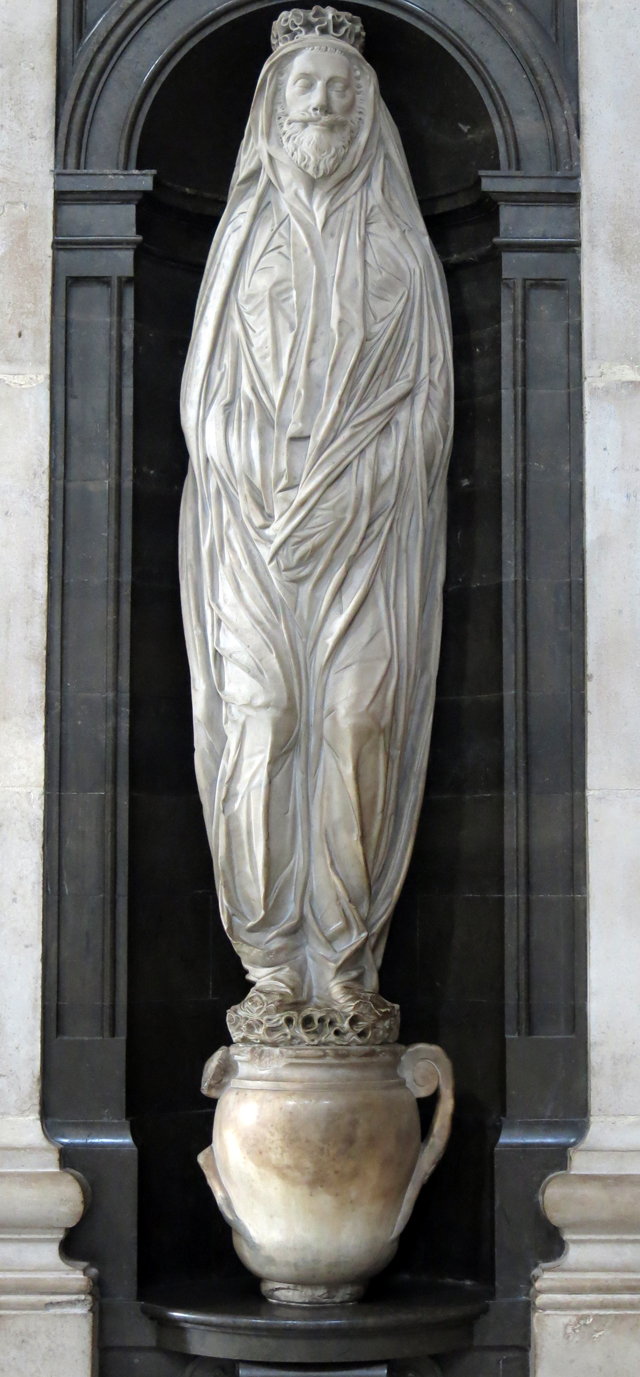
John Donne Burial Monument in St. Paul's Cathedral in London 1633
John Donne Burial Monument in St. Paul’s Cathedral in London 1633. Source: wikipedia

After the fire in 1666, not much was preserved of the interior of the medieval Cathedral of St. Paul in London. One of the few pieces of funeral furniture was the statue built in the memory of John Donne by Nicholas Stone, and based upon a drawing commissioned by the poet himself as he lay dying. It was one of the few to survive the Great Fire of London (1666). However, the cathedral was at that time just as crowded as Westminster with monuments. How would it have been to listen to a sermon of one of England’s greatest poets while standing in the old medieval cathedral?

Now, the cathedral is set to reopen in all its splendour thanks to modern digital technology. Not just the building of the cathedral, however, will reopen in virtual reality. The reconstruction will also allow visitors to experience the lost choir stalls, the rod screen, the pulpit, the altar, and seventeen medieval and Tudor monuments, such as the monument of St. John de Bauchamp († 1388) and that of John of Gaunt and his wife Blanche (erected 1374).

The models are based upon engravings taken by Bohemian etcher Wenceslaus Hollar in 1657 – less than a decade before the Great Fire of London razed the cathedral to the ground. They will sit within a complete rendering of the cathedral and surrounding streets developed by NCSU in collaboration with St Paul’s Cathedral Archaeologist John Schofield.

Ultimately, the complete visual model of the cathedral’s interior and exterior – incorporating the elements created by the illustration team of MOLA (Museum of London Archaeologists) will be combined with a realistic soundscape created by acoustic engineers using CATT acoustic modelling software. This recreation will allow visitors to experience how it may have felt to worship at St Paul’s in 1624. The action will focus on Easter Day 1624, and will include a choral service and sermon known to have been given by Bishop Lancelot Andrewes in the morning and a sermon that John Donne preached in the choir that afternoon.

Organisers

London’s Medieval St Paul’s Cathedral – destroyed by the Great Fire of London in 1666 – is set to reopen for online visitors thanks to a new virtual reality project led by Professor John Wall of North Carolina State University (NCSU). Funded by the US National Endowment for the Humanities, the Virtual St Paul’s Cathedral Project website will allow visitors to experience sermons much as they would have appeared and sounded back in 1624.

The Illustration Team has created SketchUp 3D models of a number of the cathedral’s lost interior features – the choir stalls and screen, pulpit, altar, and seventeen medieval and Tudor monuments – which will be incorporated into a complete model of the cathedral.

SOURCE:

Medieval St Paul’s Cathedral destroyed in the Great Fire to be reconstructed in virtual reality

READ MORE:

John Donne Delivered a Sermon on Gunpowder Day in 1622. What Did It Sound Like?
By Steve Moyer
In: Humanities. The Magazine of the National Endowment for the Humanities (2014) Vol 35, no. 5,

SEE MORE

A forerunner was the reconstruction of the square in fron of the church


The post Medieval St. Paul’s Cathedral Destroyed in the Great Fire to be Reconstructed in Virtual Reality appeared first on Medieval Histories.

Powered by WPeMatico

The Development of Canon Law in the High Middle Ages

After 1000, work began in earnest to develop Canon Law into a fully developed complex legal system and academic discipline. New book tells the story by following the cases of papal jurisdictional primacy and clerical celibacy.

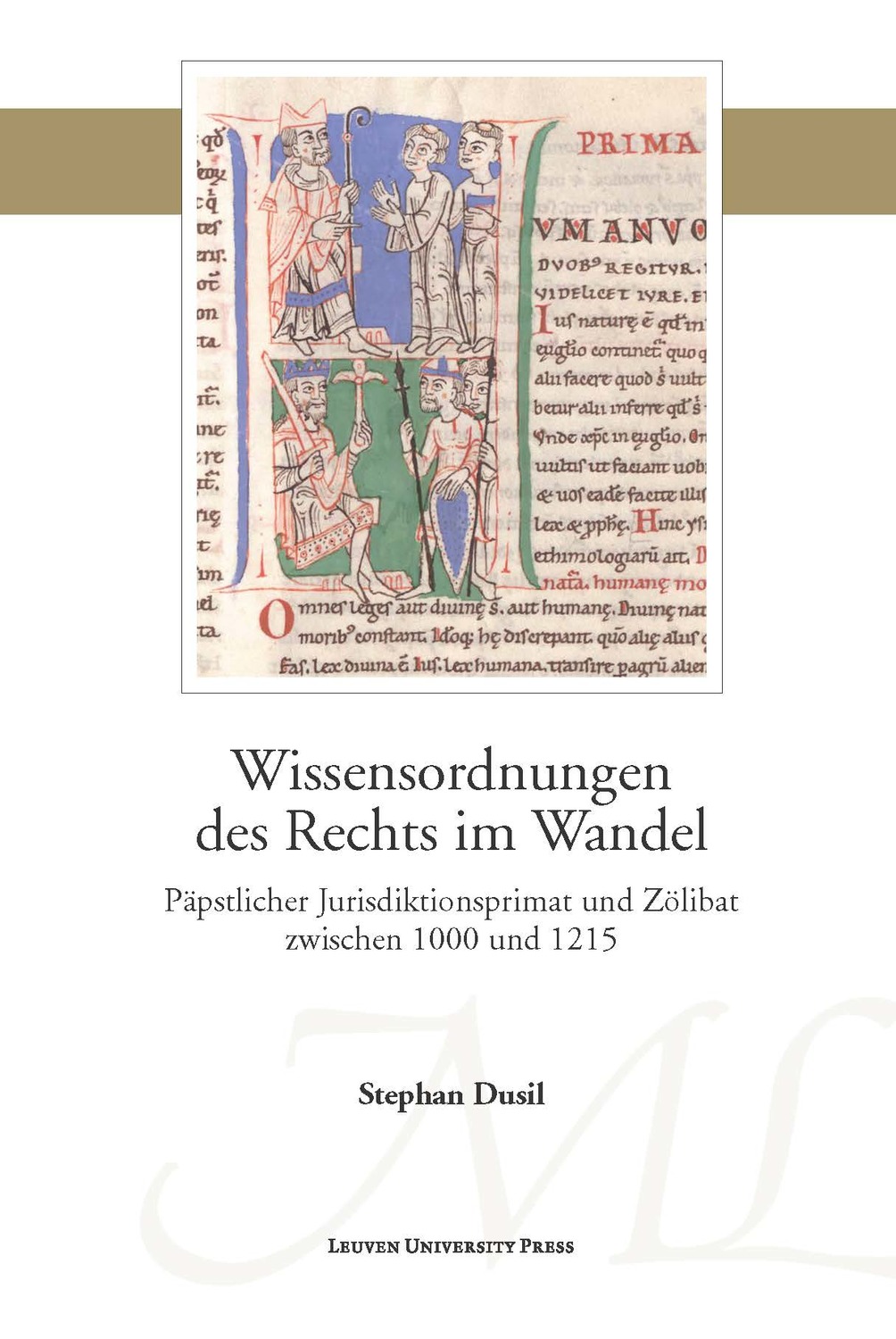
Wissensordnungen des Rechts im Wandel
Päpstlicher Jurisdiktionsprimat und Zölibat zwischen 1000 und 1215
By Stephan Dusil
Series: Mediaevalia Lovaniensia – Series 1-Studia 47
Leuven University Press 2018

Abstract:

Between 1000 and 1215, the knowledge of canon law changed fundamentally. Although ecclesiastic rules of law had been linearly collected by 1000, they had evolved into complex, highly interlinked carriers of knowledge by 1215. By carefully examining manuscript transmission, this book elucidates the evolution of legal knowledge, taking papal jurisdictional primacy and clerical celibacy as an illustrative example. Furthermore, it shows the influence the artes liberales and rhetoric had on the organisation of canon law. This study thus offers fascinating insights into the origins of canon law as an academic discipline, thereby also demonstrating the diversity and multi-layeredness of legal knowledge in the High Middle Ages. (This publication is GPRC-labeled (Guaranteed Peer-Reviewed Content).

About the Author:

Stephan Dusil is a professor of the Faculty of Law at KU Leuven.

Table of Contents

Cover - Wissensordnungen der recht leuven 2018Vorwort

Einleitung

Kapitel 1: Wissen über Jurisdiktionsprimat und Zölibat. Fragestellung und methodischer Ansatz

1. Zum Begriff des Wissens
a) Ausgangsbefunde: Ansätze in den Geisteswissenschaften
b) Zuspitzung: Rechtswissen in der historischen Kanonistik

2. Untersuchungsfelder: Päpstlicher Jurisdiktionsprimat und Zölibat
a) Tu es Petrus: Der Jurisdiktionsprimat des Bischofs von Rom im mittelalterlichen Kirchenrecht
(1) Ausgangspunkt: Der Jurisdiktionsprimat im heutigen Kirchenrecht
(2) Rückblick: Die Herausbildung des Jurisdiktionsprimats bis zum Hochmittelalter
α) Die frühe Kirche
β) Ansätze zur primatialen Verdichtung
γ) Frühmittelalterliche Entwicklungslinien
δ) Die Durchsetzung des Jurisdiktionsprimats im Hochmittelalter
ε) Zusammenfassende Überlegungen
(3) Konkretisierung: Der Jurisdiktionsprimat als Untersuchungsgegenstand
b) propter regnum caelorum: Der Zölibat im mittelalterlichen Recht

3. Wissensordnungen im Wandel: Entwicklung der Fragestellung aus der Perspektive der historischen Kanonistik

Kapitel 2: Ausgangspunkt: Kanonessammlungen im 11. Und 12. Jahrhundert

1. Quellenkunde: Vorgratianische Kanonessammlungen

2. Primus liber continet: Die Darstellung des Jurisdiktionsprimats und des Zölibats in vorgratianischen Sammlungen
a) primae sedis episcopus aut princeps sacerdotum? Der Jurisdiktionsprimat zwischen episkopal-dezentraler und römisch-primatialer Perspektive
(1) Das Decretum Burchards von Worms
(2) Die Collectio 74 Titulorum
(3) Die Panormia
(4) Die Collectio Canonum Deusdedits
(5) Wissensproduktion im Wandel: Resümierende Beobachtungen
b) ut de carnali fiat spiritale coniugium: Der Zölibat
(1) Das Decretum Burchards von Worms
(2) Die Collectio 74 Titulorum
(3) Die Panormia
(4) Konstante Wissensbestände: Zusammenfassende Gedanken
c) Wandel und Konstanz kirchlichen Rechtswissens im 11. und 12. Jahrhundert: Jurisdiktionsprimat und Zölibat im Vergleich

3. Die Formierung juristischen Wissens. Zu Texteingriffen, Rubriken und Ordnungskonfigurationen
a) Methodische Beobachtungen zum Umgang mit Kanones
(1) Das Decretum Burchards von Worms
α) Kanones zum Jurisdiktionsprimat
β) Kanones zum Zölibat
(2) Die Collectio 74 Titulorum
α) Kanones zum Jurisdiktionsprimat
β) Kanones zum Zölibat
(3) Die Panormia
α) Kanones zum Jurisdiktionsprimat
β) Kanones zum Zölibat
(4) Die Collectio Canonum Deusdedits
b) aliter se habet orientalium traditio ecclesiarum, aliter huius sancte Romane ecclesie.Vom Texteingriff zur Interpretation?

4. mihi canones facere non licet? Zur Reflexion des Umgangs mit normativen Texten
a) Prologe zu Kanonessammlungen als Spiegel der Ordnungsvorstellungen der Kompilatoren
(1) colligere: Das Vorwort zum Decretum Burchards von Worms
(2) discretio: Die Praefatio zur Collectio Canonum des Deusdedit
(3) dispensatio: Der Prolog Ivos von Chartres
b) Von Sammlern und Interpreten: Resümierende Beobachtungen

Kapitel 3: Die gemachte und die gedachte Ordnung. Ordnungsvorschläge und ihre Umsetzung

1. Die gedachte Ordnung
a) Ein hinführendes Beispiel: Bernold von Konstanz
b) Bausteine des Ordnens
(1) Isagoge und inventio: Zum Lektürekanon und zur Schulbildung im 11. und 12. Jahrhundert
(2) Schweinehirt und König: Zur Verwendung dialektischer und rhetorischer Figuren im normativen Kontext
(3) circumstantia: Autoritätskonstruktion und Autoritätsrelativierung
(4) exempla: Zur Verwendung historischer Beispiele
(5) dispensatio und necessitas: Das Abweichen von der Norm als Standard
(6) auctoritates: Hierarchie als Ordnung
c) diversi, sed non adversi: Zusammenfassende Überlegungen

2. Die gemachte Ordnung
a) Ein hinführendes Beispiel: Bernold von Konstanz liest Burchard von Worms
b) Zur Überarbeitung älterer Sammlungen
(1) Zwischen Erhaltung und Adaption. Zur inhaltlichen Rezeption von Jurisdiktionsprimat und Zölibat
α) Das Decretum Burchards von Worms
β) Die Collectio 74 Titulorum
αα) Konstanz und Wandel
ββ) Ein neuer Entwurf? Zur Redaktion der schwäbischen Version
γγ) Überarbeitung oder neue Sammlung? Zu einigen Derivaten der Collectio 74 Titulorum
γ) Die Panormia
δ) Appendizes – ein Sonderfall?
αα) Das Decretum Burchard von Worms
ββ) Die Collectio 74 Titulorum
γγ) Die Panormia
δδ) Zusammenfassende Beobachtungen
ε) Zur Tradition der Ordnung: Bilanzierende Überlegungen
(2) Notandum quod… Überarbeitungen älterer Kanonessammlungen in methodischer Hinsicht
c) Neues Ansetzen? Die Collectio Trium Librorum, der Polycarpus sowie Bonizos De vita christiana und Algers De misericordia et iustitia
(1) Die Collectio Trium Librorum und der Polycarpus
(2) Bonizos von Sutri Liber de vita christiana
(3) Algers von Lüttich De misericordia et iustitia
(4) Vom Aufbrechen der Gattungen: Zusammenfassende Überlegungen

3. Zwischen Theorie und Praxis: Bilanz

Kapitel 4: Eine janusköpfige Kompilation? Das Decretum Gratiani

1. Quellenkunde: Das Decretum Gratiani
a) Die vielen Gratiane
b) Zur Überlieferung des Decretum Gratiani
(1) Die erste Version (Gratian 1)
(2) Die zweite Version (Gratian 2)

2. Wandel und Beharrung: Die Darstellung des Jurisdiktionsprimats und des Zölibats
a) Der Jurisdiktionsprimat
(1) Eine Bleistiftskizze: Gratian 1
(2) Ein farbenprächtiges Gemälde: Gratian 2
b) Konstanz statt Wandel? Der Zölibat

3. Beobachtungen zur Methode Gratians
a) Vom perspektivischen Argumentieren zur ausführlichen Darstellung: Der Jurisdiktionsprimat
(1) Das normative Grundgerüst: Gratian 1
(2) Die umfassende Ausformung: Gratian 2
b) Vom Ordnen und Zerstören: Der Zölibat
(1) Ordnen nach causa, tempus, locus: Gratian 1
(2) Assoziieren und Abschweifen: Gratian 2
c) Von Wissensspeichern und kommentierten Autoritäten: Zusammenfassende Überlegungen

4. Die Einheit der Ordnungen. Eine Bilanz
a) Struktur, inhaltliche Erschliessung und dicta
b) Dialektik und Kanonistik. Zur Aufnahme rhetorischer und dialektischer Techniken
c) Die Autorität zur Autoritätsrelativierung. Isidor als Argument für relative Rechtsgeltung
d) Vorläufer und Einflüsse
e) Nochmals: Die gemachte und die gedachte Ordnung

Kapitel 5: Relationales Rechtswissen. Kanonistik zwischen Kanonessammlungen und Glossa ordinaria

1. Die Unterwerfung des Decretum Gratiani: Die Dekretistik
a) Quellenkunde: Dekretistische Literatur
b) Beobachtungen zu Summen und Glossen
(1) Apparat-Summen: Die Summa Quoniam in omnibus, die Summe Rufins und die Summa Parisiensis
α) Inhaltliche Aussagen zu Jurisdiktionsprimat und Zölibat
β) Apparat-Summen: Eine Mischform der Wissensvermittlung?
(2) Synthese pur? Die Summa Coloniensis
(3) infra ix questione iii aliorum. Einige Beobachtungen zu Glossen
c) Im Spinnennetz des Rechtswissens. Zusammenfassende Überlegungen

2. Die Eroberung der Tradition? Ältere Ordnungsvorstellungen und dekretistischer Neuansatz
a) Steinbrüche. Burchard von Worms als Normlieferant
b) Die einheitliche Wissensordnung. Burchard und Gratian als Argument
c) Die Verwissenschaftlichung des Unwissenschaftlichen: Glossen in vorgratianischen Sammlungen
d) Verweigerungen? Vom Vorteil thematischer Sammlungen
e) Resümierende Beobachtungen

3. Juristisches Experimentieren in einer Transformationsphase: Zusammenführende Überlegungen

Kapitel 6: Rechtswissen im langen 12. Jahrhundert

1. Rückblick
a) Ordnung, Recht, Wissen. Konzepte und Ansätze
b) Vom Kommen und Gehen kanonistischer Diskurse
c) Transformationen der Wissensstruktur

2. Ausblick
a) Mise-en-page und medialer Wandel
b) Von Monstern, die in Doppeltexten leben
c) Vom Kompilator zum Autor – und zurück?
d) Strukturwandel des Rechtswissens im langen 12. Jahrhundert

Anhang

Abkürzungsverzeichnis

Handschriftenstudien

1. Siglenverzeichnis
2. Appendix zur Collectio 74 Titulorum im Manuskript Florenz, Biblioteca Medicea Laurenziana, Pluteus 16 cod. 15
3. Glossen zur Collectio 74 Titulorum

Verzeichnis benutzter Quellen und Literatur
1. Ungedruckte Quellen
2. Gedruckte Quellen
3. Lexika, Wörterbücher, Handschriftenkataloge und andere Hilfsmittel
4. Literatur

Register der Handschriften
Register der Personen
Register der Textsammlungen
Register der Textstellen (Konzilien, Dekretalen, sonstige Texte)

FEATURED PHOTO:

Bible Moralisé. MS. Bodl. 270b fol. 208r 13th century, middle © Digital Bodleian

The post The Development of Canon Law in the High Middle Ages appeared first on Medieval Histories.

Powered by WPeMatico

5 Vintage Christmas Cards from the NYPL Archive

by New York Public Library

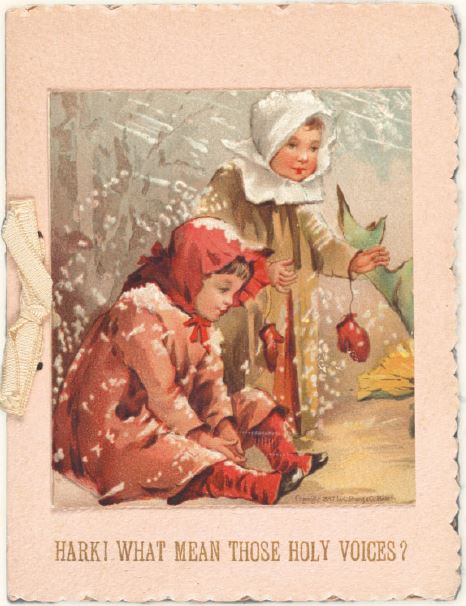
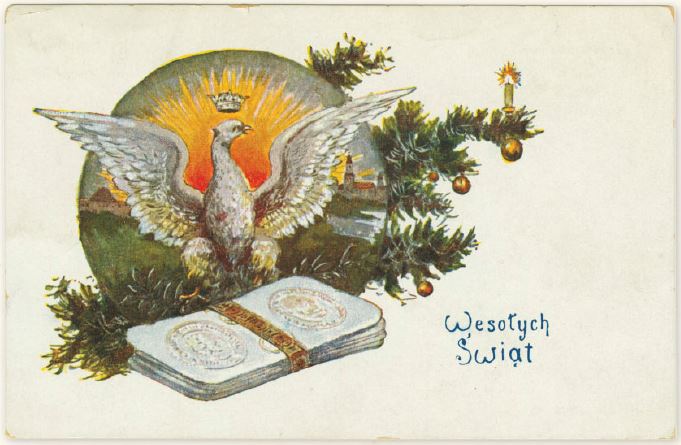
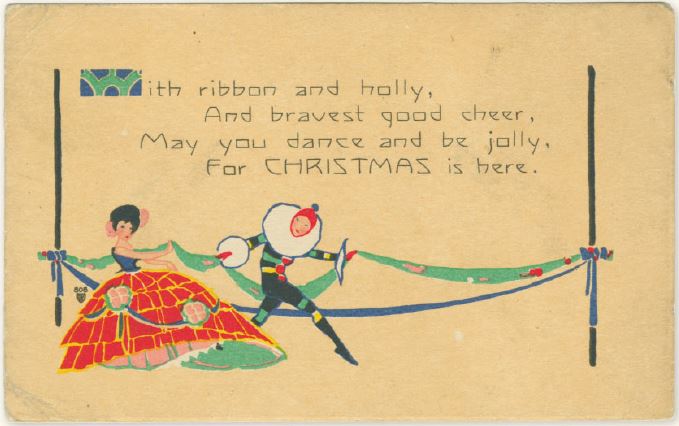
Every year as the days grow shorter, amidst the holly, cookies, and carols there is another timeless holiday tradition—sending and receiving Christmas cards to and from those you love. 100 Christmas Wishes is a collection of vintage holiday cards, all from the archives of the New York Public Library.

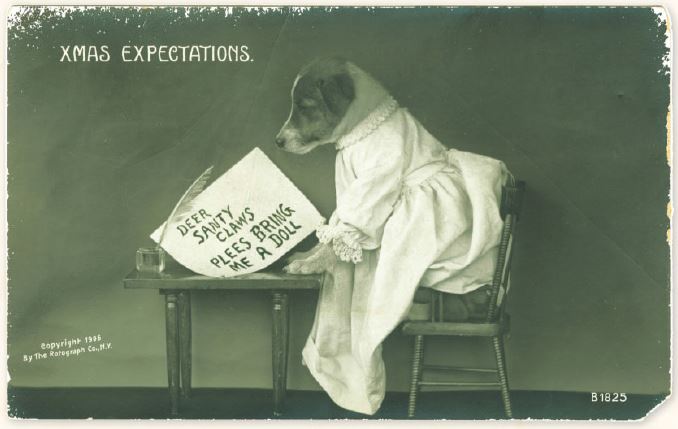
The Library houses one of the greatest collections of early Christmas postcards from around the world with thousands of cards depicting every imaginable holiday scene. Archivists selected one hundred of the best cards from the extensive collection to share in 100 Christmas Wishes. From the elegant, gilded Santa Clauses and statuesque angels, to yuletide still lifes, tumbling tots and puppies with bows around their necks, each card is a beautiful celebration of the holiday season.

As Rosanne Cash, a patron and friend of the Library as well as a devoted fan of Christmas cards, says in her introduction “This collection of early Christmas postcards, housed for a century in the New York Public Library archives, distills those abiding wishes for the holidays from revelers from long ago and far away, in a wish for peace, joy, magic, bounty, family, and for light to be shone ‘round the world at Christmas, past and future.’”

Click on the images below to see some of our favorite cards from 100 Christmas Wishes!


If you’re in the New York City area, join the New York Public Library and Rosanne Cash on Monday, November 26 for a free book signing event! Click here to learn more about the free event.


The New York Public Library is a free provider of education and information for the people of New York and beyond. With 92 locations—including research and branch libraries—throughout the Bronx, Manhattan, and Staten Island, the Library offers free materials, computer access, classes, exhibitions, programming and more to everyone from toddlers to scholars, and has seen record numbers of attendance and circulation in recent years. The New York Public Library serves more than 18 million patrons who come through its doors annually and millions more around the globe who use its resources at www.nypl.org. To offer this wide array of free programming, The New York Public Library relies on both public and private funding. Learn more about how to support the Library at nypl.org/support.

The post 5 Vintage Christmas Cards from the NYPL Archive appeared first on The History Reader.

Powered by WPeMatico